 Chuckanut Exterior
 Decks Around Alger Take a Different Kind of Beating
A deck in Alger doesn't fail the same way a deck fails in a dry climate. Out here, the damage is slow, it's mostly hidden, and by the time it shows up on the surface it's usually been building underneath for a couple of seasons. Salt-laden air off the water, long stretches of driving rain, and a moss season that can run from fall through spring all work on wood, metal, and concrete in ways that surprise homeowners who've never dealt with a coastal Pacific Northwest deck before.
We're not describing a hypothetical. This is the pattern we see, repair after repair, on decks throughout the Chuckanut area: moisture gets in somewhere it shouldn't, it can't dry out fast enough between storms, and the deck starts failing from the inside before anyone notices from the outside.
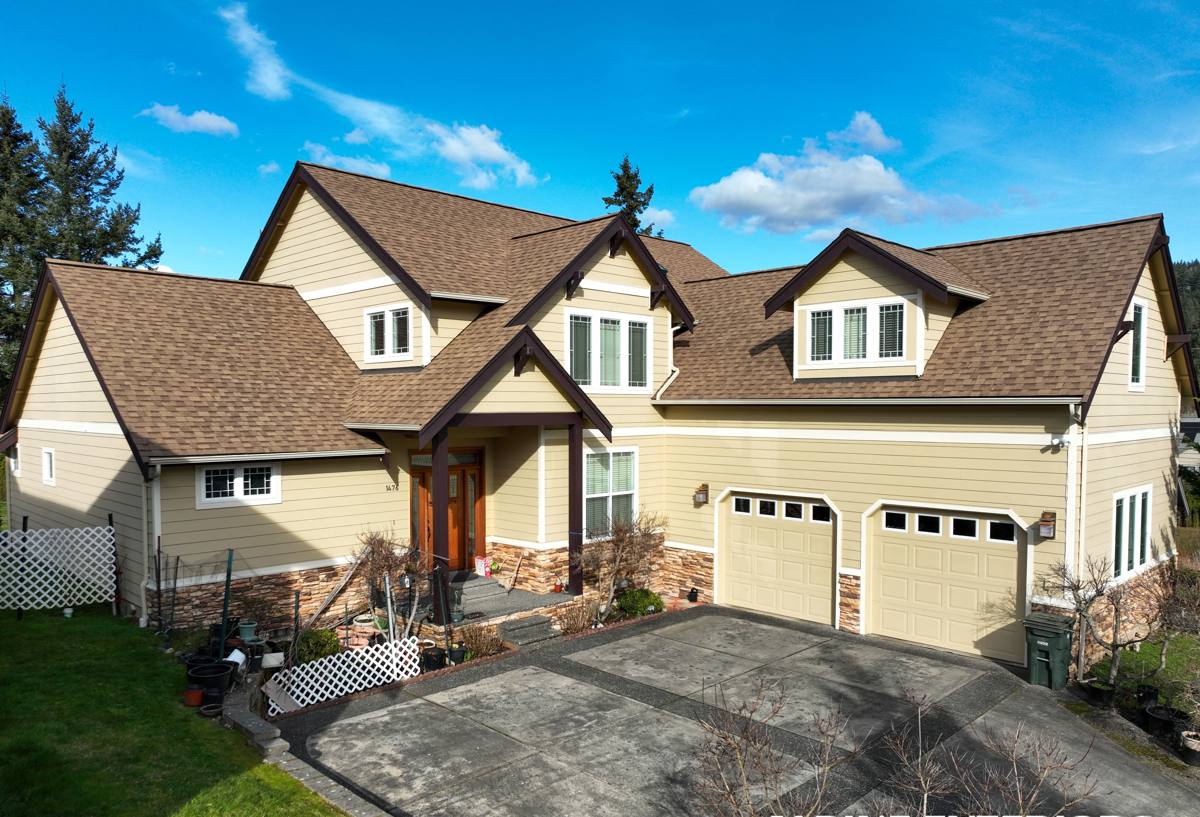
Common Deck Problems We See Around Alger
Ledger Board and Rim Joist Rot
The ledger board — the framing member that bolts the deck to the house — is the single most important structural piece on most decks, and it's also the piece most likely to be rotting quietly behind the decking. If the original flashing was missing, undersized, or installed before code required a proper drip cap and water barrier, rain running down the siding gets trapped right where the deck meets the house. That's the wettest, slowest-drying spot on the whole structure, and it's exactly where you don't want structural rot.
Fastener and Hardware Corrosion
Salt air accelerates corrosion on anything metal — nails, screws, joist hangers, bolts. We regularly find decks where the boards look fine but the hardware holding the frame together has rusted to the point of losing real strength. Galvanized coatings that would hold up fine 30 miles inland can wear through faster this close to the water, especially on fasteners that were never rated for ground contact or coastal exposure in the first place.
Moss, Algae, and Slick Surfaces
A long moss season means more than a cosmetic problem. Moss and algae hold moisture against the wood surface for weeks at a time, which speeds up surface decay and turns boards genuinely slippery — a real fall hazard on stairs and near the edges of a deck. Decks with poor sun exposure or tight board spacing that doesn't let air move underneath tend to get hit hardest.
Post Bases and Footing Deterioration
Support posts set in or near soil, or sitting on footings without proper standoff hardware, stay damp far longer than posts that are held up off the concrete. Over time that constant dampness leads to soft, punky wood at the base of the post — right where the deck's entire weight transfers down to the footing.
What a Correct Deck Repair Actually Involves
A repair that's done right starts with an honest structural look, not just a patch on the board someone noticed was soft. We check the ledger connection and flashing, probe the framing at the rim joist and post bases, test hardware for corrosion, and check the decking itself for soft spots, cupping, and fastener pop. Only after that inspection do we know whether we're looking at a cosmetic fix, a structural repair, or something in between.
Where we differ from a quick patch job: we don't just replace what's visibly broken and put new boards over old problems. If the ledger flashing is missing or failing, fixing the boards above it without correcting the flashing just buys a couple more years before the same rot comes back. A correct repair traces the water path and fixes it at the source.
Repair, Partial Re-Deck, or Full Rebuild?
Not every deck problem needs the same level of work. The right call depends on how far the damage has spread and whether the framing underneath is still sound. Here's how we generally think about it:
| Situation | Typical Scope | What Drives the Decision |
|---|---|---|
| A few soft or cracked boards, framing is solid | Spot repair — replace individual boards and fasteners | Localized damage, structure tests sound |
| Decking is worn or inconsistent across most of the surface, framing is solid | Partial re-deck — new boards, existing frame reused | Surface has aged out but structure hasn't |
| Ledger rot, multiple failing posts, or hardware corrosion throughout | Full rebuild — new framing and decking | Structural integrity is compromised, not just the surface |
| Guardrails loose, stair stringers cracked, or spacing out of code | Targeted structural repair regardless of decking condition | Safety and code items take priority over cosmetics |
We'll walk you through which category your deck falls into and why, with plain language about what we found and what it takes to fix it — not a push toward the most expensive option.
Materials and Fasteners: Our Standard for This Climate
Given the salt air and moisture exposure in the Alger and Chuckanut area, we hold to a higher fastener and flashing standard than what's minimally required. That means stainless steel or high-grade coated fasteners in areas with direct salt exposure, proper self-adhering flashing membrane at the ledger connection, and post base hardware that lifts wood off concrete rather than letting it sit flush on a damp footing. These choices cost a bit more upfront, but they're the difference between a repair that lasts and one that reopens the same failure in a few years. We're honest about that trade-off — it's not the cheapest way to do the job, it's the way that holds up out here.
For decking material itself, we work with both wood and composite depending on the homeowner's priorities. Wood costs less initially and can be refinished, but needs regular sealing and cleaning to fight moss and moisture in this climate. Composite costs more upfront and needs far less maintenance, but installation has to be done carefully — improper spacing or fastening on composite shows up as buckling or fastener pop down the road. Neither is automatically the "right" answer; it depends on how much upkeep you want to take on.
Our Repair Process
- On-site inspection of framing, ledger connection, hardware, and decking surface
- Plain-language explanation of what's damaged, what's causing it, and what your repair options are
- Written estimate broken out by scope, so you can see what's structural versus cosmetic
- Repair or rebuild work, with flashing and moisture paths corrected as part of the job, not left for later
- Final walkthrough so you know what was replaced and what to watch going forward
Guardrails, Stairs, and Code Basics Worth Knowing
A few structural items get overlooked on older decks because they were built to a different code, or never inspected at all. Guardrails should be firmly anchored and at a safe height, baluster spacing shouldn't allow a small child to pass through, and stair stringers need to be free of rot and cracking since they carry concentrated weight with every step. Ledger connections on newer builds require specific flashing and fastening details that older decks often lack entirely. None of this is about scaring anyone — it's about knowing what to ask a contractor to actually check, rather than just look at.
Deck Maintenance That Actually Helps Between Repairs
A little consistent upkeep goes a long way toward avoiding a full rebuild down the line. Here's what we tell Alger-area homeowners to stay on top of:
- Sweep leaves and debris off the deck regularly, especially in fall — trapped organic matter holds moisture against the wood
- Clean moss and algae off the surface and stairs before it builds up, particularly on shaded or north-facing sections
- Check that gaps between boards aren't clogged with debris — that spacing is there so water can drain and air can move underneath
- Look at the ledger board area where the deck meets the house once a year for staining, soft wood, or gaps in flashing
- Test guardrails and stair railings for looseness, especially after a hard winter
- Reseal or refinish wood decking on the manufacturer's recommended schedule, not just when it looks faded
Why Hiring a Crew That Already Works Alger Matters
A contractor who works this stretch of Whatcom County regularly already knows what a ledger board looks like after a few winters of driving rain, what moss damage looks like at six months versus three years, and which fastener specs actually hold up this close to the water. That's not something you get from a crew that mostly works drier inland areas and treats every deck the same. We've seen enough decks in this specific climate to know where the damage tends to start and what's worth fixing versus replacing — and we'll tell you the difference honestly.
If you've got a deck in the Alger or wider Chuckanut area that's showing soft spots, rust streaks, persistent moss, or just feels less solid than it used to, we're glad to take a look. The estimate is free, there's no pressure, and you'll walk away knowing exactly what's going on with your deck — just fill out the form below.