 Chuckanut Exterior
 Why Edison Decks Wear Out Faster Than You'd Expect
Edison sits close enough to the water and the tidal flats that salt air is a daily fact of life, not an occasional nuisance. Combine that with Whatcom County's driving rain and a moss season that can stretch from October well into spring, and you have a climate that is genuinely hard on exterior wood structures. A deck that might last two decades in a dry inland climate can start showing serious trouble in half that time here if it wasn't built or maintained with this environment in mind.
Salt-laden air accelerates corrosion on fasteners, brackets, and any exposed metal hardware. Once a screw head or joist hanger starts rusting, it weakens from the inside long before it looks bad from the outside. Add near-constant moisture and shaded, tree-covered lots common around Edison, and you get the ideal conditions for moss and algae to colonize deck boards, railings, and especially the underside framing where airflow is limited. Moss holds water against the wood surface, and that trapped moisture is what actually causes rot — the moss itself is more symptom than cause.
Homeowners often come to us after noticing soft spots underfoot, boards that stay damp for days after a rain, or a railing post that wiggles more than it should. By the time those signs show up, the damage is usually well past a simple board swap.
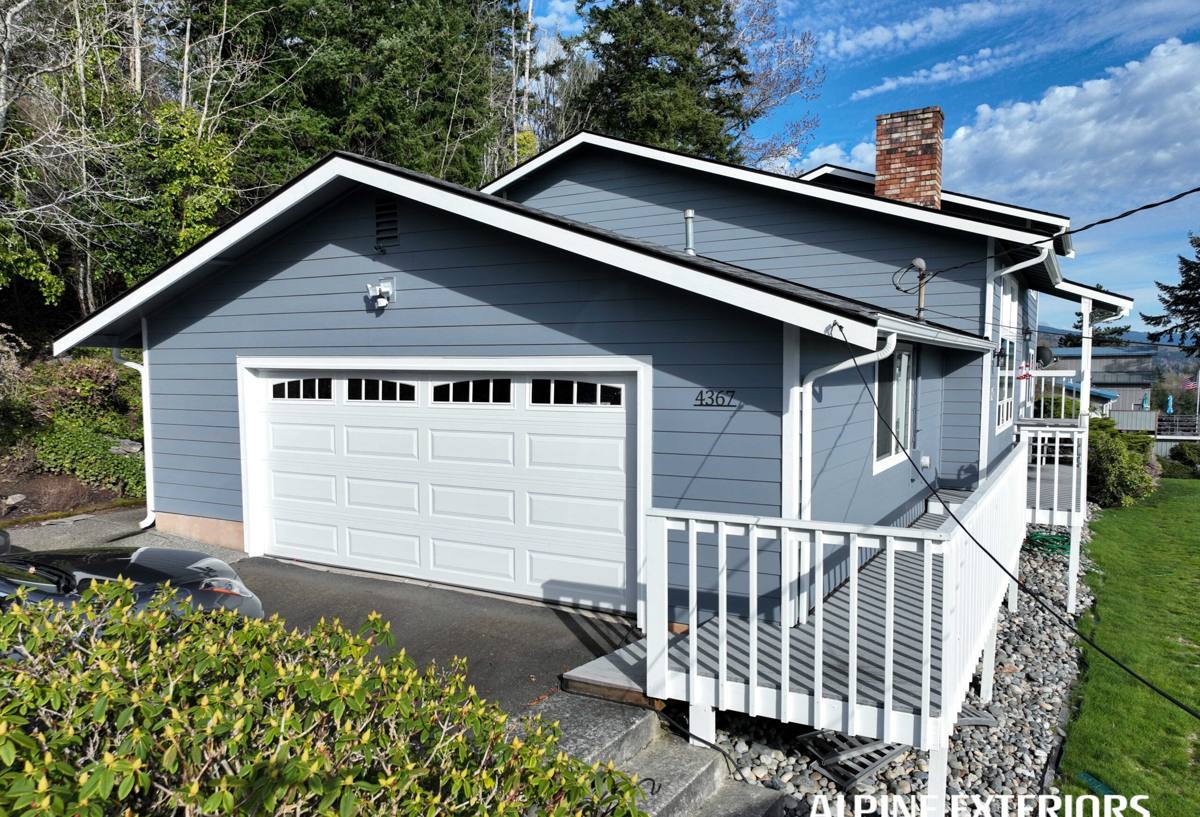
What "Correct" Deck Replacement Looks Like Here
A deck replacement done right for this area isn't just about swapping old boards for new ones. It starts underneath, with the structural framing, and works outward. Here's what we consider non-negotiable for a deck that's actually built to handle Chuckanut's conditions:
- Full inspection and replacement of any framing member showing rot, not just the ones that are obviously failing
- Corrosion-resistant fasteners and structural hardware rated for coastal or wet-climate exposure
- Proper flashing where the deck ledger meets the house, so water is directed away from the wall framing instead of into it
- Adequate ventilation and drainage under the deck so moisture doesn't sit trapped against joists
- Decking material chosen deliberately for moss resistance and low maintenance, not just appearance
- Railing and stair hardware that matches the corrosion resistance of the rest of the structure
Skipping any one of these is how you end up with a deck that looks great for a season or two and then starts failing again in the exact same spots as the old one.
Choosing the Right Decking Material for Edison's Climate
Wood vs. Composite vs. PVC
There's no single "best" decking material for every home, but there is a best material for your priorities, budget, and how much upkeep you're willing to do. Here's how the common options actually perform in a salt-air, high-moisture, moss-prone setting:
| Material | Moss & Moisture Behavior | Maintenance | Typical Lifespan Here |
|---|---|---|---|
| Pressure-treated wood | Absorbs moisture readily; needs regular sealing to resist moss and rot | Annual cleaning and re-sealing | 10-15 years with upkeep |
| Cedar | Naturally rot-resistant but still needs finish maintenance in shaded, damp spots | Periodic staining/sealing | 15-20 years with upkeep |
| Composite decking | Doesn't absorb water like wood, but surface can still host moss/algae without occasional cleaning | Low — occasional wash | 25+ years |
| PVC/capped polymer | Best resistance to moisture intrusion; smooth cap sheds algae growth more easily | Lowest — wash as needed | 25-30+ years |
We don't push one product on every homeowner. A cedar deck maintained properly can look better and last longer than a neglected composite deck. What matters is being honest about how much maintenance you actually want to do, because in this climate, "low maintenance" claims only hold up if the material and the installation details both back it up.
Hardware and Fasteners Matter More Than Most Homeowners Expect
We've seen decks with perfectly good boards fail structurally because the fasteners or joist hangers underneath corroded away in salt air. Standard hardware that's fine 30 miles inland can start pitting and weakening within a few years this close to the water. We spec hardware rated for coastal exposure on every replacement, even when it costs a little more up front — replacing hardware is cheap compared to replacing a deck that collapses because a hanger let go.
Our Deck Replacement Process
1. On-Site Assessment
We start by getting under the deck, not just walking on top of it. That means checking ledger board attachment, joist condition, post bases, and any areas where water has clearly been pooling or draining poorly. This is also when we look for the moss patterns that tell us where drainage or airflow has been a chronic problem.
2. Honest Scope and Straightforward Pricing
We tell you what actually needs to be replaced versus what's salvageable, and we explain why. If the framing is sound and only the decking surface has failed, we say so. If the ledger flashing was never done correctly and water has been getting into the house framing, we tell you that too, because it changes the scope.
3. Demolition and Structural Repair
Old decking, damaged framing, and corroded hardware come out. We correct any drainage or ventilation issues we found during assessment before a single new board goes down — building on top of an unresolved moisture problem just guarantees a repeat failure.
4. Installation
New framing, flashing, decking, and railing go in to spec, with attention to the small details — proper board spacing for drainage and expansion, correct fastener patterns, and hardware that matches the exposure level of the site.
5. Walkthrough
We walk the finished deck with you, point out what maintenance (if any) the chosen material needs, and make sure you know what a healthy deck should look like going forward so problems get caught early next time.
Signs Your Edison Deck May Need Replacement, Not Repair
Not every deck problem means a full tear-off. But there are signs that usually point to replacement being the more honest answer than another round of patching:
- Soft, spongy, or bouncy spots in multiple areas rather than one isolated board
- Visible rust staining around fasteners or hardware
- Persistent moss or dark staining that returns quickly after cleaning
- A ledger board that's separating slightly from the house or shows water staining on the siding above it
- Railing posts that flex or feel loose at the base
- A deck original to a home more than 20 years old that has never had structural hardware upgraded
If you're only seeing one or two of these and the framing underneath tests solid, targeted repair may genuinely be the more sensible option, and we'll tell you that instead of selling a full replacement you don't need.
Why Local Experience in Edison Specifically Matters
Edison isn't a generic Whatcom County address — the combination of proximity to tidal air, tree cover, and rainfall patterns here creates a fairly specific set of stresses on outdoor structures. A crew that primarily works drier, more inland parts of the county may default to specs and materials that are perfectly fine there but under-built for conditions closer to the water. We build every deck replacement in this area assuming salt exposure, extended dampness, and moss pressure as the baseline, not the exception.
That shows up in small decisions that add up: which hardware grade we default to, how much we prioritize drainage and airflow in the framing layout, and which decking finishes we recommend versus steer homeowners away from. None of that is guesswork — it's just building for the actual climate the deck has to survive in.
What to Expect Cost-Wise
Deck replacement costs vary widely based on size, material choice, height off the ground, stairs, railing style, and how much structural repair is needed underneath. Pressure-treated wood decks typically sit at the lower end of the cost range, cedar in the middle, and composite or PVC decking at the higher end — though composite and PVC often even out over time due to lower maintenance costs. Rather than quote a number that doesn't reflect your specific deck, we provide a detailed, itemized estimate after seeing the site, so you know exactly what you're paying for and why.
Get a Straightforward Estimate
If your deck is showing its age — or you just want an honest opinion on whether repair or replacement makes more sense for your home in Edison — we're happy to take a look. There's no pressure and no obligation, just a clear assessment and a straightforward estimate using the form below.