 Chuckanut Exterior
 Siding Replacement for Edison-Area Homes
Edison sits in the Chuckanut area, a part of Whatcom County where the exterior of a house works harder than it does almost anywhere else in the state. We do siding replacement here on a regular basis, and the jobs all share a common thread: homes that look fine from the street but are quietly losing the fight against salt air, driving rain, and a moss season that barely takes a break. This page is about that one job — replacing siding on an Edison-area home — and what actually needs to happen for the new siding to hold up rather than just look good for a season or two.
We install James Hardie fiber cement siding exclusively. For homes exposed to this much sustained moisture and salt, it's the material we stand behind without reservation, and we'll explain exactly why below.
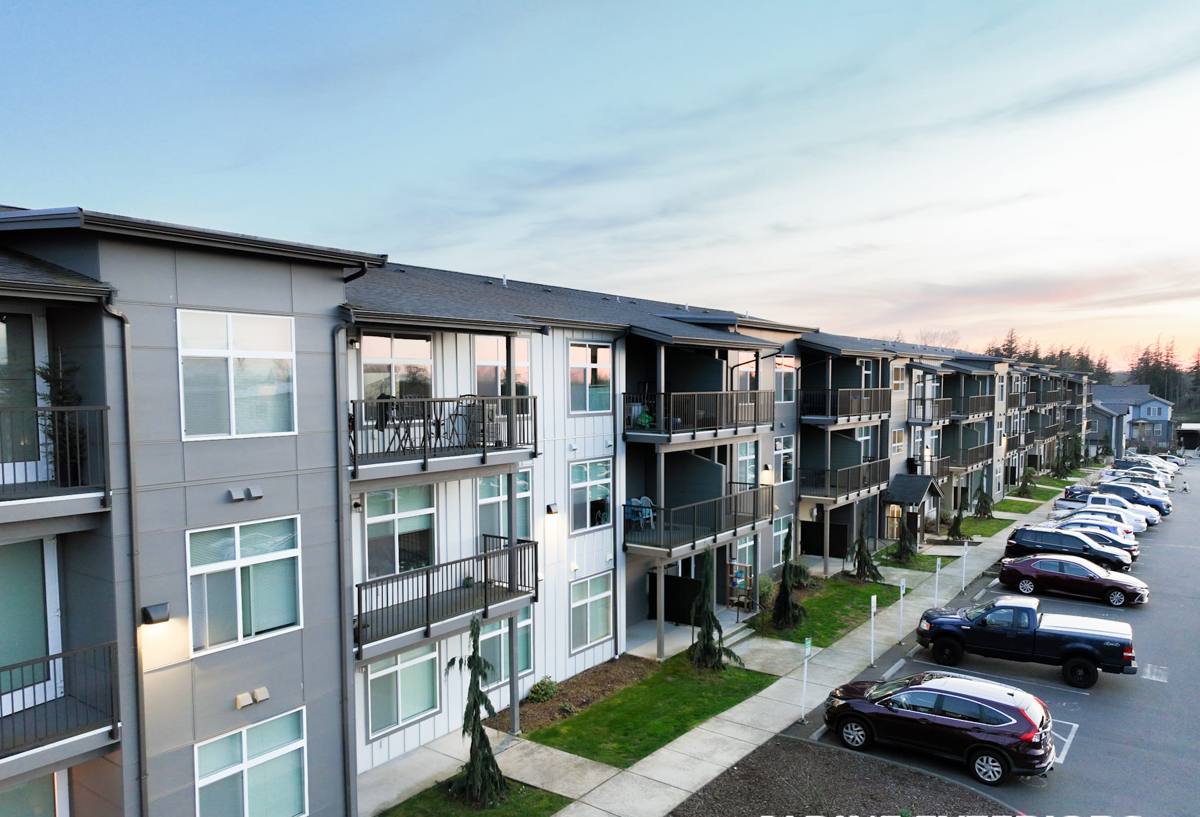
What the Chuckanut-Area Climate Does to Siding
Salt Air Off the Water
Being this close to open water means the air itself carries salt inland across the whole area, not just on the waterfront lots. That salt exposure works slowly but constantly — it accelerates corrosion at fasteners, flashing, and any lower-grade trim hardware, and it speeds the breakdown of finishes that aren't built to handle it. A siding product that performs fine in a drier inland town can start showing rust streaks and failing hardware years earlier out here.
Driving Rain and Wind
Storms in this part of the county rarely drop rain straight down. Wind pushes it sideways into south- and west-facing walls, forcing water into seams, joints, and anywhere flashing is doing less than it should. That sideways load is the detail that separates siding that holds up for decades from siding that starts letting water in behind the cladding within a few wet seasons, regardless of what the material itself is rated to handle.
A Long Moss Season
Mild temperatures and near-constant moisture add up to a moss and mildew season that can run most of the year on shaded and north-facing walls in the Edison area. It shows up first as staining or green growth, but it's more than cosmetic — sustained organic growth holds moisture directly against a wall assembly, which is exactly the condition that leads to hidden rot if it isn't addressed.
Why James Hardie Is What We Install Here
We narrowed our siding offering down to one system after watching, job after job, which materials actually held up under this specific combination of salt, wind-driven rain, and moss pressure — and which ones quietly became a maintenance burden for the homeowner a few years in.
- Non-combustible core: Fiber cement doesn't feed a fire the way wood-based or wood-derived siding products can, which matters for both household safety and insurance underwriting.
- Factory-applied ColorPlus finish: The color coat is baked on under controlled factory conditions rather than brushed on in the field, so it resists fading, chalking, and moisture intrusion far longer than a site-applied paint job exposed to salt air.
- Climate-engineered HZ product lines: Hardie builds different formulations for different climate zones, including versions engineered for sustained moisture exposure — a real match for this stretch of Whatcom County.
- Dimensional stability: Fiber cement doesn't swell, cup, or warp the way engineered wood siding can after repeated wet-season moisture cycles.
- A strong transferable warranty: Hardie backs its products with a solid warranty structure, provided the installation follows spec, giving homeowners real protection rather than a marketing claim.
We don't install LP SmartSide, vinyl siding, Cemplank, Allura, primed spruce, or cedar. Each has a place in the broader market, and plenty of homeowners elsewhere are satisfied with them. Our call is a professional one specific to this climate: with the amount of salt exposure and wind-driven rain an Edison-area home deals with, we'd rather install one system we trust completely than offer a cheaper option that shifts maintenance risk onto the homeowner down the line.
What a Correct Siding Replacement Actually Involves
Tear-Off and Substrate Check
Once the old siding comes off, we check the sheathing underneath for rot or soft spots before anything new goes up. Covering damaged sheathing with new siding just hides a problem that keeps getting worse behind the wall — far better to find it now than have it surface again in a few years, after the new siding is already up.
Weather Barrier and Flashing Detail
Most siding failures in this area trace back to water getting behind the cladding rather than through it. That means the house wrap, window flashing, and every wall penetration get careful attention at this stage. It's the step that's easiest to rush and hardest to inspect once the new siding is up, so we treat it as non-negotiable rather than an upgrade.
Installation to Manufacturer Spec
James Hardie's warranty depends on installation following their published specifications — correct fastener spacing and type, proper clearance above grade and roofline, and correct field-cutting and joint-sealing practices. We install to that spec as the baseline for every job, not as something a homeowner has to ask for.
Finish, Caulk, and Final Details
Trim, caulking, and touch-up paint at cut edges all matter more here than in a drier climate, since any gap is an opening for wind-driven rain to exploit. We finish these details the same way we'd want them done on our own homes, because in this climate, sloppy trim work shows up as a problem within a year or two, not a decade.
Choosing the Right Hardie Product for an Edison-Area Home
| Product Line | Best Use | Why It Fits This Area |
|---|---|---|
| HardiePlank lap siding | Most standard single-family homes | Traditional lap profile sheds wind-driven rain effectively when installed with proper overlap and flashing |
| HardiePanel vertical siding | Accent walls, gables, and modern designs | Clean vertical lines that pair well with the farmhouse and cottage styles common in this part of the county |
| HardieShingle siding | Craftsman-style homes and accent sections | Textured, shingle-style look without the moisture absorption and upkeep of real wood shingle |
| HardieTrim boards | Corners, window and door casing, fascia | Factory-finished trim resists the same salt and moisture exposure as the field siding around it |
Color and profile come down to the individual home, but the underlying product family and installation approach stay consistent — we spec what fits an Edison-area property's actual exposure rather than defaulting to whatever's easiest to install.
Signs an Edison-Area Home Needs Siding Replacement
- Moss or dark staining that returns quickly after cleaning, especially on shaded or north-facing walls
- Soft or spongy siding, particularly low on the wall or around window and door trim
- Peeling paint or visible warping, most common on older wood-based or engineered wood siding
- Cracked, buckled, or missing panels after a windstorm
- Rust staining running down from fasteners or trim hardware
- Musty odors or staining on interior walls that back up to exterior siding
- Siding older than 20-25 years with no documented replacement history
None of these automatically mean a full replacement is the answer, but each is worth a professional look before another wet season adds to the damage rather than after.
What Affects Siding Replacement Cost in the Edison Area
| Factor | What It Affects | Why It Matters Here |
|---|---|---|
| Tear-off vs. overlay | Labor scope and substrate access | Tear-off reveals hidden moisture and rot damage that's common under older siding in this climate |
| Substrate condition | Repair costs before new siding goes on | Long-term trapped moisture from salt air and driving rain can rot sheathing and framing behind the wall |
| Wind exposure by wall orientation | Fastening pattern and flashing detail | South- and west-facing walls take the brunt of wind-driven rain and need more careful detailing |
| Trim and detail complexity | Labor time and material | More corners, windows, and rooflines mean more joints and flashing points that have to be done right |
| Site access | Labor time and staging needs | Rural and wooded lots in this area can have longer driveways or tighter staging than an in-town property |
Exact costs depend on the specific property and its exposure, which is why we walk the home in person before giving a real number instead of quoting off a generic price sheet.
Why a Crew That Already Works the Edison Area Matters
A crew that works this part of Whatcom County regularly understands how salt air, wind-driven rain, and a long moss season behave on real homes here over a full year — not just how a product performs on a spec sheet. That experience shapes practical decisions on install day: which wall orientations on a given lot stay wet the longest, where extra flashing attention actually pays off, and which fastening and sealing details are worth the added time so a homeowner isn't dealing with a callback after the next winter storm. It also means that when a warranty question comes up years later, it's a call to a crew still working in the same area, not a company that quoted the job once and moved on.
If your Edison-area home needs new siding, or you'd like an honest second opinion on what's happening behind an aging wall, we're glad to take a look. Reach out using the form below to schedule a free, no-pressure estimate.