 Chuckanut Exterior
 Window Replacement Built for Edison's Coastal Conditions
Edison sits close enough to the water that homes here take a different kind of weathering than houses just a few miles inland. Salt-laden air off the bay, long stretches of driving rain, and shaded, moisture-holding tree cover all work on window frames, seals, and glazing in ways that show up as premature fogging, swollen sashes, and corroded hardware years before a homeowner expects to be shopping for replacements. If you've noticed drafts around the frames, condensation between the panes, or windows that stick every fall when the rain sets in, the cause usually traces back to this specific combination of exposures rather than simple old age.
We work on homes throughout the Chuckanut area, including Edison, and we specify and install windows differently here than we would on a dry, sheltered lot. That's not marketing — it's a practical response to what actually fails first in this climate: seals, cladding, and fasteners exposed to salt and standing moisture.
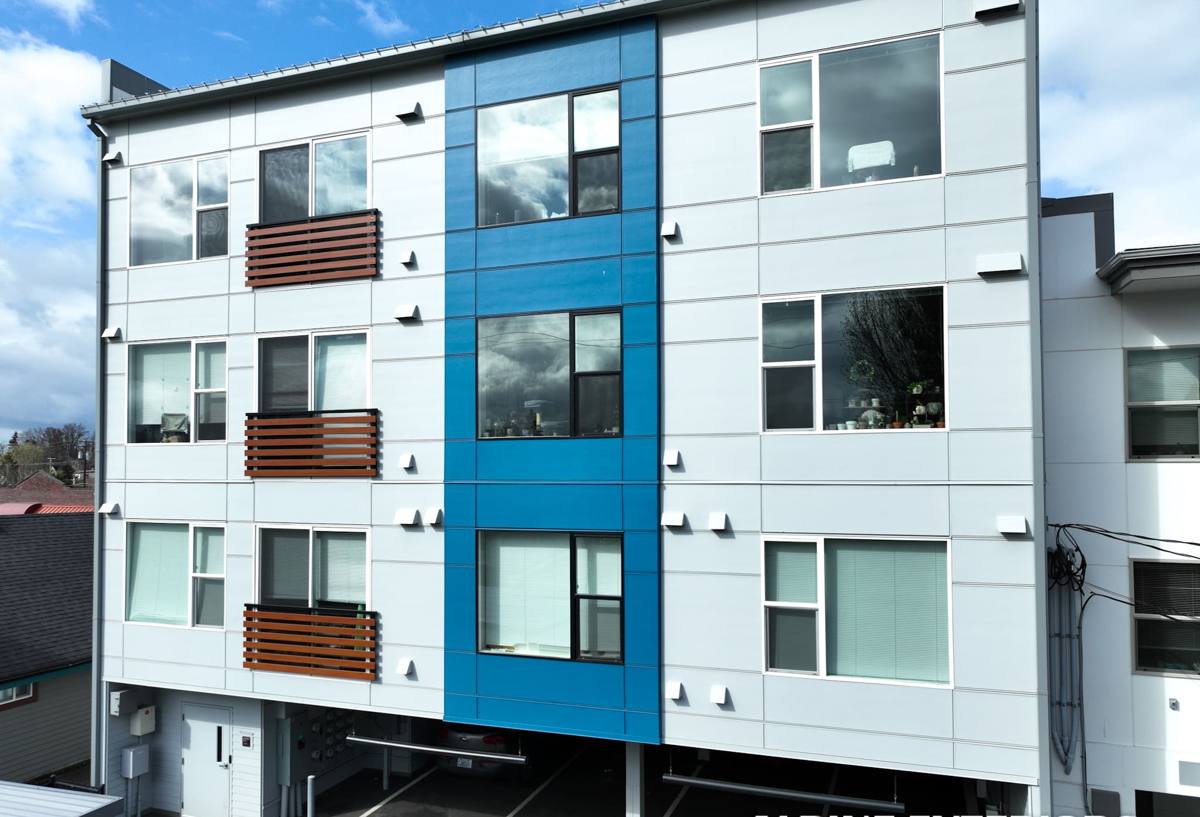
What This Climate Actually Does to Windows
Salt air and corrosion
Airborne salt is conductive and hygroscopic — it holds moisture against metal and accelerates corrosion on hardware, hinges, and unprotected fasteners. On homes near the bay, we regularly see pitted locks, seized cranks, and rusted screws on windows that are otherwise structurally sound. Once hardware corrodes, the sash no longer seats and compresses the seal correctly, and that's when air and water start finding their way in.
Driving rain and wind-driven moisture
Storms here don't just fall straight down — sustained wind pushes rain sideways into wall assemblies, which puts far more stress on flashing and sealant joints than a calm rain ever would. Wood-frame windows without a properly lapped weather-resistive barrier and sill flashing are the ones that develop hidden rot behind the trim, often well before any staining is visible on the interior.
Moss, shade, and standing moisture
Tree cover and damp shade extend the season where wood trim and sills stay wet, which is exactly what moss, mildew, and slow rot need to take hold. On older wood-frame windows, this shows up as soft or spongy wood at the bottom corners of the sash and sill — the first place water collects and the last place it dries out.
Signs an Edison Home Is Overdue for Window Replacement
- Fog or haze between panes of double-glazed windows (a failed seal, not a cleaning issue)
- Visible corrosion or seized hardware on locks, cranks, or hinges
- Soft, discolored, or spongy wood at the sill or bottom sash corners
- Persistent drafts you can feel with a hand near the frame on a windy day
- Paint that blisters or peels repeatedly at the same window despite repainting
- Visible moss or dark staining building up on the exterior sill or lower sash
- Noticeably higher heating bills compared to similarly sized rooms elsewhere in the house
- Windows that are difficult to open, close, or latch fully
Any one of these on its own might just need a repair. Several together, especially on the same wall facing prevailing weather, usually means replacement is the more honest recommendation than another round of caulk and paint.
What a Correct Window Replacement Job Actually Involves
Removal and hidden damage inspection
Pulling the old window is the point where we find out what's really going on behind the trim. In this climate, it's common to find soft sheathing, rusted nailing flanges, or a weather barrier that was never lapped correctly at the sill. A correct installation addresses whatever is found here before the new unit ever goes in — installing a new window over damaged framing just repeats the same failure on a faster timeline.
Flashing and the weather barrier
The sill pan and flashing are what actually keep wind-driven rain out of the wall, not the window unit itself. We integrate sill pan flashing, properly lapped jamb and head flashing, and tie it into the existing weather-resistive barrier so water sheds down and out rather than pooling at the sill or getting behind the cladding.
Insulation and air sealing
Gaps around a new frame need to be filled with a low-expansion, flexible insulating foam or backer rod and sealant — not packed with fiberglass or over-filled with rigid foam, both of which trap moisture or bow the frame. Getting this step right is a big part of what actually stops the drafts homeowners are trying to solve.
Choosing hardware and cladding for salt exposure
Given the corrosion issue described above, we pay attention to hardware finish and cladding material on homes closer to the water, favoring components with better resistance to salt exposure over ones chosen purely on lowest cost.
Choosing the Right Window for an Edison Home
There's no single "best" window material — the right choice depends on sun exposure, proximity to the water, and how much upkeep a homeowner wants to take on. Here's how the common options actually compare for this climate:
| Frame Material | Salt Air / Moisture Resistance | Maintenance | Notes for Edison-Area Homes |
|---|---|---|---|
| Vinyl | Good — won't corrode or rot | Low | Solid value option; check weld quality on corners for long-term seal performance |
| Fiberglass | Very good — dimensionally stable, resists moisture | Low | Handles temperature and moisture swings well; often our default recommendation near the water |
| Wood (unclad) | Poor without diligent upkeep | High | Beautiful, but the maintenance burden in driving rain and shade is real and ongoing |
| Aluminum-clad wood | Good exterior protection, interior wood still needs care | Moderate | Cladding must be fully sealed at joints or moisture gets trapped behind it |
We're generally cautious about recommending unclad wood exteriors on homes with heavy shade or close water exposure — not because wood is a bad material, but because the maintenance schedule needed to keep it performing well here is more than most homeowners want to keep up with. That's a maintenance-burden judgment, not a knock on any particular product.
Our Process for a Window Replacement Project
- On-site assessment — we look at every window being considered, check for hidden moisture or framing damage, and note sun and wind exposure per elevation.
- Honest scope and estimate — you get a clear breakdown of what's being replaced, what materials we're recommending and why, and a written price before any work starts.
- Removal and structural check — old units come out carefully so we can inspect sheathing, framing, and existing flashing before anything new goes in.
- Flashing and weather barrier integration — sill pans and flashing are installed and tied into the existing barrier correctly, not just caulked over.
- Window installation and sealing — units are set plumb and square, shimmed correctly, insulated, and sealed with materials suited to this climate.
- Final walkthrough — we test operation, locks, and weatherseal with you before calling the job done.
Why Local Experience in the Chuckanut Area Matters
A lot of window problems in this region trace back to installations done by crews unfamiliar with what salt air and driving rain do to a wall assembly over time. Flashing details that work fine in a drier, more sheltered part of the state don't hold up here. Working regularly in Edison and the surrounding Chuckanut area, Whatcom County means we've already seen how specific elevations and lots handle weather exposure, and we bring that into how we scope and flash every job — not as a generic checklist, but based on what actually happens to homes in this specific stretch of coastline.
What Affects the Cost of Window Replacement
| Factor | Why It Matters |
|---|---|
| Number and size of windows | Larger openings and higher counts increase material and labor cost proportionally |
| Frame material chosen | Vinyl, fiberglass, and clad-wood options carry different material costs and lead times |
| Hidden damage found at removal | Rotted sheathing or framing repair is additional scope, priced once it's actually found |
| Flashing and weather barrier work | Full flashing integration takes more labor than a simple swap, but it's what prevents repeat failures |
| Access and site conditions | Second-story windows, tight lots, or difficult staging can add time |
We'd rather give you a broad, honest range up front and firm numbers after a real on-site look than quote a low number over the phone and add surprises later.
Ready to Talk About Your Windows?
If your windows in Edison are showing fogging, corrosion, drafts, or soft wood at the sill, it's worth having someone look before another wet winter makes the damage worse. We offer a free, no-pressure estimate — use the form below to get started, and we'll walk the property with you and give you an honest read on what your windows actually need.