 Chuckanut Exterior
 Decking Built for What Fairhaven Actually Deals With
Fairhaven sits close enough to the water that salt air, wind-driven rain, and a long stretch of shaded, damp months are just part of owning a home here. A deck in this pocket of Chuckanut doesn't fail the way a deck in a dry inland climate fails. It doesn't usually crack from sun exposure first — it goes soft at the ledger, grows a slick film of moss along the north side, and lets moisture creep into fastener holes and board gaps long before the surface looks obviously bad. Composite decking, installed correctly for this specific climate, is one of the more sensible ways to get ahead of that.
This page is about one job in one neighborhood: composite deck installation and repair for Fairhaven homes, and what actually matters when the marine layer, the rain, and the moss are working against the deck year-round.
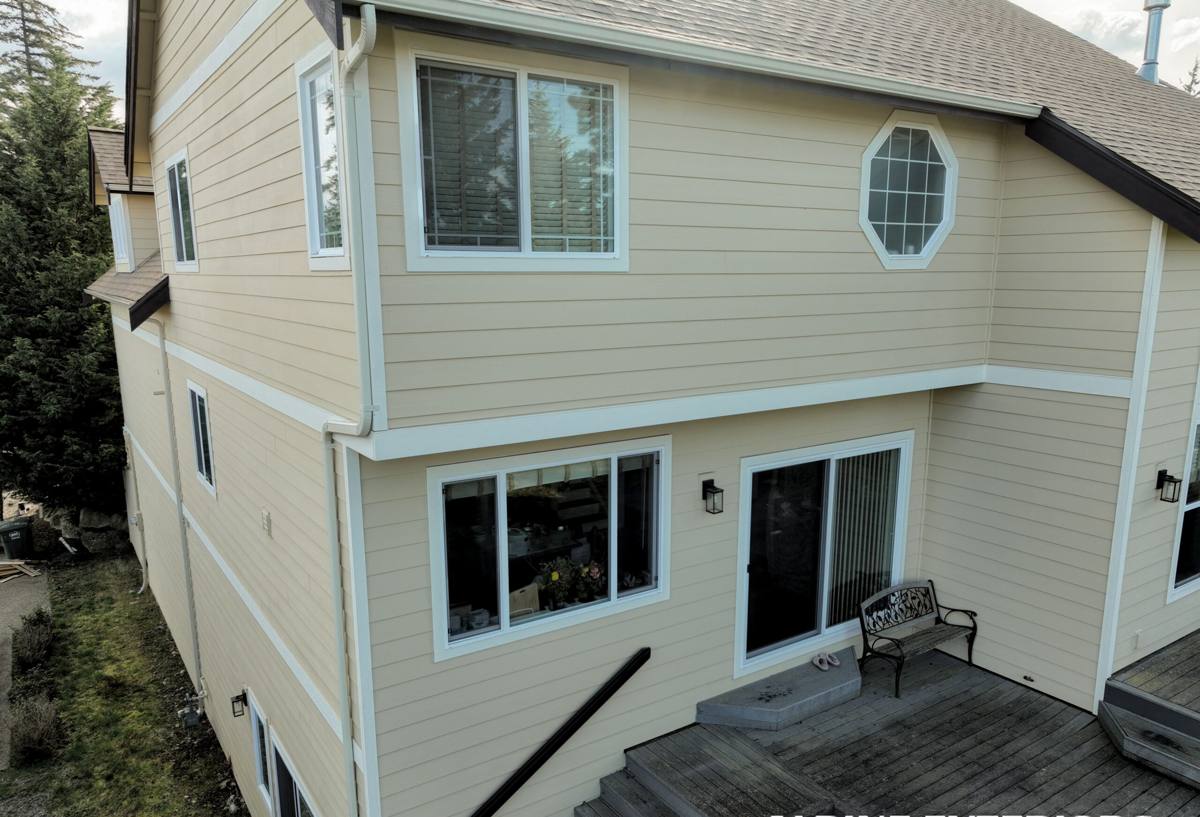
What Salt Air, Rain, and Moss Actually Do to a Deck
None of these three factors act alone — they compound each other, which is why decks near the water in Whatcom County tend to show wear in specific, predictable places.
Salt Air and Metal Fasteners
Airborne salt accelerates corrosion on anything metal — screws, joist hangers, structural brackets, railing hardware. Once a fastener starts to corrode, it weakens, stains the surrounding material, and can eventually fail structurally. This is one of the most overlooked parts of a coastal-influenced deck build: homeowners focus on the decking material and forget that the hardware holding it together needs to match the environment.
Driving Rain and Water Intrusion
Rain that comes in sideways off the water finds every gap a calm, straight-down rain would never reach — under railing posts, into ledger connections, behind fascia boards. Over time, water that gets trapped rather than shed causes rot in the framing underneath, even if the decking surface itself is fully synthetic and water-resistant.
Moss, Algae, and Shade
Whatcom County's long wet season, combined with mature tree cover and homes shaded by neighboring structures, creates ideal conditions for moss and algae to take hold on any horizontal surface that doesn't dry out quickly. On a deck, that means slick, dark green or black growth in the board grooves, along the north-facing edge, and anywhere airflow underneath is restricted. Beyond looking bad, moss holds moisture against the board surface, which matters more with some decking materials than others.
Why Composite Decking Fits This Climate
Composite decking is made from a blend of wood fiber and recycled plastic, and on quality capped boards, that core is wrapped in a polymer shell that doesn't need staining, sealing, or annual refinishing. For a Fairhaven deck, that shell is the whole point — it doesn't absorb water the way raw wood does, it doesn't need to be sealed against salt spray, and it resists rot at the board level even when the framing underneath is doing the harder work of managing moisture.
What Composite Handles Well Here
- Resists rot and softening from prolonged dampness far better than untreated or lightly treated wood
- Doesn't require yearly staining or sealing to keep water out
- Capped boards resist moss and algae staining better than raw wood, since there's no exposed wood fiber for organic growth to root into
- Color and texture stay more consistent over time than wood exposed to salt air and UV together
Where Composite Still Needs Respect
Composite is not maintenance-free, and we don't tell homeowners it is. Moss and algae can still grow on the surface of any decking material if it stays damp and shaded long enough — composite just doesn't feed that growth the way wood fiber does, and it cleans off easier. The bigger risk with composite in a wet climate is what's underneath it: framing, ledger boards, and fasteners still need to be built and protected correctly, because the composite deck board itself was never the weak point.
What a Correct Composite Deck Install Involves in This Climate
A composite deck is only as good as the structure underneath it and the details most people never see once the project is finished. This is where a lot of installs — done fast or done by someone unfamiliar with coastal-influenced Pacific Northwest conditions — start to fall short years down the road.
Framing and Ledger Connection
The ledger board, where the deck attaches to the house, is the single most common point of hidden water damage on any deck. Correct flashing at this connection keeps rain from working its way behind the ledger and into the house framing — something that matters even more with the amount of driving rain Chuckanut gets off the water. Joists and framing lumber should be rated for exterior, damp-condition use, and all structural hardware should be corrosion-resistant, not just standard-grade.
Hidden Fasteners and Board Spacing
Most quality composite systems use hidden fastener clips rather than face screws, which keeps water from pooling in screw heads and gives the deck a cleaner look. Board spacing has to account for composite's expansion and contraction with temperature and moisture — gaps that are too tight trap water and debris; gaps that are too wide look sloppy and collect grit that feeds moss growth.
Drainage and Airflow Underneath
This is the detail that matters most in a moss-prone climate and gets skipped most often. A deck built low to the ground, over poorly graded soil, or without any ventilation underneath will stay damp longer after every rain, which is exactly what moss, algae, and framing rot need to take hold. Correct grading, joist spacing, and in some cases a drainage system underneath the deck all extend the life of both the composite surface and the structure holding it up.
Composite Decking Compared to Other Materials for This Climate
| Factor | Capped Composite | Wood (cedar / pressure-treated) | Uncapped / older-generation composite |
|---|---|---|---|
| Upfront material cost | Higher than wood, generally the largest single cost in the project | Lowest upfront cost | Mid-range, often less than capped composite |
| Moisture resistance | Strong — polymer shell sheds water | Depends on maintenance; wood absorbs and swells over time | Weaker — exposed wood fiber can still absorb moisture |
| Moss / algae resistance on the surface | Good — smooth cap resists organic growth taking root | Poor without regular cleaning and sealing | Fair — more prone to surface staining than capped boards |
| Ongoing maintenance | Occasional cleaning, no staining or sealing needed | Annual or biannual staining/sealing to hold up in this climate | Periodic cleaning; more prone to fading and staining over years |
| Typical lifespan expectation | Long-term, often backed by manufacturer warranty | Shorter without diligent upkeep, especially near salt air | Moderate — shorter than modern capped composite |
Wood isn't a bad material — it's a different set of trade-offs. It costs less upfront but demands consistent upkeep to hold up against Whatcom County's wet season and salt air, and skipping that upkeep is exactly how wood decks near the water end up needing early repair. Composite shifts the cost toward the initial install and away from year-after-year maintenance, which is why we recommend it for most Fairhaven homes that want a deck they're not constantly re-sealing.
Our Process for Fairhaven Deck Projects
- On-site assessment. We look at sun and shade exposure, existing framing condition if this is a replacement, drainage around the site, and how exposed the location is to wind and rain.
- Material and layout plan. We talk through composite board options, color, and layout based on how the space will actually be used, not just what looks good in a sample.
- Framing and structural work. Ledger flashing, joist layout, corrosion-resistant hardware, and proper grading or drainage underneath are handled before a single composite board goes down.
- Installation. Boards are installed with correct spacing and hidden fasteners where the system allows, with attention to railing posts, stair connections, and edge trim — the spots most prone to water intrusion.
- Final walkthrough. We go over care basics with the homeowner and point out anything worth keeping an eye on given the site's specific sun, shade, and drainage conditions.
Keeping a Composite Deck Ahead of Moss and Salt Air
Composite cuts the maintenance load significantly, but a deck in this climate still benefits from a bit of seasonal attention. None of this is complicated — it's mostly about not letting moisture and organic debris sit in one place too long.
- Sweep leaves, needles, and debris out of board grooves regularly, especially in fall and through the wet season
- Rinse the deck periodically to keep salt residue and grime from building up on the surface
- Clean shaded or north-facing areas more often, since they dry out slower and are more prone to moss and algae
- Keep gutters and downspouts near the deck clear so runoff isn't draining directly onto or under the decking
- Check railing posts and stair connections once a year for any looseness, which can signal a fastener or framing issue underneath
- Trim back overhanging branches or vegetation that keeps sections of the deck shaded and damp longer than the rest
Why a Crew That Already Works Fairhaven Matters
Composite decking is a forgiving material, but the framing, flashing, drainage, and fastener choices underneath it are where coastal-influenced Pacific Northwest jobs succeed or quietly fail over the following years. A crew that regularly works this part of Chuckanut has already seen which spots on a Fairhaven property tend to hold moisture, which orientations grow moss fastest, and what level of hardware and flashing actually holds up against salt air and driving rain rather than just meeting a minimum code requirement. That local pattern recognition is hard to replace with a generic install, no matter how good the composite boards themselves are.
If you're planning a new composite deck or replacing an aging one in Fairhaven, we're happy to take a look at your site and talk through what it actually needs — no pressure, no upsell, just a straight assessment. Reach out using the form below for a free estimate.