 Chuckanut Exterior
 Why Fairhaven Homes Wear Out Their Siding Faster
Fairhaven sits close enough to open water that salt-laden air is a constant, low-grade presence on every exterior surface in the neighborhood. Combine that with Whatcom County's long wet season — months of driving rain off the water, followed by weeks of shade, condensation, and moss growth on north- and west-facing walls — and you get a climate that is genuinely harder on siding than most of the country ever deals with. Homes just a few miles inland in Chuckanut don't take quite the same beating, but Fairhaven's proximity to the bay means salt spray, wind-driven rain, and persistent dampness all show up sooner and hit harder here.
None of that is a reason to panic about your siding. It's a reason to be deliberate about what you replace it with and how the job gets done. Siding that's a poor match for this environment doesn't fail dramatically — it fails slowly, in ways that are easy to miss until the damage is expensive: soft trim boards, bubbling paint, dark streaking that won't scrub off, and eventually rot sheathing hiding behind a wall that still looks fine from the street.
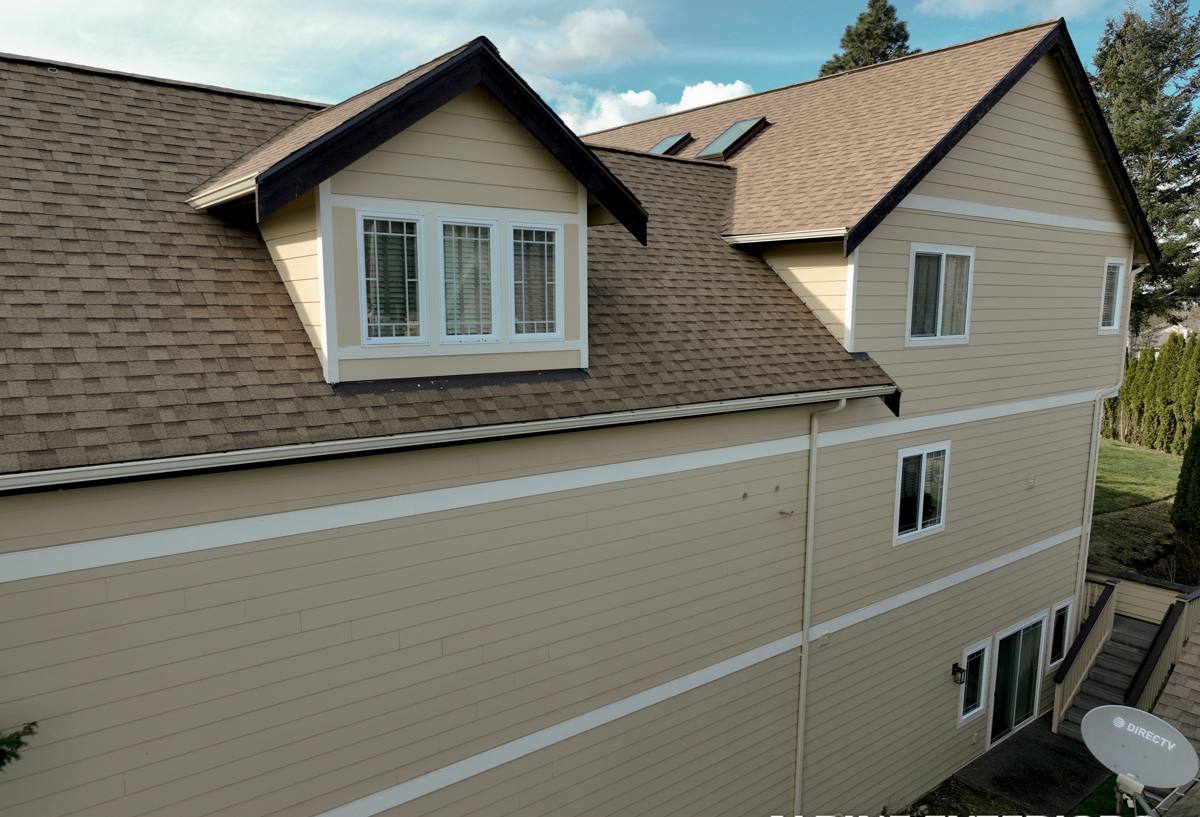
What Salt Air, Rain, and Moss Actually Do to Siding
Salt Air
Airborne salt is corrosive to fasteners and metal trim, and it's hygroscopic — meaning it pulls moisture out of the air and holds it against whatever surface it lands on. On wood-based or wood-look siding, that means the material stays damp longer after every storm, even on days when it isn't raining. Over years, that constant low-level moisture is what breaks down paint film and softens fiber at the edges of boards.
Driving Rain
Rain that comes in sideways off the water doesn't just wet the face of the siding — it drives water up under laps, into seams, and behind poorly sealed trim. A siding system's ability to shed that water, and a house's water-resistive barrier behind it, matter more here than they would on a home in a drier, calmer part of the state.
Moss and Sustained Shade
Shaded walls in Fairhaven — especially those facing north or tucked behind mature trees — stay damp for days after a storm. That's exactly the environment moss and algae need to take hold. On some siding materials that's a cosmetic problem you pressure-wash away. On others, sustained organic growth traps moisture against the surface and accelerates the very deterioration that got you in trouble in the first place.
Signs Your Fairhaven Home Needs Siding Replacement, Not Just Repair
- Soft or spongy spots when you press on the siding, especially near the bottom courses and around windows
- Paint that's bubbling, peeling, or that you're repainting more often than every 5-7 years
- Persistent dark streaking or green/black growth that returns quickly after cleaning
- Visible gaps, warping, or cupping in boards, particularly on the sides of the house facing prevailing wind and rain
- Rising energy bills alongside noticeably drafty rooms — often a sign moisture has degraded the wall assembly, not just the siding face
- Siding that's original to a home built more than 20-25 years ago, especially with wood or older composite products
A few soft boards on an otherwise sound wall might be a repair. Widespread softness, repeated repainting, or moisture showing up on interior walls near exterior corners usually means the siding has been letting water in for a while, and replacement is the honest recommendation.
Why We Only Install James Hardie Fiber Cement
We don't install vinyl, LP SmartSide, primed wood, cedar, or other fiber cement brands like Cemplank or Allura. That's a deliberate standard, not a marketing line, and in a climate like Fairhaven's the reasoning is straightforward.
Vinyl siding doesn't rot, but it isn't the barrier some homeowners assume it is — it's cladding, not a moisture management system, and it can warp or become brittle with age and temperature swings. Wood and primed wood products need diligent, ongoing paint maintenance to hold up against constant damp exposure, and in a salt-air environment that maintenance interval gets shorter, not longer. Other fiber cement brands aren't engineered the same way Hardie's are for this specific region — Hardie manufactures HardiePlank HZ5 specifically for the Pacific Northwest's wet climate, formulated to resist moisture-related damage better than their general-climate products.
James Hardie fiber cement is non-combustible, doesn't support the kind of organic growth that thrives on some wood-based products, and comes with a factory-applied ColorPlus finish that's baked on and warranted against fading and peeling — which matters when your siding sits a short distance from salt spray year-round. It's also backed by a strong transferable limited warranty, which carries real weight for a coastal-adjacent home that will likely change hands at some point.
How Siding Materials Compare in a Coastal-Adjacent Climate
| Factor | James Hardie Fiber Cement | Vinyl | Wood / Primed Wood |
|---|---|---|---|
| Moisture resistance | Engineered HZ5 line for wet PNW climates | Doesn't rot, but seams and expansion can let water track behind panels | Absorbs moisture; prone to swelling and rot without diligent upkeep |
| Salt air durability | Non-combustible, factory finish resists fading/peeling | Can chalk, fade, and become brittle over time | Paint film breaks down faster; frequent repainting needed |
| Moss/algae resistance | Dense composition resists sustained organic growth | Growth stays on surface, generally washable | Porous surface can hold moisture that feeds growth |
| Maintenance | Occasional wash; repaint only if not ColorPlus finish | Low, but damage often means full panel replacement | Regular repainting/resealing required |
| Fire resistance | Non-combustible material | Combustible | Combustible |
| Warranty | Strong, transferable limited warranty | Varies widely by manufacturer and grade | Typically no material warranty beyond the paint product |
What a Correct Siding Replacement Involves
Tear-Off and Inspection
Removing the old siding is when we find out what's actually happening behind it — soft sheathing, compromised house wrap, corroded flashing, or insulation that's absorbed moisture. In a climate like Fairhaven's, this step catches problems a homeowner would otherwise not discover until they were much more expensive.
Repairing the Water-Resistive Barrier
Any damaged sheathing gets replaced, and the house wrap or weather barrier gets repaired or replaced as needed before a single new board goes up. Skipping this step is one of the most common reasons a siding job looks fine for a few years and then fails from the inside out.
Flashing and Trim Detail
Given the amount of wind-driven rain this area sees, flashing around windows, doors, and roof-to-wall transitions has to be done right — proper laps, correct materials, and attention to every penetration. This is where a lot of the long-term performance of a siding job actually lives, more than the siding material itself.
Installing James Hardie to Manufacturer Spec
Correct nailing patterns, proper gaps and clearances, factory-recommended fastener spacing, and correct caulking (or intentionally leaving joints uncaulked where Hardie's specs call for it) all affect how the siding performs and whether the manufacturer's warranty stays valid. Installing Hardie "close enough" isn't the same as installing it to spec.
Final Details
Trim, corners, and any transitions to masonry or other materials get finished so water sheds away from the house rather than pooling or tracking behind the cladding.
What to Expect From Our Process
- An on-site walk-through of your Fairhaven home's specific exposure — which walls take the most wind, rain, and shade
- A written estimate that reflects the actual condition found once tear-off begins, with no surprise scope changes hidden until the invoice
- James Hardie HZ5 products selected to match the wet, coastal-adjacent conditions common throughout Chuckanut and the surrounding Whatcom County waterfront
- Attention to the underlying water-resistive barrier and flashing, not just the visible siding
- Installation carried out to James Hardie's published specifications, which is what keeps the manufacturer warranty intact
- A cleanup and final walk-through before we consider the job done
Why It Matters That We Already Work in Fairhaven
A crew that's replaced siding on homes throughout Chuckanut and the Fairhaven area already knows which walls in this kind of setting take the worst of the weather, what condition to expect behind older siding on a home this close to the water, and how to sequence a job around the region's rain patterns. That experience shows up in fewer surprises during tear-off and a finished job that's built for the specific conditions your house actually faces — not a generic install plan borrowed from a drier part of the state.
Cost Factors Worth Understanding Upfront
Every home is different, so we won't quote a number without seeing the house, but a few factors consistently move the price on Fairhaven-area siding replacement jobs:
| Factor | Why It Matters |
|---|---|
| Condition behind the old siding | Rot or moisture damage found during tear-off adds repair scope before new siding can go on |
| Home size and wall complexity | More corners, dormers, and trim detail mean more labor and material |
| Siding profile and finish selected | Lap width, texture, and ColorPlus color options carry different material costs |
| Existing flashing and barrier condition | Replacing compromised flashing or house wrap adds time but protects the investment |
| Access and site conditions | Tight lots, landscaping, or multi-story walls can affect labor time |
We'll walk through each of these with you on-site so the estimate reflects your home, not a generic average.
If your Fairhaven home's siding is showing its age or you're just planning ahead of the next wet season, we're glad to take a look and put together a free, no-pressure estimate — no obligation, just a straight answer about what your home actually needs.