 Chuckanut Exterior
 Siding That Has to Work Overtime in Edison
Homes around Edison sit close enough to the water and the open fields that the siding takes a beating most inland houses never see. Salt-laden air drifts in off the bay, rain comes in sideways more often than straight down, and the shoulder seasons bring long stretches of damp, shaded weather that never quite dries out. Siding here isn't just a cosmetic layer — it's the one material standing between that weather and the framing underneath it, every day of the year.
This page is about one job in one place: installing James Hardie fiber cement siding correctly on an Edison home. Not a general overview of siding, not a sales pitch for every product on the market — just what this climate demands, what a proper Hardie installation looks like, and why the crew doing the work matters as much as the material itself.
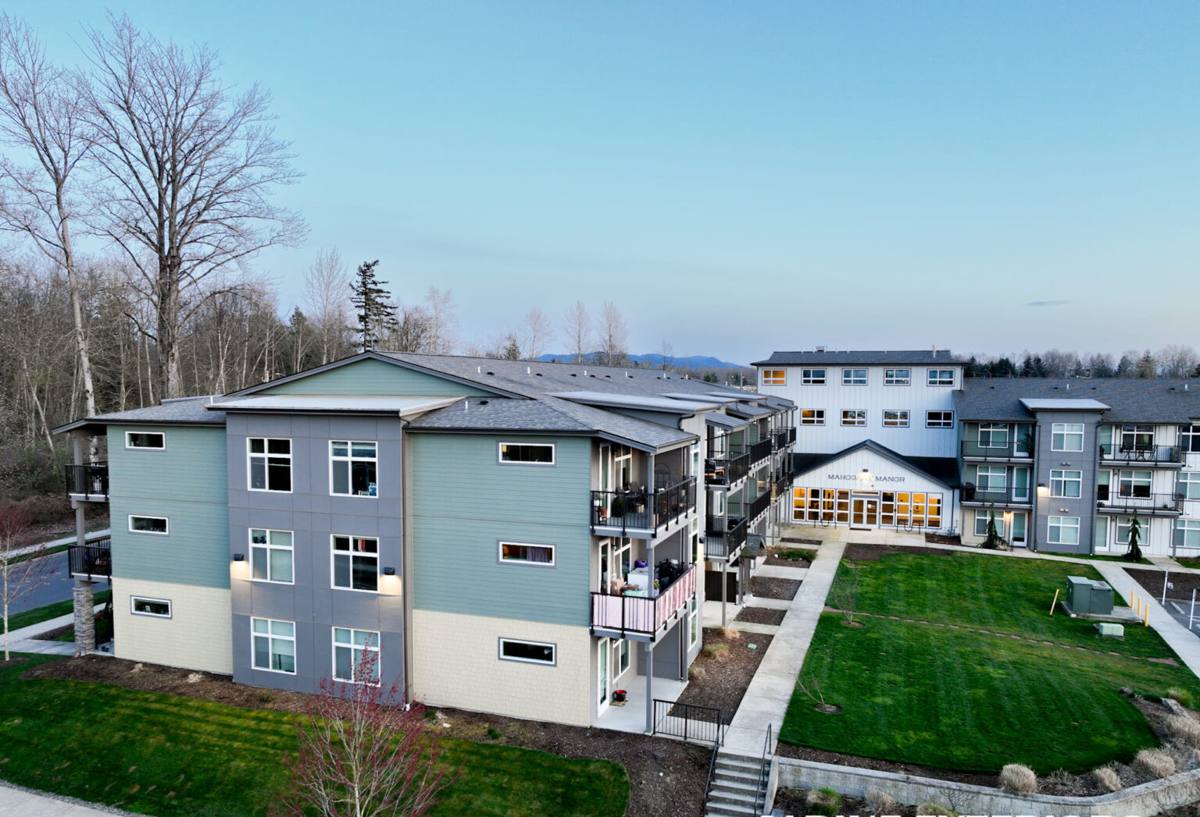
What Salt Air, Driving Rain, and Moss Season Actually Do to Siding
Salt air
Airborne salt is corrosive to metal fasteners, flashing, and trim, and it's abrasive to any coating that isn't built to shed it. Over years, salt exposure accelerates fading, chalking, and finish breakdown on siding products that rely on a field-applied paint job rather than a factory-cured finish. It also works into seams and end cuts, which is exactly where poor installation practices show up first.
Driving rain
Wind-driven rain doesn't just wet a wall — it pushes water sideways and upward, testing every lap, joint, and penetration in the siding system. A house near Chuckanut and the surrounding coastline sees more of this than a house thirty miles inland. Any gap in flashing, any panel installed too tight to the trim, any missing caulk joint becomes a path for water to get behind the cladding, where it can sit against sheathing that never gets a chance to fully dry.
Moss and algae
Shade, moisture, and mild temperatures are exactly what moss and algae need to take hold, and this part of Washington offers all three for a good chunk of the year. Siding materials that hold surface moisture — or that develop a porous, weathered surface over time — give moss and algae something to grip. Once established, that growth holds even more moisture against the wall, which compounds the problem instead of just sitting on top of it.
Why We Only Install James Hardie in This Area
We made a decision as a company to install James Hardie fiber cement exclusively — not vinyl, not LP SmartSide, not Cemplank or Allura, not primed wood. That's not a marketing angle; it's a standard we hold because of what we've seen this climate do to homes over time. Vinyl can warp and fade under UV and thermal cycling, and its seams give wind-driven rain a place to work. Wood siding needs ongoing maintenance to keep ahead of moisture and rot, which is a tough ask in a climate that rarely gives wood a long dry stretch to recover. Engineered wood products carry their own moisture-management requirements at every cut edge and joint.
James Hardie is fiber cement — sand, cement, and cellulose fiber, cured to be non-combustible and dimensionally stable. It doesn't rot, it isn't a food source for pests, and it holds up to repeated wet-dry cycling far better than wood-based products. That combination is why it's the only siding we put our name behind, and why it's the product we recommend without hedging when an Edison homeowner asks what to replace their siding with.
Choosing the Right Hardie System for an Edison Home
James Hardie makes climate-specific product lines, and picking the right one matters more in a coastal, high-moisture area than it does somewhere drier. For this region, that generally means HardiePlank lap siding or HardiePanel vertical siding built on Hardie's HZ10 formulation, which is engineered for wetter, harsher climates rather than the drier HZ5 formulation sold in the Southwest. The factory-applied ColorPlus finish is the other half of the equation — it's baked on and warrantied against fading and peeling, which matters when salt air is working against whatever finish is on the wall.
| Factor | Why It Matters in Edison |
|---|---|
| HZ10 formulation | Engineered for high-moisture, coastal-type climates rather than arid regions |
| ColorPlus factory finish | Baked-on finish resists salt-air fading and chalking better than field-applied paint |
| Panel vs. lap profile | Lap siding suits most walls; panel systems work well for accent areas and outbuildings |
| Trim and fascia matching | Consistent fiber cement trim closes off the gaps where wind-driven rain gets in |
What a Correct Installation Actually Involves
Fiber cement siding is only as good as the details underneath and around it. A large share of the siding problems we get called to look at trace back to installation shortcuts, not the product itself. On an Edison job, a correct install means:
- A proper weather-resistive barrier and drainage plane behind the siding, not just a wrap stapled on and covered over
- Correctly flashed windows, doors, and any wall penetrations, lapped in the right order so water sheds outward
- Manufacturer-specified fastener spacing and fastener type, driven flush rather than overdriven
- Proper clearance at the bottom of the wall and at grade, so siding isn't sitting in standing water or snow contact
- Correct joint and butt-seam treatment, including factory-primed cut edges recoated with matching touch-up
- Caulking only where Hardie's install guide calls for it — not as a substitute for proper flashing
None of this is exotic. It's just detail work that takes longer to do right, and it's the difference between siding that performs for decades and siding that starts showing water staining, cupping trim, or moss buildup within a few years.
How Our Process Works
- Walk-through and assessment — we look at existing siding, sheathing condition where visible, drainage around the foundation, and any problem areas specific to your exposure.
- Product and color selection — we help match the right Hardie line and ColorPlus color to the home and its sun/shade exposure.
- Written estimate — a clear scope covering removal, any sheathing repair, house wrap, siding, trim, and flashing detail.
- Installation — done to Hardie's published fastening and clearance specifications, not shortcuts to save a day of labor.
- Final walk-through — checking seams, caulking, trim reveals, and cleanup before we call the job finished.
Comparing Options Homeowners in This Area Actually Consider
Most homeowners looking at siding replacement end up weighing the same handful of materials. Here's an honest look at how they compare under the specific conditions Edison sees — salt air, wind-driven rain, and long damp stretches that favor moss.
| Material | Moisture/Salt Behavior | Moss & Algae Resistance | Maintenance Burden |
|---|---|---|---|
| James Hardie fiber cement | Dimensionally stable, doesn't rot | Factory finish resists surface buildup better than porous materials | Occasional wash; no repainting on ColorPlus finish |
| Vinyl | Can warp/distort with heat and impact; seams vulnerable to wind-driven rain | Smooth surface but seams and laps can trap grime | Low, but replacement rather than repair when damaged |
| Primed wood or cedar | Absorbs moisture; needs consistent sealing to resist rot | Susceptible to moss and mildew without upkeep | High — regular repainting/sealing required |
| Engineered wood (e.g., LP SmartSide) | Requires strict edge-sealing to manage moisture uptake | Moderate, depends on coating maintenance | Moderate — edge and joint maintenance is critical |
Living With Hardie Siding Through Moss Season
No siding material is completely maintenance-free, but Hardie asks very little of you. A gentle wash once a year or so to knock off any surface grime or early moss growth is usually enough — no repainting, no sealing, no annual inspection for soft spots. Keep gutters clear so water isn't sheeting down the wall in one concentrated path, and keep shrubs and trees trimmed back enough that walls get some airflow and sun, which does more to discourage moss than any cleaning product. Because the ColorPlus finish is factory-applied and warrantied, you're not stuck matching field-mixed paint years down the road if a section ever needs attention.
A Crew That Already Works This Coastline
Installing James Hardie correctly in Edison isn't the same job as installing it in a dry inland climate. The flashing details, clearances, and product-line choice all shift based on how much wind-driven rain and salt exposure a wall actually sees. A crew that works this stretch of Whatcom County regularly already knows where water wants to get in on a coastal-exposed wall, and builds the installation around that from the first course.
If your siding is showing moss buildup, staining, soft trim, or just isn't holding up the way it should, we're happy to take a look. Estimates are free, there's no pressure attached, and you'll get a straight answer about what your home actually needs — you can request one using the form below.