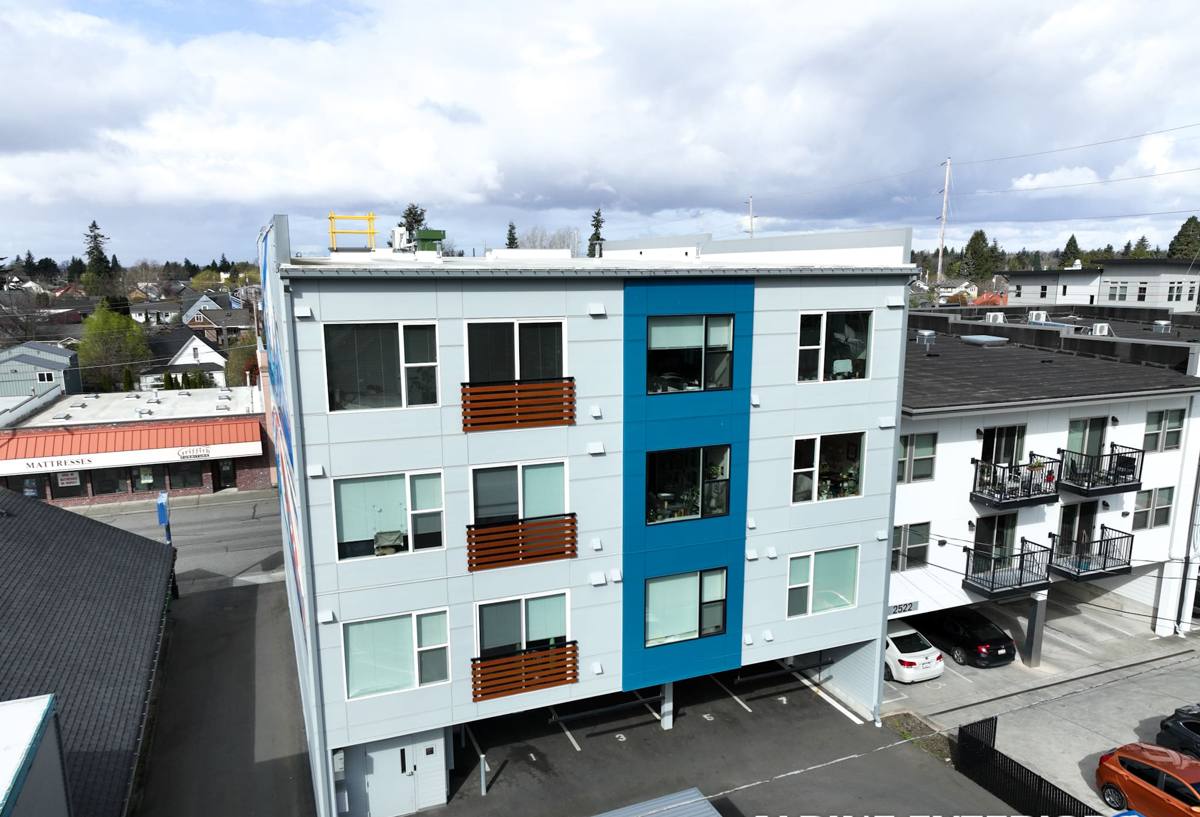
 Chuckanut Exterior
 Building New in Alger? The Windows Are Where the Envelope Either Works or Doesn't
If you're framing a new home or a major addition out in Alger, the windows are one of the few places in the building envelope where a small mistake gets buried behind siding and trim — and then shows up two or three winters later as a stain on the drywall or soft sheathing under a sill. New-construction window installation isn't just "screw the unit into the rough opening." It's a sequence of flashing, water management, and fastening steps that has to be done in the right order, every time, because there's no going back once the siding is on.
We install new-construction windows for builders and homeowners around Chuckanut and out toward Alger regularly, and the jobs we get called back to fix are almost never about the window brand — they're about a flashing detail that got skipped to save an hour on install day.
What Alger's Climate Does to a New Window Installation
Alger sits close enough to the water and the lower Skagit/Whatcom marine air that new construction here needs to be built for conditions a lot of national window details simply don't account for.
Salt Air and Marine Exposure
Homes in and around Chuckanut and Alger sit close enough to Samish Bay and the Sound that airborne salt is a real factor on hardware, fasteners, and finishes. Salt-laden air accelerates corrosion on cheap window hardware, uncoated fasteners, and lower-grade aluminum trim. On a new build, this means choosing corrosion-resistant fasteners and hardware up front rather than dealing with pitted latches and streaked frames a few years in.
Driving Rain and Wind-Driven Water
Storms coming off the water don't just drop rain straight down — they push it sideways into the wall assembly. A new-construction window relies on its nailing fin and flashing to shed that wind-driven water before it ever reaches the sheathing. If the flashing laps are backwards or the sill pan is missing, driving rain will find that gap eventually, and it usually finds it during the worst storm of the year.
Moss Season and Prolonged Dampness
Whatcom County's long wet season keeps exterior surfaces damp for months at a stretch, which is exactly the environment moss and mildew need. On a finished home this shows up as green streaking below sills and on trim; on the building envelope it means any trapped moisture behind an improperly flashed window has weeks, not days, to do damage before things dry out. New construction gives us the one chance to build in drainage and drying paths before that siding goes on.
New-Construction vs. Replacement Windows — Why the Install Method Matters
These are two different products and two different install methods, and using the wrong one on a new build is a common source of callbacks.
| Feature | New-Construction Window | Replacement (Pocket) Window |
|---|---|---|
| Installed into | Open, unfinished rough opening | Existing frame, siding intact |
| Water management | Nailing fin flashed directly to the WRB | Relies on existing frame and sealant |
| Best use | New builds, additions, full wall re-sides | Swapping units without disturbing siding |
| Long-term performance in wet climates | Best — full flashing plane control | Good, but limited by existing conditions |
For a genuine new build in Alger, new-construction (nail-fin) windows are the right product almost every time — they let us control the entire flashing plane instead of working around what's already there.
What a Correct New-Construction Window Install Involves
Flashing Sequence
Every opening gets flashed in a specific order so water always drains outward and down, never sideways into a seam: sill pan first, then the window's nailing fin, then jamb flashing, then head flashing lapped over the top so it sheds water onto the housewrap below it. Get the order backwards and you've built a funnel instead of a barrier.
Sill Pans
A sloped sill pan under the window is non-negotiable on our jobs. If bulk water ever does get past the exterior seal — a failed sealant joint, a hairline gap years down the road — the sill pan gives it a way out instead of a place to pool against the sheathing.
Housewrap and WRB Integration
The window flashing has to tie into the weather-resistive barrier correctly, with each layer lapped over the one below it, shingle-style. This is the detail that most often gets rushed on a tight framing schedule, and it's the one that matters most once the siding is closed up.
Checklist We Run on Every New-Construction Opening
- Rough opening squared, level, and sized correctly before the window arrives on site
- Sloped sill pan installed and flashed to drain outward
- Nailing fin fully flashed and integrated with the WRB in the correct shingle-lap order
- Head flashing installed last, lapped over the WRB above it
- Window shimmed and fastened per manufacturer spec — no over-driven or missing fasteners
- Unit checked for square and smooth operation before trim or siding closes it in
- Interior air-seal gap filled per code, without over-foaming and bowing the frame
- Corrosion-resistant fasteners and hardware used throughout, given the marine air
Choosing Window Materials for This Climate
Material choice matters less than installation quality, but it's not irrelevant — especially with salt air and constant moisture in the mix.
| Material | Strengths Here | Trade-offs |
|---|---|---|
| Vinyl | Affordable, low maintenance, good moisture resistance | Fewer color options, can flex on very large openings |
| Fiberglass | Very stable, holds paint well, strong long-term performance | Higher upfront cost |
| Wood-clad | Best interior appearance, warm look | Clad exterior still needs sound flashing to protect the wood core; higher maintenance if the finish is neglected |
Whatever material a homeowner chooses, our standard is the same: correct flashing first, because no window material — vinyl, fiberglass, or clad wood — performs well if water gets behind it. We'll talk through the honest trade-offs of each option for your specific project rather than push whatever's easiest to install.
Our Process for New Builds in Alger
- Plan review: We look at window schedules and rough opening sizes before framing locks them in, so nothing gets built wrong the first time.
- Site walk with the builder: We coordinate timing with the framing and WRB schedule so windows go in at the right point, not rushed ahead of the wrap or delayed past it.
- Flashing and install: Sill pan, fin, jamb, and head flashing installed in sequence on every opening, with photos documented as we go.
- Quality check: Every unit checked for square, level, plumb, and smooth operation before trim or siding closes it in.
- Final walkthrough: We review the finished openings with the homeowner or builder before moving to the next phase.
Why Hire a Crew That Already Works the Alger and Chuckanut Area
A window flashing detail that works fine in a dry inland climate can fail out here within a few wet seasons. Crews who don't regularly build in Whatcom County's marine conditions sometimes use flashing tapes, sealants, or sequencing that aren't rated for the amount of sustained moisture and wind-driven rain this area sees. We build every opening assuming it will get tested by a real Pacific storm, because out here, it will. Knowing the local wind exposure, typical rain direction, and how fast moss and mildew take hold on a damp surface changes decisions we make on site — not just the products we spec on paper.
Cost Factors for New-Construction Windows
Costs on a new build vary with the number and size of openings, window material, glass package, and how complex the flashing details are around things like bays, corners, or tall great-room walls. Rather than quote a number that doesn't fit your plans, we walk the window schedule with you and give a written estimate based on the actual openings, materials, and site conditions — no surprises once the crew is on site.
Timing Your Window Install With the Build Schedule
Window installation has a narrow window in the build sequence — after framing and WRB, before siding closes everything up. Scheduling it too early means working around incomplete wrap details; too late holds up every trade behind it. We coordinate directly with builders and general contractors on Alger and Chuckanut-area projects to hit that window without becoming the bottleneck.
If you're planning a new build or major addition in Alger and want windows installed the way this climate actually requires, we're happy to walk your plans and give you a straightforward, no-pressure estimate — just fill out the form below.