 Chuckanut Exterior
 Building Decks for the Edison Stretch of Chuckanut Country
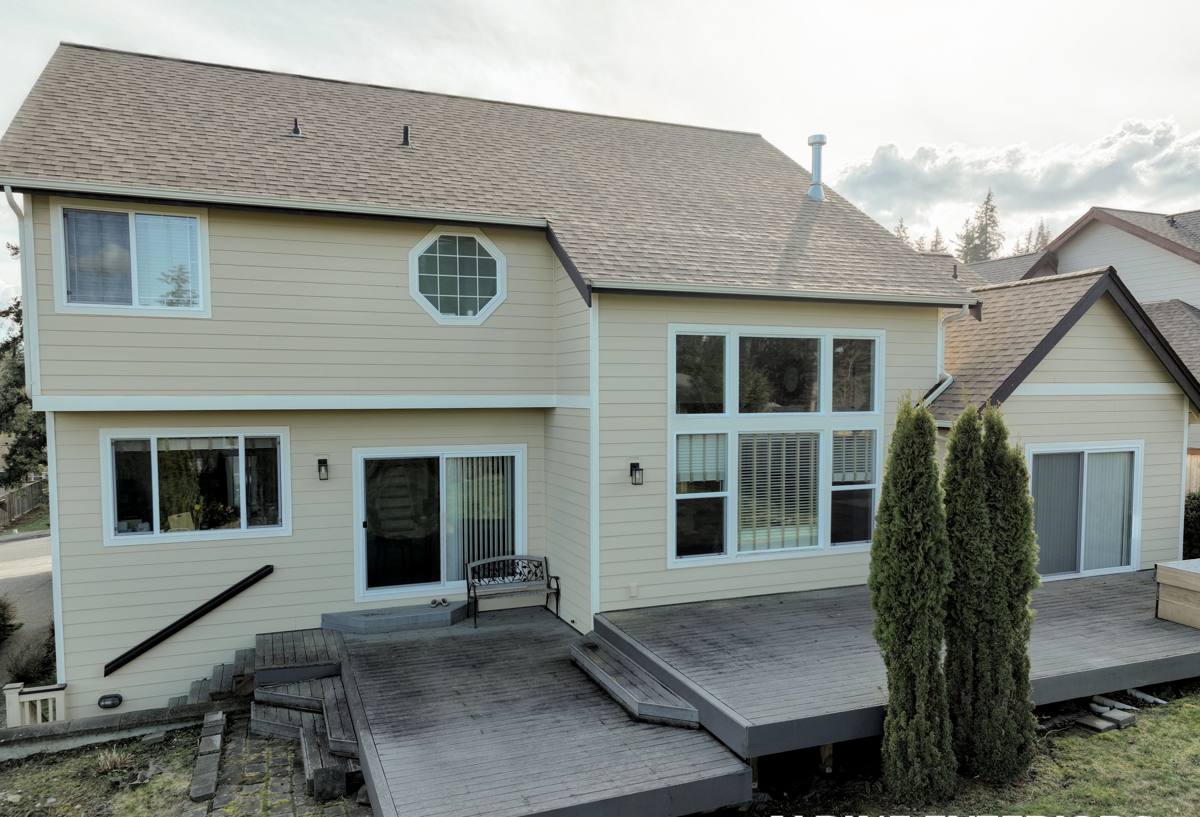
Edison sits in that low, green corridor between the Chuckanut foothills and the tidal flats, and that location shapes everything about how a deck should be built here. You're close enough to the water to catch salt-laden air off Samish Bay, tucked under enough tree cover to fight moss and standing shade half the year, and squarely in the path of the long, driving rains that define a Whatcom County winter. A deck built to a generic spec sheet does not hold up well in that combination. A deck built for this specific stretch of coastline does.
We work this area regularly, which matters more than it sounds. We already know which fascia boards get the worst of the north-facing weather, which ledger connections need extra flashing attention because of how rain tends to drive sideways here, and which framing details actually earn their keep over a Chuckanut winter instead of just looking good on install day. This page is about that one job — deck building for Edison homes — done right, not generically.
What Edison's Climate Actually Does to a Deck
Before talking about lumber species or fastener grades, it helps to understand what we're building against. Three things drive almost every deck failure or premature repair we see out here.
Salt Air
Proximity to Samish Bay means airborne salt reaches structures well inland of the shoreline itself. Salt accelerates corrosion in fasteners, hardware, and metal flashing far faster than it will in a dry inland climate. A deck built with mismatched or under-rated hardware can start showing rust streaks and loosening connections within a few seasons, long before the wood itself is a problem.
Driving Rain
This isn't gentle, straight-down rainfall. Storms off the water push rain sideways into ledger boards, under poorly lapped flashing, and into any gap where end grain is exposed. Water that gets behind a ledger board or into an unsealed joist end doesn't dry out quickly under a Whatcom County overcast — it sits, and that's where rot starts.
Moss and Shade
Edison's tree cover and marine-layer humidity add up to a long moss season — often eight months or more of conditions damp enough for moss and algae to establish on horizontal surfaces. Moss holds moisture against decking boards, degrades traction, and speeds up surface wear on softer woods and lower-grade composites alike.
None of these are exotic problems. They're just the normal cost of building near the water in the Pacific Northwest — but only if the deck is built to account for them.
What a Correctly Built Edison Deck Involves
The Ledger Connection
This is the single most important detail on any attached deck, and it's the one that fails most often when a deck is built too fast. The ledger board bolts to the house and carries a large share of the deck's structural load, so the flashing at that connection has to shed water away from the house wall completely — not just slow it down. We flash the ledger with a continuous drip cap and proper step flashing integration into the existing siding or house wrap, so wind-driven rain off the bay can't work its way behind the board over time.
Framing and Fasteners
Given the salt exposure here, we don't cut corners on hardware. Joist hangers, structural screws, and post bases need a corrosion rating suited to coastal air, not just standard exterior-rated hardware. We also give more attention to joist spacing and blocking than a bare-minimum build would, because a stiffer frame sheds vibration and movement that otherwise works fasteners loose over years of freeze-thaw and wet-dry cycling.
Footings and Posts
Edison's soil can hold moisture longer than you'd expect given the drainage nearby, especially on lots with any clay content. Footings need to be sized and set below frost depth per local code, with posts isolated from standing water using proper post bases rather than wood set directly in or near grade.
Decking Surface
The decking material takes the brunt of moss, foot traffic, and UV cycling. Whatever material a homeowner chooses, the boards need consistent gapping for drainage and airflow underneath — tight, no-gap installs are one of the most common causes of moss holding on longer than it should, because there's nowhere for water to go.
Choosing a Decking Material for This Climate
There's no single "best" decking material — there's a best fit for a given budget, maintenance appetite, and how much moss and moisture exposure the deck's location will see. Here's how the common options actually compare for an Edison property.
| Material | Moss/Moisture Behavior | Maintenance | Typical Lifespan Here |
|---|---|---|---|
| Pressure-treated fir/pine | Absorbs moisture readily; needs a breathable finish to resist moss staining | Annual cleaning and refinishing recommended | 15–20 years with upkeep |
| Cedar | Naturally moisture- and insect-resistant; still needs surface maintenance against algae | Periodic cleaning, occasional re-oiling | 20–25 years with upkeep |
| Composite decking | Doesn't rot, but moss and algae can still grow on the surface film if boards stay shaded and damp | Low — occasional wash-down | 25–30+ years, manufacturer-dependent |
| PVC/capped composite | Fully sealed surface resists staining and moisture intrusion best | Lowest — wash-down only | 25–30+ years, manufacturer-dependent |
We install all of these. What matters more than the brand name is whether the product's warranty structure and installation requirements are followed to the letter — composite and PVC manufacturers are specific about hidden fastener spacing, ventilation clearance, and joist spacing, and skipping those details is the fastest way to void a warranty a homeowner is paying extra for in the first place.
Why We're Careful About Certain Composite Products
Some early-generation composite boards without a full cap layer are prone to moisture wicking at cut ends and fastener holes, which shows up as swelling or dark staining faster in a wet, shaded climate like Edison's than it would in a drier region. That's not a defect claim against any specific manufacturer — it's a known trade-off of uncapped composite construction, and it's why we lean toward capped composite or PVC when a homeowner wants low maintenance in a heavily shaded, moss-prone yard, and explain the trade-offs clearly when a homeowner prefers the look and lower cost of an uncapped board.
Our Process for an Edison Deck Build
- On-site assessment. We walk the property, check sun and shade exposure, drainage patterns, and how the deck will tie into the existing structure.
- Design and material selection. We talk through decking material, railing style, and layout against the budget and maintenance preference, with the climate trade-offs above laid out plainly.
- Permitting. Most attached decks in Whatcom County require a permit; we handle that process so the footings, ledger connection, and railings meet current code.
- Demo and site prep. Removal of any existing structure, grading as needed, and layout of footing locations.
- Footings and framing. Footings set to proper depth, posts installed, and the frame built with corrosion-rated hardware throughout.
- Ledger flashing. The critical waterproofing step, done before decking goes down, not patched afterward.
- Decking, railing, and finish work. Boards installed with proper gapping, railing set to code height and spacing, and any finish or sealant applied per manufacturer spec.
- Final walkthrough. We go over the finished deck with the homeowner, including basic maintenance guidance specific to the material chosen.
Maintenance That Actually Matters Here
Every deck in Edison benefits from a maintenance rhythm built around the moss season rather than a generic calendar. A short annual routine prevents most of the problems we get called out to fix.
- Sweep debris and leaf litter off the surface before fall rains start — trapped organic matter is what moss and algae feed on first.
- Clean the surface with a deck-safe cleaner in early spring, before growth gets established for the season.
- Check railing connections and stair fasteners annually for looseness — salt air corrosion shows up here before it shows up anywhere else.
- Keep gutters and downspouts near the deck clear so runoff isn't dumping extra water onto or under the structure.
- Re-oil or reseal wood decking on the manufacturer's recommended schedule — don't wait for visible graying to start.
- Check underneath the deck once a year for standing water, blocked drainage, or early signs of rot at post bases.
What a Neglected Deck Costs Later
Skipping this routine doesn't just shorten the deck's lifespan cosmetically — moss buildup left untreated holds moisture against boards long enough to start rot in wood decking or accelerate wear on composite surfaces, and corroded fasteners at railing posts are a genuine safety issue, not just an eyesore. A few hours of upkeep a year is far cheaper than replacing boards or re-securing a railing system.
Cost Factors for an Edison Deck Project
Every deck is priced around its own footprint, framing complexity, and material choice, so we won't quote a number without seeing the site — but these are the variables that move the price most.
| Factor | Why It Matters |
|---|---|
| Deck size and shape | Square footage and any angles, multi-level layouts, or curves add framing and cutting time |
| Height above grade | Taller decks need more substantial post and railing engineering, plus stair construction |
| Decking material | Pressure-treated wood, cedar, composite, and PVC span a wide cost range |
| Ledger and flashing complexity | Tying into existing siding correctly sometimes requires more flashing work than a simple new-construction ledger |
| Railing style | Cable, glass, and custom railing systems cost more than standard baluster railing |
| Site access | Difficult access for equipment or materials can add labor time |
Why a Local Crew Matters for This Job
Deck building isn't a job where "close enough" specs hold up over time in this climate. A crew that hasn't worked Edison and the broader Chuckanut coastline before might default to standard hardware ratings, standard flashing details, or a decking gap spacing that works fine in a drier region and underperforms here. We've built and repaired enough decks in this specific stretch of Whatcom County to know where the driving rain actually hits hardest, how much moss pressure a shaded north-facing deck really sees compared to open exposure, and which details are worth the extra time versus which are genuinely optional.
That local knowledge doesn't show up as a line item on an estimate, but it's the difference between a deck that needs attention again in five years and one that just needs the maintenance routine above.
Get a Straight Estimate for Your Edison Deck
If you're planning a new deck, replacing an aging one, or want an honest read on what a current deck needs to hold up through another Chuckanut winter, we're glad to come take a look. Estimates are free and there's no pressure — just a clear rundown of what we'd recommend and why. Use the form below to get started.