 Chuckanut Exterior
 Why Fairhaven Decks Wear Differently Than Decks Inland
Fairhaven sits close enough to the water that homes here deal with a combination most inland Whatcom County properties don't: salt-laden air, driving rain that comes in sideways off Bellingham Bay, and a moss season that can stretch from fall through spring. Individually, none of these is unusual for western Washington. Together, on a deck that's exposed to all three at once, they accelerate wear in ways that catch homeowners off guard — a deck that looks fine from the yard can be hiding soft framing, corroding hardware, or a ledger connection that's slowly failing underneath.
We repair decks in this specific environment regularly, and the patterns are consistent. Understanding what's actually happening to the wood, fasteners, and structure under your deck is the first step to fixing it right instead of just patching the surface.
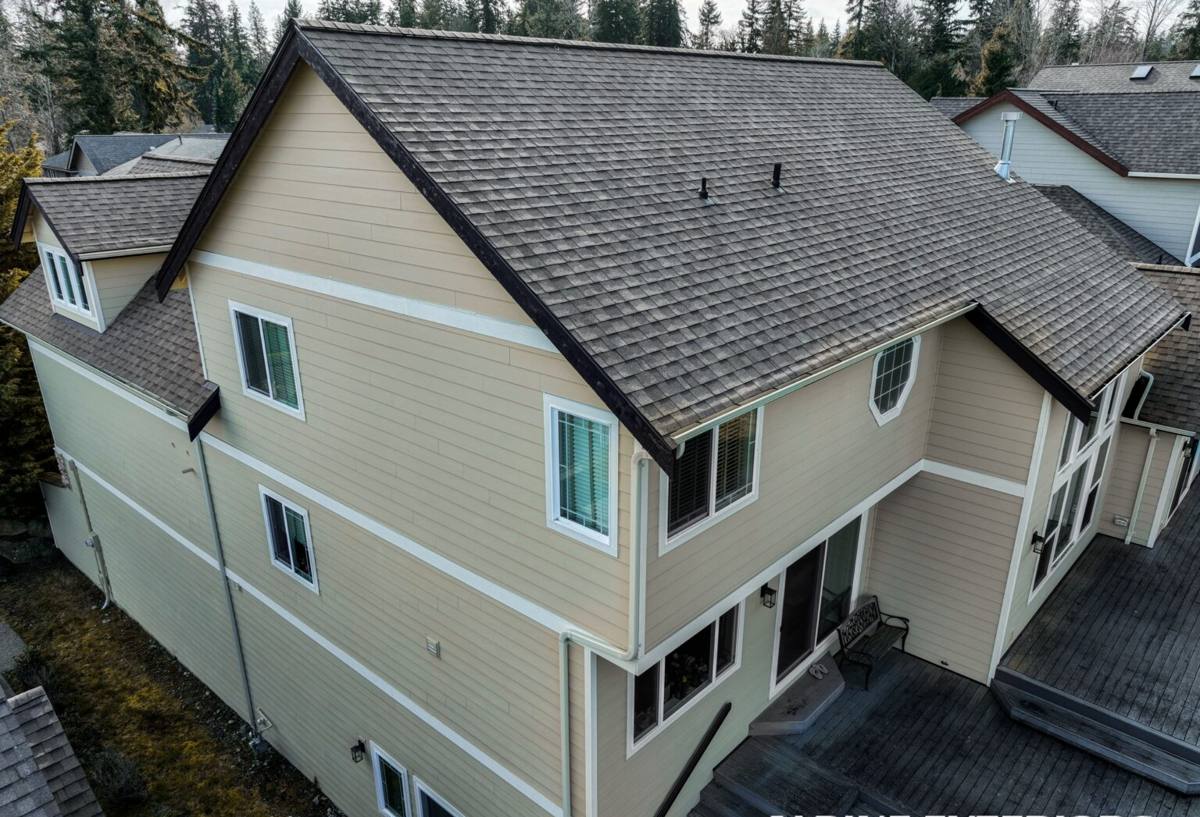
How Salt Air, Rain, and Moss Actually Damage a Deck
Salt Air and Metal Fatigue
Airborne salt accelerates corrosion on anything metal — nails, screws, joist hangers, bolts, and railing hardware. Standard galvanized fasteners that would last decades in a drier, inland climate can start breaking down years earlier this close to the bay. Corroded fasteners lose holding strength quietly; you often don't see it until a board starts to lift or a railing gets wobbly.
Driving Rain and Water Intrusion
Rain that blows in at an angle finds its way into places vertical-only rain never would: under flashing, behind ledger boards, into end-grain cuts on deck boards, and around post bases. Once water gets past the surface, wood doesn't dry out quickly in our climate — it stays damp long enough for rot to take hold, especially in framing that's not properly ventilated underneath.
Moss, Algae, and Trapped Moisture
A long moss season means more than a slippery, unsightly deck surface. Moss and algae hold moisture directly against the wood or composite decking for months at a time. On wood decks, that constant dampness feeds rot. On any deck, moss buildup in the gaps between boards blocks drainage, so water pools instead of shedding off — which just accelerates every other problem on this list.
Signs Your Deck Needs Repair
Most deck failures don't happen all at once — they show early warning signs first. If you're seeing any of the following, it's worth having the deck looked at before it becomes a safety issue:
- Boards that feel spongy, springy, or soft underfoot
- Railings or posts that wobble or flex when you lean on them
- Visible gaps, staining, or dark streaking where the deck meets the house (ledger board area)
- Rust stains bleeding from screws, nails, or metal connectors
- Persistent moss or algae buildup that doesn't fully dry out between rains
- Stairs that feel uneven or have developed a lean
- Gaps opening up between deck boards, or boards that have started to cup or crown
- A musty smell coming from underneath the deck
Any one of these on its own might be minor. Several together, especially near the ledger board or support posts, usually means it's time for a real inspection rather than a cosmetic fix.
What a Proper Deck Repair Actually Involves
A lot of "deck repair" work in this region stops at replacing a few visibly bad boards and calling it done. That approach misses the parts of the deck doing the actual structural work. A repair done right starts underneath and works outward:
Structural Inspection First
Before any boards come off, we check the ledger board connection to the house (a common failure point and a safety-critical one), the condition of support posts and footings, joist condition, and hardware corrosion. This tells us whether we're looking at a surface repair or something that reaches into the framing.
Framing and Fastener Repair
Rotted joists, a compromised ledger, or corroded hangers get addressed before anything cosmetic happens. Replacing surface boards over a weak frame just hides the problem — it doesn't fix it, and it can create liability if the deck later fails.
Decking, Railings, and Drainage
Once the structure is sound, we replace damaged boards, secure or rebuild railings to current safety standards, and make sure the deck actually sheds water instead of trapping it — proper board spacing, ventilation underneath, and grading around post bases all matter more here than in a drier climate.
Repair vs. Replacement: What Actually Drives the Decision
Homeowners often ask whether it's worth repairing an older deck or better to replace it outright. The honest answer depends on a few specific factors, not the deck's age alone.
| Factor | Favors Repair | Favors Replacement |
|---|---|---|
| Ledger board condition | Solid, no rot at the house connection | Rotted or improperly flashed ledger |
| Support posts & footings | Structurally sound, minor surface wear | Widespread rot, undersized, or shifting footings |
| Extent of board damage | Isolated boards affected | Damage spread across most of the deck surface |
| Fastener corrosion | Localized, easily replaced | Corrosion throughout the connector system |
| Deck age & design | Sound framing, outdated surface only | Old framing not built to current load or code standards |
In many cases we see in Fairhaven, the framing is salvageable even when the visible boards look rough — which means a well-scoped repair can extend a deck's life significantly without the cost of a full rebuild.
Our Process for Fairhaven Deck Repairs
- Inspection: We walk the entire deck, check underneath, and test the ledger, posts, and railings by hand — not just a visual pass.
- Honest assessment: We tell you plainly what's structural, what's cosmetic, and what can wait, along with what happens if it doesn't get addressed.
- Written estimate: A clear scope of work and cost before anything starts, no surprise add-ons mid-project.
- Repair: Framing and hardware first, then decking, railings, and finish work, using fasteners and materials rated for coastal, high-moisture exposure.
- Final walkthrough: We check the repaired areas together before we consider the job finished.
Materials That Hold Up in This Climate
Fasteners and Hardware
This is where we don't cut corners, and it's the single biggest factor in how long a repair lasts near the water. We use stainless steel or high-grade coated fasteners and connectors rated for coastal exposure rather than standard galvanized hardware. It costs more upfront and it's the difference between a repair that holds for years and one that starts rusting and loosening within a couple of seasons.
Wood vs. Composite Decking
Both have a place, and the right choice depends on the deck and the homeowner's priorities:
- Pressure-treated or cedar wood: Lower material cost, natural look, but needs regular sealing/staining and closer attention to moss and moisture in our climate.
- Composite decking: Higher upfront cost, far less maintenance, and better resistance to moss staining and moisture absorption — often worth it for decks that stay shaded or damp for long stretches of the year.
We'll talk through the trade-offs honestly rather than pushing one option — it depends on your deck's exposure, budget, and how much upkeep you want to do.
Why Hire a Crew That Already Works in Fairhaven
Deck repair here isn't the same job as deck repair in a dry, inland climate, and it isn't the same job as repair in a fully exposed waterfront setting either. Fairhaven's mix of coastal air, rainfall patterns, and tree cover creates a specific set of conditions — a crew that regularly works this neighborhood knows where moisture tends to collect, which fastener grades actually hold up, and which shortcuts show up as callbacks two winters later. That familiarity shows up in fewer surprises during the inspection and repairs that are scoped to what your deck actually needs, not a generic checklist.
Keeping Your Repair Lasting
A good repair is only half the equation — a little seasonal upkeep protects the investment:
- Clear moss and debris from between boards before it packs in and holds moisture
- Keep gutters and downspouts directing water away from the deck and its footings
- Check railings and stair connections for looseness once a year
- Reseal or restain wood decking on the schedule your material calls for, not just when it looks faded
- Address small issues — a soft board, a loose baluster — before winter rains arrive
If your Fairhaven deck is showing any of the signs above, or it's just been a while since anyone looked at it closely, we're happy to take a look. Reach out for a free, no-pressure estimate using the form below.