 Chuckanut Exterior
 Why Decks in Fairhaven Wear Out Faster Than You'd Expect
Fairhaven sits close enough to the water that salt-laden air is a daily fact of life, not an occasional coastal storm event. Combine that with Whatcom County's long, wet shoulder seasons — soaking rain from fall through spring, cool damp summers, and short bursts of real sun — and you get a climate that's brutal on exterior wood structures in ways that inland decks never experience. Salt air accelerates corrosion in fasteners, hardware, and any exposed metal connectors. Driving rain off Bellingham Bay finds its way into end grain, joints, and any spot where flashing was skipped or done wrong. And the moss season here isn't a cosmetic nuisance — it's a moisture trap that sits on deck boards and holds water against the wood for months at a time.
A deck that would last 20+ years in a dry inland climate can start showing real structural problems in half that time near Fairhaven if it wasn't built with this environment in mind. That's the core of what "deck replacement" means for a home in this neighborhood: it's not just swapping old boards for new ones, it's correcting for a climate that punishes shortcuts.
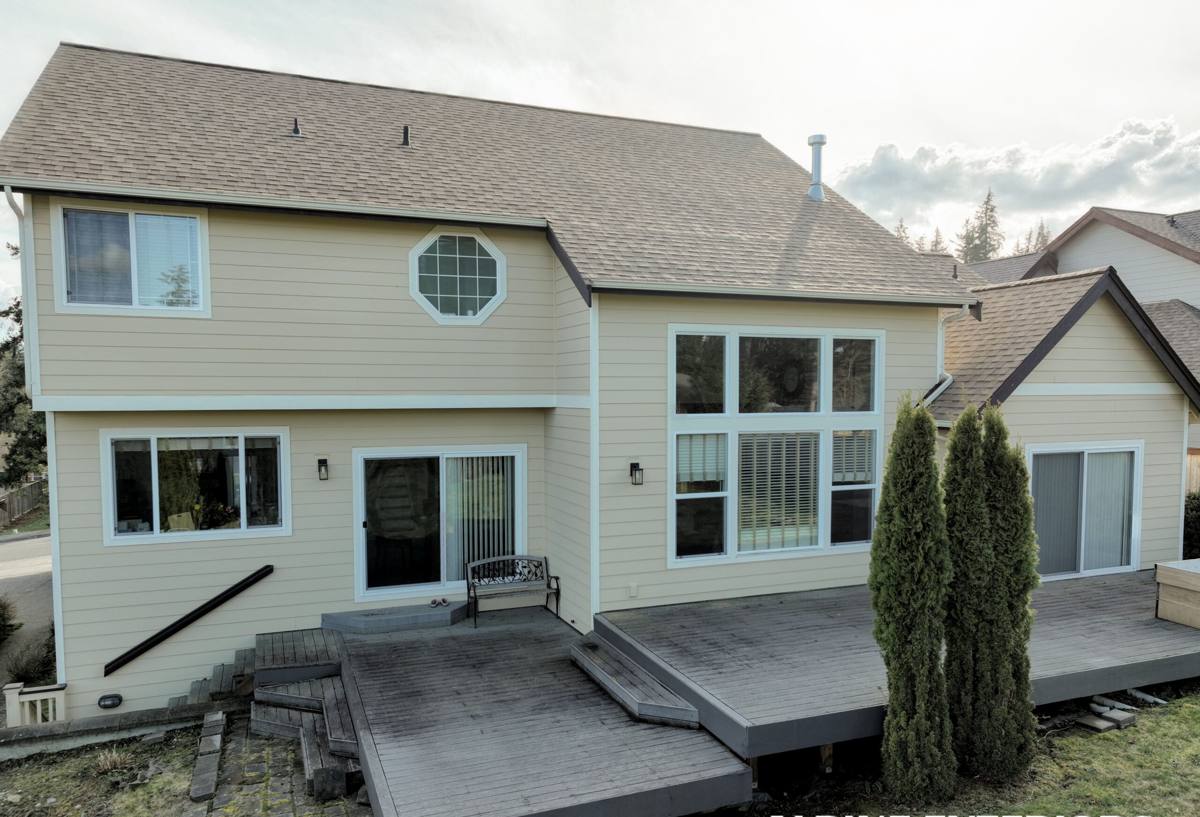
Signs a Deck Needs Replacement, Not Just Repair
Homeowners often call us thinking they need a few boards swapped, and sometimes that's true. But in this climate, surface problems are frequently a signal of something happening underneath. Here's how we tell the difference on a typical Fairhaven visit:
- Soft or spongy spots when you walk the deck — usually means moisture has broken down the wood fibers, not just the surface finish
- Fasteners that are rusted, backing out, or leaving dark stains around the screw heads — a sign the connection is failing, not just ugly
- Ledger board separation from the house, even a small gap — this is a structural and safety issue, not cosmetic
- Persistent moss or algae growth that comes back within weeks of cleaning — the wood is staying wet longer than it should
- Visible checking or splitting that runs deep into the board, not just surface graying
- Railings or posts that flex or wobble under normal use
If it's one or two boards and the frame underneath is sound, repair makes sense. If the ledger connection, joists, or posts are compromised, patching the surface just hides the problem for another season — and in this climate, that season goes by fast.
What a Correct Deck Replacement Actually Involves
It Starts Below the Decking
The visible boards are the last thing we install, not the first thing we think about. A deck rebuild done right here means paying close attention to the parts nobody sees once the project is finished:
- Ledger board flashing — where the deck attaches to the house is the single most common failure point in this climate. Proper flashing keeps water from tracking behind the siding and into the wall framing.
- Footings and posts — footings need to be sized and set to code for our soil and frost conditions, and post bases should keep wood off standing water, not sitting in a puddle after every rain.
- Joist protection — joist tape or an equivalent moisture barrier over the top of each joist keeps rain from soaking into end grain and fastener holes, which is where rot usually starts.
- Fastener selection — coastal air corrodes standard hardware faster than most homeowners expect. We use fasteners and connectors rated for the exposure, not just what's cheapest at the yard.
Then the Decking Surface
Board spacing, ventilation underneath the deck, and drainage away from the house all matter as much as the material you pick. A deck with tight board spacing and poor airflow underneath will stay damp longer after every rain event — which in a moss-heavy climate means faster growth and faster wear, regardless of what the boards are made of.
Choosing a Decking Material for This Climate
There's no single "best" decking material — every option is a trade-off between upfront cost, maintenance, and how it handles moisture over time. Here's how the common choices compare for a Fairhaven property specifically:
| Material | Moisture Behavior | Maintenance | Typical Lifespan Here |
|---|---|---|---|
| Pressure-treated wood | Absorbs and releases moisture readily; needs consistent sealing to resist our rain and moss cycle | Annual cleaning and re-sealing recommended | 10–15 years with upkeep |
| Cedar | Naturally more rot-resistant than treated pine, but still absorbs water; looks best with regular care | Periodic cleaning, oil or stain every 1–2 years | 15–20 years with upkeep |
| Composite decking | Doesn't absorb water into the core, but surface can still hold moss and algae in shaded, damp spots | Periodic washing; no staining or sealing | 25+ years, varies by product |
| PVC decking | Fully moisture-resistant material; best performance in constant-damp, low-sun areas | Occasional washing | 25+ years, varies by product |
We install all of these, and the right pick usually comes down to how much sun the deck actually gets and how much upkeep you want to do. A deck tucked under trees or on the shaded side of the house will grow moss no matter what it's made of — composite and PVC just make cleanup easier and don't rot underneath the growth. A full-sun deck has more flexibility, including real wood if you're willing to keep up with sealing.
Our Deck Replacement Process
- On-site assessment — we check the ledger connection, footings, framing, and current decking to determine what's actually failing versus what's cosmetic.
- Honest scope and estimate — you get a clear breakdown of what needs full replacement, what can be reused, and what your material options cost in real terms.
- Permitting — most deck replacements in Whatcom County that involve structural work (new footings, ledger reattachment, height or size changes) require a permit through the local building department. We handle that process rather than leaving it on you.
- Demolition and disposal — old decking, framing, and hardware removed and hauled off, with the site protected so demo doesn't damage landscaping or siding.
- Structural rebuild — footings, posts, ledger flashing, and joists brought up to current code and rated for coastal exposure.
- Decking and railing install — your chosen material installed with proper spacing and fastening for drainage and airflow.
- Final walkthrough — we go over the finished deck with you, including what maintenance (if any) the material needs going forward.
Permits and Code Considerations Near Fairhaven
Deck work close to the water in Whatcom County can also intersect with setback and shoreline-related rules depending on the property's exact location and elevation relative to the water. We don't guess on this — if a project is close enough to trigger additional review, we flag it during the assessment and work through the proper permit process before any demo starts. Skipping permits on a structural deck rebuild isn't a shortcut worth taking: it can create real problems at resale, and more importantly, an unpermitted ledger or footing that fails inspection is often one that wasn't built to hold up in this climate in the first place.
What Drives the Cost of a Deck Replacement
| Factor | Why It Matters |
|---|---|
| Deck size and shape | More square footage and complex angles mean more material and labor |
| Decking material chosen | Pressure-treated wood costs less upfront than composite or PVC, but with more ongoing maintenance |
| Structural condition | A deck needing all-new footings and framing costs more than one where the substructure is sound |
| Height and railing requirements | Taller decks and code-required railings add material and labor |
| Site access | Decks with tight or obstructed access take longer to demo and rebuild |
| Permit scope | Structural changes requiring inspection add time to the schedule, not just cost |
We won't quote a price without seeing the deck — anyone who does is guessing, and guessing on a structural project isn't fair to you. What we can tell you upfront is that the cheapest bid is rarely the cheapest deck over ten years, because corners cut on flashing, fasteners, or footings show up as repair bills later, and repeat repairs on a coastal deck add up fast.
Keeping a New Deck Healthy in This Climate
Whatever material you choose, a little routine care goes a long way toward getting the full lifespan out of a Fairhaven deck. We walk every client through this at handoff:
- Sweep leaves and debris off the deck regularly, especially in fall — trapped organic matter holds moisture and feeds moss
- Clean moss and algae off the surface at the start of moss season before it gets established, rather than after
- Check that gutters and downspouts near the deck are directing water away, not onto it
- Inspect the ledger flashing and any visible fasteners once a year for rust or gaps
- For wood decking, plan on re-sealing on the schedule recommended for your specific product — skipping a year in this rain cycle costs more than doing it on time
- Keep planters and furniture feet off direct wood contact where water can pool underneath
Why a Crew That Already Works Fairhaven Makes a Difference
Deck replacement isn't a generic checklist you can run the same way in every climate. A crew used to working inland doesn't always think about salt-air fastener corrosion, moss-season drainage, or how driving rain off the bay behaves against a ledger board — because they haven't had to. We work this stretch of Whatcom County regularly, which means we're not guessing at how a deck needs to be built here; we're building to what this specific environment actually does to a structure over time. That shows up in the small decisions — flashing details, fastener grade, board spacing — that don't cost much extra at build time but decide whether you're calling us back in five years or in twenty.
If you're weighing a repair against a full replacement, or you just want an honest read on what condition your deck is really in, we're glad to take a look. Reach out for a free, no-pressure estimate using the form below.