 Chuckanut Exterior
 Why Metal Roofing Makes Sense for Edison Homes
Homes along the Chuckanut corridor and in Edison sit in one of the more demanding roofing environments in Whatcom County. You've got open water nearby pushing salt-laden air onto every exposed surface, weather systems that roll in off the water and drop rain sideways as much as down, and a shaded, damp growing season that runs long enough for moss to get comfortable on almost any roof that isn't actively shedding water and light. Asphalt shingle roofs can be made to work here, but they take the brunt of all three conditions directly on a surface that's designed to wear down over time. Metal roofing, installed correctly, handles this combination better than most other options — not because it's trendy, but because the material and the way it sheds water line up well with what this specific area throws at a roof.
This page is about metal roofing for Edison specifically, not metal roofing in general. The climate factors below, the installation details we pay attention to, and the maintenance realities are all shaped by what happens to a roof that sits near the water in this part of Washington.
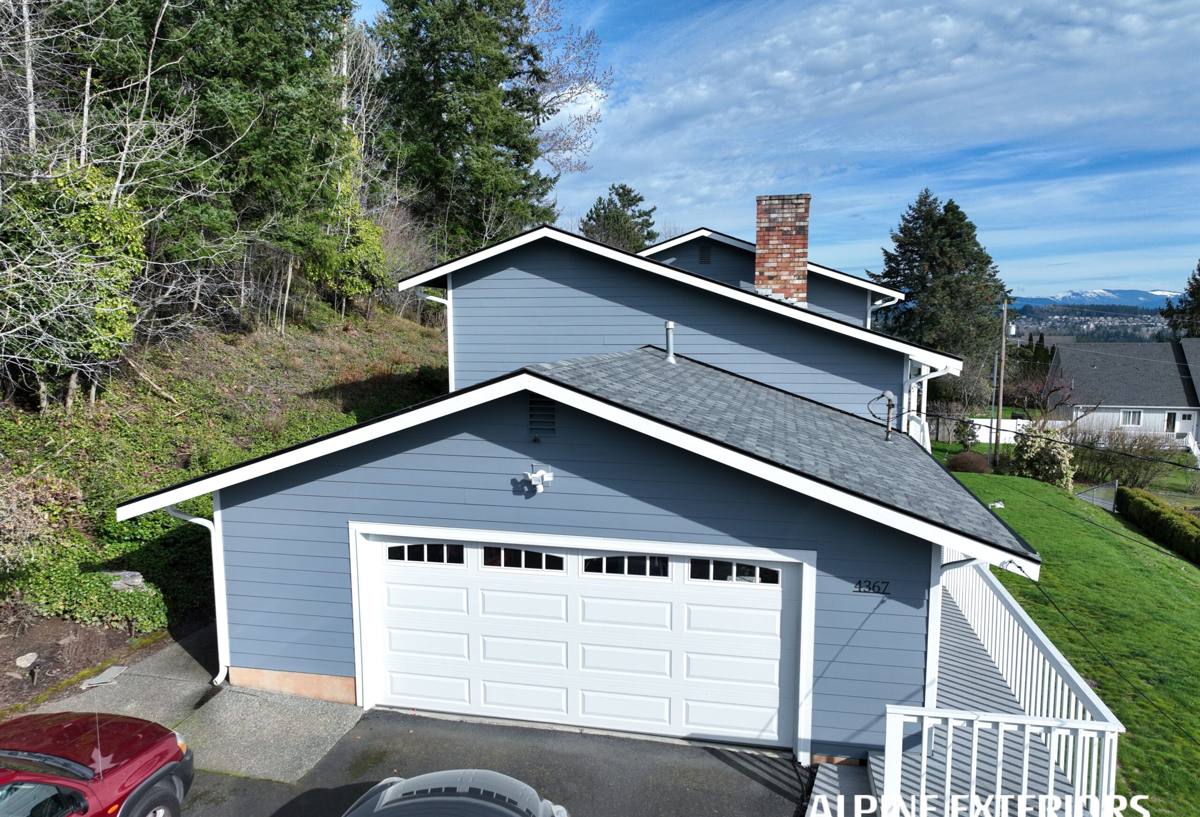
What Chuckanut's Coastal Climate Does to a Roof
Salt Air and Corrosion
Proximity to saltwater means airborne salt settles on roofing surfaces, flashing, and fasteners year-round, not just during storms. On a metal roof, this makes coating quality and fastener material a real decision, not an afterthought — the wrong combination of metals or a thin, low-grade coating will show corrosion at seams, fastener heads, and cut edges well before the panel itself is worn out. On any roofing material, salt exposure also accelerates the breakdown of exposed metal flashing, gutters, and vent components if they aren't matched correctly.
Driving Rain and Wind-Driven Water
Rain here doesn't always fall straight down. Storms moving through the Chuckanut area frequently push rain at an angle, which means water gets tested at every lap, seam, and penetration on a roof — not just the open field of the roofing material. A roof that performs fine in calm, straight-down rain can still leak under wind-driven conditions if the underlayment, flashing, and panel overlaps weren't detailed for it.
Long Moss Season
Between the rainfall totals and the tree cover common around Edison and Chuckanut, moss has a long window to establish itself — longer than in drier parts of the state. Moss needs standing moisture and organic debris to get a foothold. On roofing surfaces where water sheets off quickly and there's no texture for spores and grit to catch on, moss has a much harder time taking hold compared to surfaces with more texture or slower drainage.
Choosing the Right Metal Roofing System
"Metal roofing" covers more than one product, and the right choice for a home near Edison depends on the roof's exposure, budget, and how the home reads architecturally. Here's how the common options compare for this specific environment.
| System | Salt Air Performance | Water Shedding | Best Fit |
|---|---|---|---|
| Standing seam steel | Strong, with a quality coating and correctly matched fasteners | Excellent — concealed fasteners, continuous seams | Full roofs on homes with direct water exposure |
| Standing seam aluminum | Very strong — aluminum resists corrosion inherently | Excellent | Homes closest to the water or with heavy salt exposure |
| Exposed-fastener steel panels | Moderate — depends heavily on fastener quality and gasket condition | Good, but fasteners are a maintenance point | Outbuildings, budget-conscious projects, lower-exposure roofs |
| Metal shingles/shakes | Good with proper coating | Good — more seams than standing seam | Homes wanting a traditional look with metal's durability |
Standing Seam vs Exposed Fastener
Standing seam panels use concealed clips and continuous vertical seams, so there are no exposed screw heads for salt air to attack over time and no gaskets that eventually harden and fail. Exposed-fastener panels cost less up front but rely on screw gaskets that need periodic checking — in a salt-air environment, those fasteners are the first thing to show wear. For a primary residence near Edison, we generally steer people toward standing seam unless budget makes exposed-fastener the more practical call for a secondary structure.
Steel, Aluminum, and Coatings
Steel panels with a quality factory finish hold up well here as long as cut edges are properly sealed and dissimilar metals aren't allowed to contact each other (which causes galvanic corrosion). Aluminum costs more but doesn't rust, which makes it a strong option for roofs with the most direct exposure. The coating system matters as much as the base metal — a well-applied factory finish resists fading, chalking, and coastal corrosion far longer than a thin or field-applied coating.
What a Correct Metal Roof Installation Involves
Metal roofing fails prematurely almost exclusively because of installation shortcuts, not because the material itself wore out. Given the wind-driven rain this area sees, the details below aren't optional.
Underlayment and Water Protection
A synthetic, high-temperature underlayment goes down first, with self-adhered ice-and-water membrane at eaves, valleys, and any low-slope transitions where water is most likely to back up under wind pressure. This layer is the roof's backup plan — it's what keeps a home dry if wind ever drives water past the panel laps.
Flashing and Penetrations
Every valley, wall transition, chimney, and vent penetration gets custom-formed flashing sized and lapped for the specific panel profile being used. This is where most leaks on any roof actually originate, metal or otherwise, and it's the step that separates a roof that handles sideways rain from one that only handles straight-down rain.
Fastening and Panel Layout
Panel layout starts with an accurate measurement of the roof plane so seams land evenly and cuts are minimized. Fasteners and clips are matched to the panel metal to avoid galvanic reaction, and clip spacing is set to the wind exposure of the specific roof plane — a roof facing open water or a wind corridor needs tighter fastening than a sheltered plane.
Ventilation
Metal roofs need proper intake and exhaust ventilation in the attic space just like any other roofing material — arguably more attention, since condensation on the underside of metal panels can be an issue if the attic isn't ventilating correctly. We check existing ventilation as part of every metal roofing project rather than assuming what's there is adequate.
Our Process for Edison Metal Roofing Projects
- On-site assessment — we look at the existing roof deck, ventilation, flashing points, and exposure of each roof plane before recommending a system.
- System selection — panel type, metal, and coating are matched to the home's exposure and your budget, not a one-size answer.
- Written estimate — scope, materials, and timeline laid out clearly before any work starts.
- Tear-off and deck check — old roofing comes off and the deck is inspected for rot or damage before anything new goes down.
- Underlayment, flashing, and panel installation — done in the sequence and detail described above.
- Final walkthrough — we go over the finished roof with you, including what routine upkeep looks like going forward.
Cost Factors for Metal Roofing in Edison
Every roof is different, so we don't quote a number without seeing the job — but these are the factors that move the price up or down, in relative terms.
| Factor | Effect on Cost |
|---|---|
| Panel type (exposed-fastener vs standing seam) | Standing seam runs higher due to labor and concealed fastening hardware |
| Metal (steel vs aluminum) | Aluminum typically costs more but needs less long-term corrosion maintenance near the water |
| Roof complexity (valleys, dormers, penetrations) | More cuts, flashing, and detail work increases labor |
| Existing deck condition | Rot or damage found at tear-off adds repair cost before new roofing goes on |
| Roof pitch and access | Steep or hard-to-access roofs take longer and require more safety setup |
Maintaining a Metal Roof Through Moss Season
A correctly installed metal roof needs far less maintenance than shingles, but "far less" isn't "none." A few habits keep it performing the way it should through Edison's long wet season:
- Keep gutters and valleys clear of needles and leaf debris so water has a clean path off the roof
- Trim back overhanging branches where practical to reduce shade and debris load on the roof
- Do a visual check after major windstorms for lifted flashing or debris caught at penetrations
- Watch for any staining or streaking at seams, which can be an early sign a fastener or seal needs attention
- Avoid pressure washing the panel finish — a soft rinse is enough since metal doesn't hold moss the way rougher surfaces do
What to Ask Before Hiring a Metal Roofing Contractor
- Do they detail flashing at valleys and penetrations, or rely on caulk as a shortcut?
- Do they match fasteners and clips to the panel metal to avoid galvanic corrosion?
- Will they check attic ventilation as part of the scope, not just the roofing surface?
- Can they explain why they're recommending one panel system over another for your specific roof?
- Do they carry proper licensing and insurance, and will they put the scope in writing?
Why a Crew That Works Chuckanut and Edison Regularly Matters
A roofing crew that's used to working in drier, more sheltered parts of Whatcom County isn't automatically prepared for what a roof near Edison deals with. The flashing details that matter for wind-driven rain, the fastener choices that hold up against salt air, and the ventilation habits that prevent condensation under a metal roof aren't universal best practices applied the same everywhere — they're decisions shaped by this specific stretch of coastline. Working in this area regularly means we're not guessing at how a roof will hold up here; we've already seen what does and doesn't hold up under these conditions, and we build accordingly.
If you're weighing metal roofing for a home in Edison or anywhere along the Chuckanut corridor, we're happy to take a look and walk you through what your specific roof needs — no pressure, no obligation. Reach out using the form below for a free estimate.