 Chuckanut Exterior
 Storm Damage Roofing in Edison: A Different Kind of Wear
Edison sits close enough to the water and the open flats around Chuckanut and the greater Whatcom County coastline that its roofs take a different kind of beating than homes further inland. It isn't usually one dramatic storm that causes the damage homeowners call us about. It's the accumulation: wind-driven rain that finds its way under marginal flashing, salt-laden air that speeds up corrosion on fasteners and metal components, and a moss season that runs longer here than in drier parts of the state. By the time a homeowner notices a stain on the ceiling, the roof has usually been losing the battle for a while.
That's the context we bring to every storm damage repair in this area. We're not just patching what's visibly broken — we're looking at why it broke, and whether the same conditions will cause it again in a year or two.
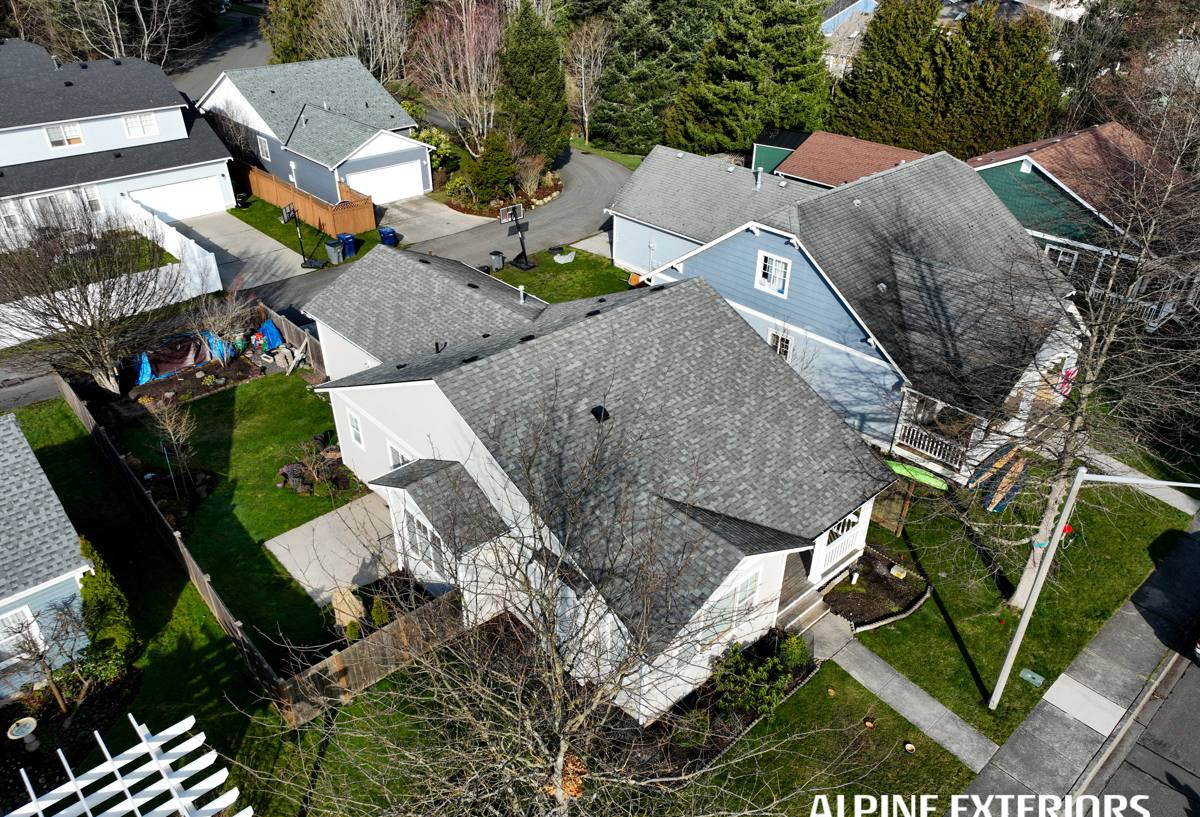
What Actually Counts as Storm Damage
Storm damage isn't always a missing shingle after a windstorm. In this climate, it shows up in several different forms, and homeowners are often surprised by which ones are the real cause of a leak.
Wind and Wind-Driven Rain
Strong gusts off the water can lift shingle edges, crease ridge caps, or work fasteners loose without pulling a shingle off entirely. The bigger issue is often what happens next: rain gets driven sideways or upward under a lifted edge, something a straight-down rainstorm would never do. This is a common cause of interior leaks that show up nowhere near where the actual damage is.
Moss and Organic Growth
Whatcom County's damp, shaded conditions are close to ideal for moss, and a roof that goes a couple of seasons without attention can end up with moss mats holding moisture directly against the roofing material. That moisture works its way under shingle tabs and accelerates rot in the decking underneath — damage that often gets misdiagnosed as storm damage when it's really long-term moisture retention that a storm simply exposed.
Salt Air Corrosion
Proximity to salt air corrodes exposed metal faster than it would inland — nail heads, flashing seams, and vent boots in particular. A storm can be the event that finally pushes a corroded flashing seam past the point of holding, even though the corrosion had been building for years.
What a Correct Repair Actually Involves
A lot of storm damage repairs we get called to fix were "fixed" once already — usually with a quick patch that addressed the visible symptom and not the underlying cause. A correct repair works through the roof system in order, not just the spot that's leaking.
Start With the Decking, Not the Shingles
Before any new roofing material goes down, the decking underneath needs to be checked for soft spots, delamination, or rot. Installing new shingles over compromised decking just hides the problem and shortens the life of the repair. If a section of decking has been sitting under a moss mat or a slow leak, it needs to be assessed honestly, even if that means the scope of the job grows.
Match the Existing System, Don't Just Cover the Hole
Roofing is a system of layers — underlayment, flashing, shingles, ridge caps — and each layer needs to tie into what's already there correctly, not just get stacked on top. A repair that doesn't properly integrate new flashing with existing flashing, or new shingles with the surrounding course lines, creates a new weak point even if it stops the immediate leak.
Address the Cause, Not Just the Symptom
If the real cause of the failure was moss buildup or corroded fasteners, the repair should include removing that moss and replacing the affected hardware — not just sealing the spot where water got in. Otherwise the same failure shows up again in the next storm.
Our Process, Start to Finish
- Inspection first. We walk the roof (not just look from the ground) and check attic or ceiling access points for signs of moisture, not just the exterior.
- Honest scope. We tell you what's storm damage, what's pre-existing wear, and what's cosmetic — so you're not paying to fix things that don't need fixing, and not surprised later by things that did.
- Written estimate. Materials, labor, and timeline laid out before any work starts.
- Repair or replace. We do the work with materials matched to what's already on the roof where possible, and flag it clearly if an exact match isn't realistic.
- Final walkthrough. We show you the completed work and explain what was done and why.
Repair or Replacement: How to Tell
Not every storm-damaged roof needs full replacement, and not every roof with a leak can be reasonably patched. The honest answer usually comes down to a handful of factors.
| Factor | Repair Is Usually Enough | Replacement Should Be Considered |
|---|---|---|
| Extent of damage | Isolated to one section or slope | Spread across multiple sections or the whole roof |
| Roof age | Well within expected service life | Already near or past typical lifespan |
| Decking condition | Solid, no rot found | Soft spots or rot found in more than one area |
| Moss/moisture history | Minimal, recently maintained | Long-term buildup with visible decking staining |
| Prior repairs | None, or one well-executed repair | Multiple past patches, especially in different spots |
When a roof falls into a mix of both columns, we'll tell you that directly rather than push one option. Sometimes the right call is a targeted repair now with a plan to budget for replacement in a few years — that's a legitimate answer, not a sales pitch.
Trouble Spots We See Most Often in This Area
Certain parts of a roof are simply more exposed to Edison's mix of wind, rain, and salt air, and they tend to fail before the field of the roof does.
- Valleys. Where water concentrates during heavy, wind-driven rain — the first place a weak seal shows up.
- Chimney and skylight flashing. Metal-to-roof transitions are where corrosion and movement cause the most leaks.
- North-facing and shaded slopes. Slower to dry out, so moss and moisture sit longer.
- Gutter lines and eaves. Debris and moss buildup here backs water up under the lowest shingle course.
- Exposed fasteners on vents and metal trim. Salt air accelerates corrosion here faster than on the shingles themselves.
A Note on Insurance Claims
Many storm damage repairs are eligible for coverage under a homeowner's policy, but coverage depends on the cause of the damage and the specific policy — that's between the homeowner and the insurance company, not something we can promise on their behalf. What we can do is document the damage clearly with a detailed inspection and written scope of work, which is the kind of documentation an adjuster needs to see. If you're planning to file a claim, it's worth getting that documentation before any repair work begins.
Reducing the Chance of a Repeat
Because moss and moisture are as much a factor here as any single storm, ongoing maintenance matters more in Edison than it would in a drier climate. A few habits go a long way toward keeping small issues from becoming storm-triggered failures.
- Have moss treated and removed before it mats down and holds moisture against the roof surface
- Keep gutters clear so water has somewhere to go besides under the roof edge
- Check attic ventilation — poor airflow keeps decking damp longer after any rain event
- Have flashing and fasteners inspected periodically, since corrosion here is gradual and easy to miss until it fails
- Get a post-storm inspection after any significant wind event, even if nothing looks obviously wrong from the ground
Why It Matters to Hire a Crew That Already Works in Edison
A roofer who mainly works drier, inland areas of Washington will diagnose a Whatcom County roof differently than one who sees these salt-air and moss conditions regularly. Knowing which failure patterns are common here — corroded flashing before shingle failure, moss-driven decking rot before wind damage — changes where we look first and what we flag as a priority. That local pattern recognition is the difference between a repair that holds and one that gets revisited after the next storm season.
If you're dealing with a leak, storm-related damage, or just want an honest read on where your roof stands, we're happy to take a look. Fill out the form below for a free, no-pressure estimate — we'll tell you what we find, plainly.