 Chuckanut Exterior
 Storm Damage Roof Repair for Fairhaven Homes
Fairhaven sits close enough to the water that every roof in the area earns its keep. Between wind off the bay, driving winter rain, and a moss season that can run half the year in Whatcom County's damp, shaded lots, roofs here take a different kind of beating than roofs even twenty miles inland. When a storm passes through, the damage isn't always obvious from the ground — a few lifted shingles, a bent piece of flashing, or a soaked patch of underlayment can sit quietly for months before it turns into a ceiling stain or a soft spot in the decking.
This page is about one job: storm damage roof repair for homes in and around Fairhaven. Not a general roofing pitch — the specific work of figuring out what a storm actually did to your roof, and fixing it correctly the first time.
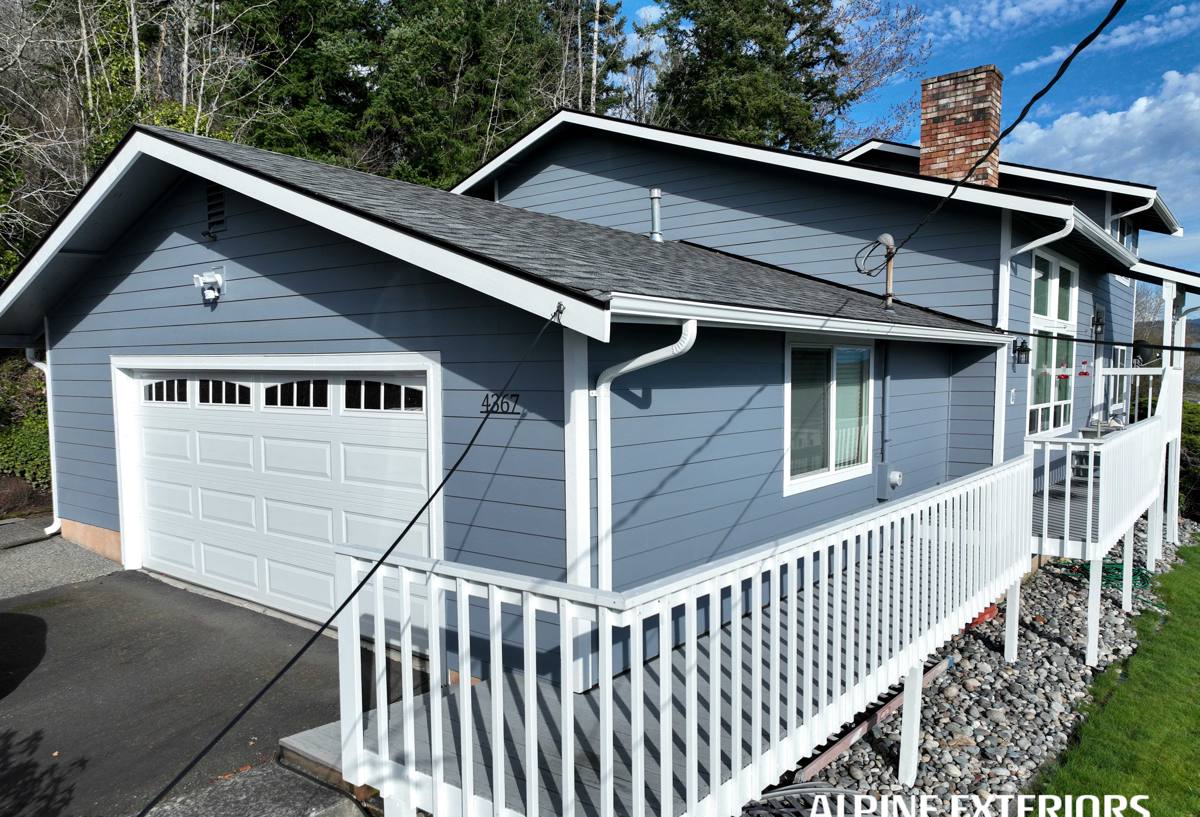
What Storms Do to a Fairhaven Roof
Wind and Driving Rain
Storms coming off the water tend to drive rain sideways rather than straight down. That matters because a roof built to shed water falling vertically doesn't always stop water being pushed horizontally under shingle tabs, around chimney flashing, or up under ridge caps. Wind uplift can also loosen shingles just enough to break their seal without tearing them off outright — the roof looks intact from the street, but the next rain gets underneath it.
Salt Air and Corrosion
Proximity to the water means salt air is a constant, low-grade stressor on anything metal on your roof — flashing, fasteners, gutter hangers, vent caps. Salt exposure speeds up corrosion, and corroded fasteners lose their grip long before they look obviously rusted through. A storm repair that just replaces shingles but reuses corroded flashing or nails is a repair that fails again within a year or two.
Moss, Shade, and Trapped Moisture
Whatcom County's long wet season and the tree cover common on Fairhaven's lots mean moss gets a real head start on north-facing and shaded roof slopes. Moss holds moisture against the roofing material long after the rest of the roof has dried out, which softens shingles, works into fastener holes, and can hide storm damage underneath a green mat that looks harmless from a distance.
Signs Your Roof Took Storm Damage
Most storm damage doesn't announce itself with a hole in the roof. It shows up as small things that are easy to write off. After any significant wind or rain event, it's worth walking the perimeter of your house and checking for:
- Shingle granules collecting in gutters or at downspout outlets
- Shingles that look curled, lifted at the corners, or slightly out of line with their neighbors
- Bent, creased, or missing flashing around chimneys, skylights, and roof-to-wall joints
- Dark streaks or a soft, spongy feel underfoot in the attic near exterior walls
- New or growing moss patches, especially on shaded slopes
- Water stains on interior ceilings or upper walls that weren't there before the storm
- Debris — branches, needles, gravel from shingles — pooled on low-slope sections
None of these guarantee a problem, but any one of them is a reason to get a roof looked at rather than wait for a leak to confirm it.
What a Correct Storm Repair Actually Involves
Assessment Before Anything Else
A storm repair that starts with "replace what's visibly damaged" often misses the point. The right first step is finding out how far water actually traveled — under how many courses of shingle, along how much flashing, into what part of the decking — before deciding what needs to come off and what can stay. That means checking the attic side as well as the roof surface, since interior moisture tells you more about the real extent of damage than shingles alone.
Matching Materials and Method to the Damage
Once we know the extent of the damage, the repair itself needs to match it — not undersized, not oversized. Spot-replacing a few shingles when the underlayment beneath them is also compromised just delays the next leak. Tearing off a whole slope when the damage is isolated to one section wastes money. Corroded or bent flashing gets replaced, not reused, given how quickly salt air works on metal here. Any exposed decking gets checked for soft spots before new material goes down over it.
Repair Scope Comparison
| Repair Type | When It Fits | What's Involved | Main Cost Factors |
|---|---|---|---|
| Spot Repair | Isolated wind or impact damage, underlayment intact | Remove and replace affected shingles, check and reseal flashing nearby | Roof access, pitch, number of affected areas |
| Partial Re-Roof | Damage concentrated on one slope or section | Tear-off and rebuild of one section including underlayment and flashing | Square footage of the section, decking condition, material match to existing roof |
| Full Replacement | Damage widespread, roof already near end of service life | Complete tear-off, decking repair as needed, new underlayment and roofing system | Total roof size, pitch and complexity, material choice, disposal |
We'll tell you honestly which category your roof falls into rather than defaulting to the most expensive option. A lot of storm damage on Fairhaven roofs turns out to be spot or partial work if it's caught before moss and repeated soaking make things worse.
Our Process for Fairhaven Storm Repairs
- Inspection — roof surface, flashing points, attic interior, and gutters, documented with photos.
- Findings review — we walk you through what we found, what caused it, and what it will take to fix, in plain terms.
- Written estimate — scope, materials, and a clear price before any work starts.
- Repair — tear-off limited to what's actually compromised, corroded metal replaced, decking checked before new roofing goes down.
- Final check — flashing seals, shingle lines, and attic ventilation confirmed before we consider the job done.
A Note on Insurance Claims
Many storm repairs on Fairhaven homes end up going through homeowner's insurance, and we're used to working alongside that process. We're not public adjusters and won't promise a claim outcome, but we will document damage clearly with photos and a written scope that your insurer can use, and we're happy to walk an adjuster through what we found on the roof.
Materials We Use and Why
Given the salt air and moss exposure common around Chuckanut and Fairhaven, we lean toward materials that hold up to that specific combination rather than whatever is cheapest per square:
- Corrosion-resistant flashing and fasteners — standard galvanized hardware corrodes faster this close to salt air; we use fasteners and flashing rated for coastal exposure.
- Self-adhered underlayment at vulnerable points — valleys, eaves, and around penetrations get a self-sealing membrane rather than standard felt, since those are the spots wind-driven rain finds first.
- Algae-resistant shingles where moss and moss-staining are a recurring issue — these won't eliminate moss on a shaded, damp lot, but they slow regrowth compared to standard shingles.
We'll talk through the trade-offs of each option honestly — some cost more up front and pay for themselves in fewer callbacks; others are a reasonable fit for a lower-slope or less exposed section of roof.
Why Hire a Crew That Already Works Fairhaven
Roofing problems here aren't generic. A crew that mostly works drier, inland areas doesn't always think to check for salt corrosion on fasteners that look fine on the surface, or to account for how much longer a north-facing slope near mature trees stays wet after a storm. Working regularly in and around Fairhaven and the wider Chuckanut area means we're used to the specific failure points this climate creates, and we price and plan repairs around them instead of treating every roof the same.
Preventing Repeat Damage
A good storm repair should reduce how much trouble the next storm causes, not just patch the last one. After a repair, a few habits go a long way in this climate:
- Clear gutters and downspouts before the fall rains start, so water isn't backing up under the roof edge
- Treat or remove moss on shaded slopes before it spreads across a whole section
- Trim back branches that keep a roof section shaded and damp longer than the rest of the house
- Have the roof looked at after any major wind event, even if nothing looks wrong from the ground
If a recent storm has you wondering what's going on with your roof, or you just want a second set of eyes before the next one hits, we're glad to come take a look. The estimate is free, there's no pressure to book anything on the spot, and you'll get a straight answer about what — if anything — actually needs fixing.