 Chuckanut Exterior
 Alger's Climate Is Harder on Siding Than It Looks
Alger sits in the kind of Pacific Northwest microclimate that wears siding down slowly and quietly. There's no single dramatic weather event that damages a home here — it's the combination of salt-laden air moving off the water, driving rain that hits walls at an angle instead of falling straight down, and a moss season that stretches for most of the year in shaded, north-facing spots. Any one of those on its own is manageable. Together, over a couple of decades, they expose every weak point in a siding system: a poorly sealed joint, a fastener that wasn't set right, a bottom edge that never gets a chance to dry out.
That's the lens we use when we look at a home in this area. The question isn't just "what does this siding look like installed," it's "how does this exact assembly behave here in year eight, year fifteen, year twenty-five."
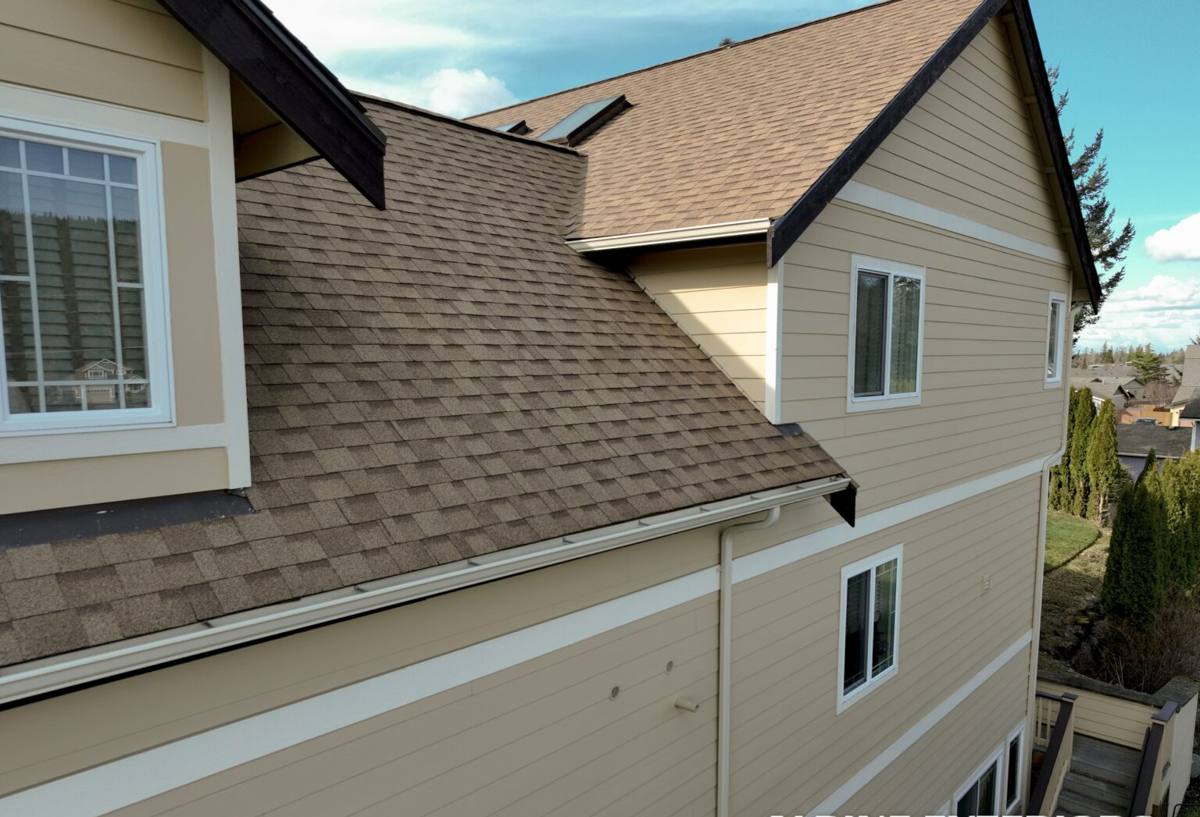
What Salt Air, Rain, and Moss Actually Do to a Wall
Salt Air and Coastal Exposure
Homes closer to the water deal with airborne salt that settles on exterior surfaces and accelerates corrosion of fasteners, trim flashing, and any metal component in the siding assembly. It also tends to degrade lower-grade paint finishes faster than inland exposure would, leading to chalking and fading well before a homeowner expects to repaint.
Driving Rain and Moisture Cycling
Whatcom County storms frequently come with wind, which pushes rain sideways into wall assemblies rather than letting it run off cleanly. Siding that isn't installed with proper clearances, flashing, and drainage behind it can trap that moisture. The wall then goes through repeated wet-dry cycles, which is what causes swelling, cupping, and eventually rot in materials that aren't dimensionally stable.
The Long Moss Season
Shaded exterior walls, roof lines that shed onto siding, and the general dampness of the region give moss and algae a long window to establish themselves — often most of the year on north- and west-facing elevations. Moss holds moisture directly against the siding surface, and on materials that absorb water, that's a slow path to decay underneath a surface that still looks intact from a distance.
Why We Standardized on Fiber Cement
We install James Hardie fiber cement siding exclusively — not vinyl, not engineered wood products, not primed cedar or spruce. That's a deliberate call, not a default. Fiber cement is dimensionally stable in wet-dry cycling, it doesn't feed moss and algae the way wood-based products can, it's non-combustible, and it holds a factory-applied finish far longer than field-applied paint on wood substrates. For a climate that specializes in exactly the stresses described above, that stability matters more than almost any other property.
We also standardized on one manufacturer rather than mixing suppliers. James Hardie engineers specific product lines for specific climate zones (their HZ5 line is built for the wetter, colder regions the Pacific Northwest falls into), backs the ColorPlus factory finish with its own warranty terms, and has a long enough track record in this region that we're not guessing about how the product performs after quiet, wet decades — we've seen it.
What a Correct Installation Actually Involves
Fiber cement siding is only as good as the assembly behind it. A rushed or undertrained install can leave a home with the same moisture problems as a cheaper product, just with a better-looking face on it. On every Alger project, the details below are non-negotiable, not optional upgrades:
Water Management Behind the Siding
A correctly lapped weather-resistive barrier, proper flashing at every window, door, and roof-to-wall intersection, and a drainage gap where the siding assembly calls for one. This is what actually keeps driving rain from reaching the structural sheathing, regardless of how good the face material is.
Clearances and Gapping
Manufacturer-specified clearances at the ground, roof lines, decks, and any horizontal surface, plus expansion gaps at butt joints and trim. Siding installed tight to grade or hard against flashing is one of the most common causes of premature failure we see when we're called out to look at someone else's work.
Fastening
Correct fastener type, spacing, and depth matter more with fiber cement than with more forgiving materials — over-driven or under-driven nails compromise both the water seal and the long-term hold, especially with the wind exposure common on unprotected lots in this area.
Joint and Seam Treatment
Every butt joint, corner, and penetration gets sealed and finished to the manufacturer's spec, using compatible sealants and touch-up products rather than generic caulk that will fail years before the siding itself does.
James Hardie Product Lines We Work With
Not every Hardie product is the right fit for every part of a home. We select the line based on exposure, elevation, and the look the homeowner wants.
| Product Line | Best Use | Why It Fits Alger |
|---|---|---|
| HardiePlank Lap Siding (HZ5) | Primary wall cladding | Climate-engineered for wet, cooler regions; the standard choice for most of the home |
| HardiePanel Vertical Siding | Accent walls, gables, modern facades | Clean lines for contemporary designs while keeping the same moisture performance |
| HardieTrim Boards | Corners, window and door surrounds, fascia | Matched expansion behavior with the field siding, avoiding mismatched movement at joints |
| HardieShingle Siding | Accent gables, cottage-style sections | Traditional shingle look without the moisture absorption of real wood shingles |
Our Process for an Alger Siding Project
- Walkthrough and assessment: We look at current siding condition, moisture history, moss patterns, and any trim or flashing issues before we talk product.
- Scope and product selection: We recommend the Hardie lines and colors that fit the home's exposure and the homeowner's goals, and explain the reasoning rather than just handing over a quote.
- Tear-off and sheathing check: Old siding comes off, and we inspect the sheathing underneath for any moisture damage that needs addressing before new siding goes on — a step that gets skipped more often than it should.
- Weather barrier and flashing installation: This is the part of the job nobody sees once it's finished, and it's the part that determines whether the siding lasts.
- Siding, trim, and joint installation: Installed to manufacturer clearances, fastening schedules, and sealant specs.
- Final walkthrough: We go over the finished work with the homeowner before calling the job done.
Living With Fiber Cement Siding in This Climate
Fiber cement is low-maintenance compared to wood, but "low-maintenance" doesn't mean "no maintenance" in a moss-prone, salt-air environment. A short seasonal routine keeps a correctly installed system performing the way it's supposed to for decades:
- Rinse siding annually with a garden hose and soft brush, focusing on shaded north- and west-facing walls where moss and algae establish first
- Avoid pressure washers directly on siding seams and caulked joints — they can force water behind the assembly
- Trim back vegetation and tree limbs that keep sections of wall shaded and damp longer than the rest of the house
- Check gutters and downspouts each fall so overflow isn't running down the wall face during heavy rain
- Inspect caulking at trim and joints every couple of years and touch up before gaps open
- Watch ground-contact clearances after any landscaping or mulch work, since raised soil level is a common cause of moisture problems years later
What Fiber Cement Siding Typically Costs
Every home is different, but the factors below are what actually move the number on a fiber cement project in this area more than anything else:
| Cost Factor | Why It Matters |
|---|---|
| Home size and wall complexity | More corners, gables, and dormers mean more cutting, trim, and labor time |
| Condition of existing sheathing | Rot or moisture damage found during tear-off adds repair work before new siding can go on |
| Product line and finish | Vertical panel, shingle-style accents, and specialty trim cost more than standard lap siding |
| Access and site conditions | Steep lots, limited staging area, or tall walls affect labor and equipment needs |
| Amount of trim and detail work | Window surrounds, corner boards, and fascia work add time even on a straightforward wall |
We don't quote a number without seeing the home — anyone who does is guessing, and guesses on siding projects tend to be wrong in the homeowner's favor right up until the invoice.
Why It Matters That We Already Work This Area
Siding advice that works for a dry-climate suburb doesn't automatically work for a home exposed to Whatcom County wind, rain, and salt air. A crew that already works the Alger and Chuckanut corridor knows which elevations tend to hold moss the longest, which exposures need the most attention at flashing and clearances, and how a given product actually ages here rather than how it performs in a manufacturer's climate-controlled testing. That local pattern recognition is the difference between a siding job that looks good on installation day and one that still looks good and performs correctly fifteen years later.
If you're weighing a siding replacement or repair on an Alger-area home, we're glad to take a look and give you a straightforward, no-pressure assessment of what your home actually needs — use the form below to request a free estimate.