 Chuckanut Exterior
 Roof Repair for Alger Homes Near Chuckanut
Alger sits close enough to the water and the timber line that its roofs take a different kind of beating than roofs twenty miles inland. Salt-laden air off the bay, driving rain that comes in sideways during winter storms, and a moss season that seems to run nine months out of twelve all work against asphalt, wood, and metal roofing in ways that are easy to underestimate until you're standing in the attic with a flashlight looking at a water stain. We repair roofs in this area regularly, and the patterns repeat: the same fastener types corrode, the same low-slope valleys back up, the same north-facing slopes grow moss faster than anyone expects.
This page is about roof repair specifically — patching, fixing, and restoring a roof that still has useful life left in it, not tearing it off and starting over. Most roofs we look at in the Alger area don't need full replacement. They need the right repair, done correctly, by someone who understands why the damage happened in the first place.
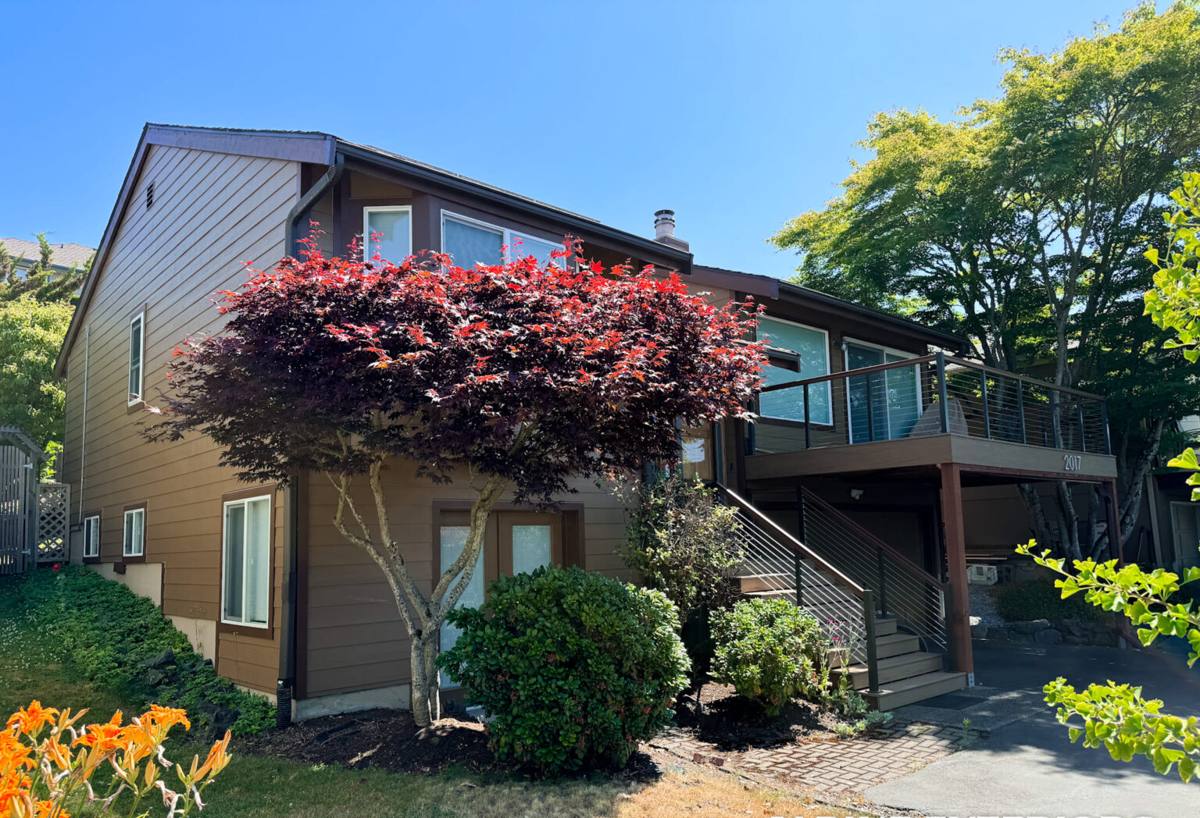
What Alger's Climate Does to a Roof
Salt Air and Corrosion
Proximity to the water means airborne salt settles on roofing metal — flashing, drip edge, nail heads, and any exposed fasteners. Over time that accelerates rust and pitting, especially on lower-grade galvanized hardware. A roof that would hold up for decades further inland can show fastener corrosion and flashing failure years earlier here. It's rarely the shingles themselves that fail first; it's the metal details around them.
Driving Rain and Wind-Driven Leaks
This part of Whatcom County gets rain that doesn't just fall straight down — winter storms push it sideways under shingle tabs, around poorly sealed vent boots, and through any flashing that's slightly undersized or improperly lapped. A roof can look intact from the ground and still be taking on water at every penetration point during a hard blow. Leaks that only show up during specific storm conditions are almost always a wind-driven water problem, not a simple worn-shingle problem.
Moss, Shade, and Slow Drying
Between tree cover and the region's damp, mild winters, roofs here rarely get a long enough dry stretch to fully shed moisture between rain events. Moss and algae take hold on north-facing slopes and anywhere debris collects, and once established, moss holds moisture directly against the roofing material. That constant dampness breaks down shingle granules, lifts edges, and works its way under flashing over time. A mossy roof isn't just a cosmetic issue — it's a slow, ongoing leak risk.
Signs Your Roof Needs Repair Now
Most roof damage doesn't announce itself with a dramatic leak. It shows up as small signs that get ignored until they aren't small anymore. If you're seeing any of the following, it's worth having it looked at before the next storm cycle:
- Water stains on ceilings or upper walls, especially ones that appear only during heavy or wind-driven rain
- Granules collecting in gutters or at downspout outlets
- Shingles that are curling, cracking, or lifting at the edges
- Visible moss or algae streaking, particularly on shaded or north-facing slopes
- Rusted, lifted, or gapped flashing around chimneys, skylights, or vent pipes
- Sagging or soft spots when walking the roof or viewed from a ladder
- Daylight visible through the roof deck from inside the attic
- Higher-than-normal heating bills, which can point to attic moisture and insulation damage from a slow leak
Common Roof Repairs We Handle in Alger
Shingle and Section Repair
Wind and impact damage often affects a limited area rather than the whole roof. We replace damaged shingles in kind, matching the surrounding material as closely as possible, and check the surrounding fasteners and underlayment while we're in there — a damaged shingle is often a symptom, not the whole story.
Flashing Repair and Replacement
Given the corrosion risk from salt air, flashing is one of the first things we inspect on any repair call. Chimney flashing, step flashing along walls, valley flashing, and vent boot collars are common failure points. We replace corroded or undersized flashing with material suited to this climate rather than just re-sealing a failing piece with caulk, which is a short-term fix at best.
Moss and Debris Remediation
Where moss has taken hold, we remove it carefully — not by aggressive pressure washing, which strips granules and shortens the roof's remaining life — and address the underlying moisture retention: clearing debris, addressing shade and airflow issues where practical, and treating the surface to slow regrowth. This is often paired with gutter cleaning, since clogged gutters keep water sitting against the roof edge.
Valley and Low-Slope Repair
Valleys and low-slope sections collect the most water and are the first place driving rain finds a weakness. We check valley flashing and underlayment integrity closely on every repair visit, since a failure here can send water well beyond the visible damage point.
Vent, Skylight, and Penetration Repair
Every pipe, vent, or skylight that penetrates the roof is a potential leak point. Rubber boots crack and shrink with age and UV exposure; skylight flashing kits fail at the seams. These are small repairs individually but are responsible for a large share of the leaks we're called out for.
Repair or Replace? How We Decide
Not every damaged roof needs to come off. We look at the age, material condition, and extent of the damage before recommending anything, and we'll tell you honestly when a repair is the smarter call and when it isn't.
| Factor | Favors Repair | Favors Replacement |
|---|---|---|
| Roof age | Under 15-20 years, material still has service life | At or beyond expected material lifespan |
| Extent of damage | Isolated to one area or a few penetration points | Widespread across multiple slopes |
| Decking condition | Solid, no rot found during inspection | Soft, delaminated, or water-damaged decking |
| Moss/algae history | Surface issue, treatable | Long-term moss damage with granule loss throughout |
| Relative cost | Lower upfront cost, targeted work | Higher upfront cost, resets the clock on the whole roof |
If a roof is showing isolated damage and the decking underneath is sound, repair is almost always the right first move. We only recommend replacement when the numbers and the roof's condition genuinely point that way.
Our Repair Process
- Inspection. We walk the roof and attic when accessible, checking flashing, penetrations, valleys, and any interior signs of moisture, not just the spot you called about.
- Honest assessment. We explain what we found, what's causing it, and whether repair or replacement makes sense — in plain language, no pressure either direction.
- Written estimate. You get a clear scope of work and cost before anything starts.
- Repair work. We match materials where possible, replace corroded or failing components rather than patching over them, and check surrounding areas for related wear.
- Final check. We confirm the repair area is sealed and weather-tight before we consider the job done.
Materials and Methods We Use
Given the corrosion and moisture exposure common in this area, we lean toward flashing and fastener materials with better long-term resistance rather than the cheapest available option, and we avoid over-relying on sealants and caulk as a primary fix — they're a supplement to correct flashing work, not a substitute for it. When matching shingles or roofing material, we aim for the closest available match in type, weight, and color, understanding that some variation is normal on a repaired section versus original roofing that's weathered for years. We're upfront if an exact match isn't possible so there are no surprises.
Why Work With a Crew That Already Knows Alger
Roof repair done by someone unfamiliar with this area's specific weather pattern often addresses the visible symptom and misses the cause — a technician who doesn't expect wind-driven rain from a particular direction, or who under-specs flashing because salt air corrosion isn't on their radar, ends up back at the same house a year later. We work roofs in the Chuckanut area regularly enough to recognize the patterns quickly: which slopes hold moss, which flashing details tend to fail first in this climate, and what a genuinely sound repair looks like here versus a temporary patch. That local familiarity generally means a faster, more accurate diagnosis and a repair that's built for the conditions your roof actually faces, not generic conditions.
Maintenance That Extends a Repair's Life
A good repair lasts longer with a small amount of upkeep between visits. A few habits make a real difference in this climate:
- Keep gutters and downspouts clear, especially heading into fall storm season
- Remove overhanging branches that keep sections of roof shaded and slow to dry
- Have moss addressed early, before it spreads across a slope
- Do a visual check after major windstorms for lifted shingles or displaced flashing
- Schedule a periodic inspection rather than waiting for a visible leak
If you're dealing with a leak, storm damage, or a roof that's just showing its age, we're happy to take a look and give you a straight answer on what it needs. Fill out the form below for a free, no-pressure estimate.