 Chuckanut Exterior
 Siding Installation in Alger: Built for the Chuckanut Corridor, Not a Catalog Climate
Alger sits along the Chuckanut corridor, tucked between forested slopes and open water, in the stretch of country where Whatcom County homes deal with a very specific mix of weather. It's not just "rainy Pacific Northwest" — it's salt-laden air moving in off the water, driving rain that comes in sideways during winter storms, and heavy tree canopy that keeps siding shaded and damp long after a storm has passed. That combination is hard on exterior materials in ways that a generic siding job doesn't account for.
When we install siding in Alger, we're not treating it like a job in a dry inland subdivision. We're treating it like what it is: a coastal-adjacent, tree-shaded property that needs a water-management plan built into the installation, not bolted on afterward. That's the difference between siding that looks good for two years and siding that holds up for decades.
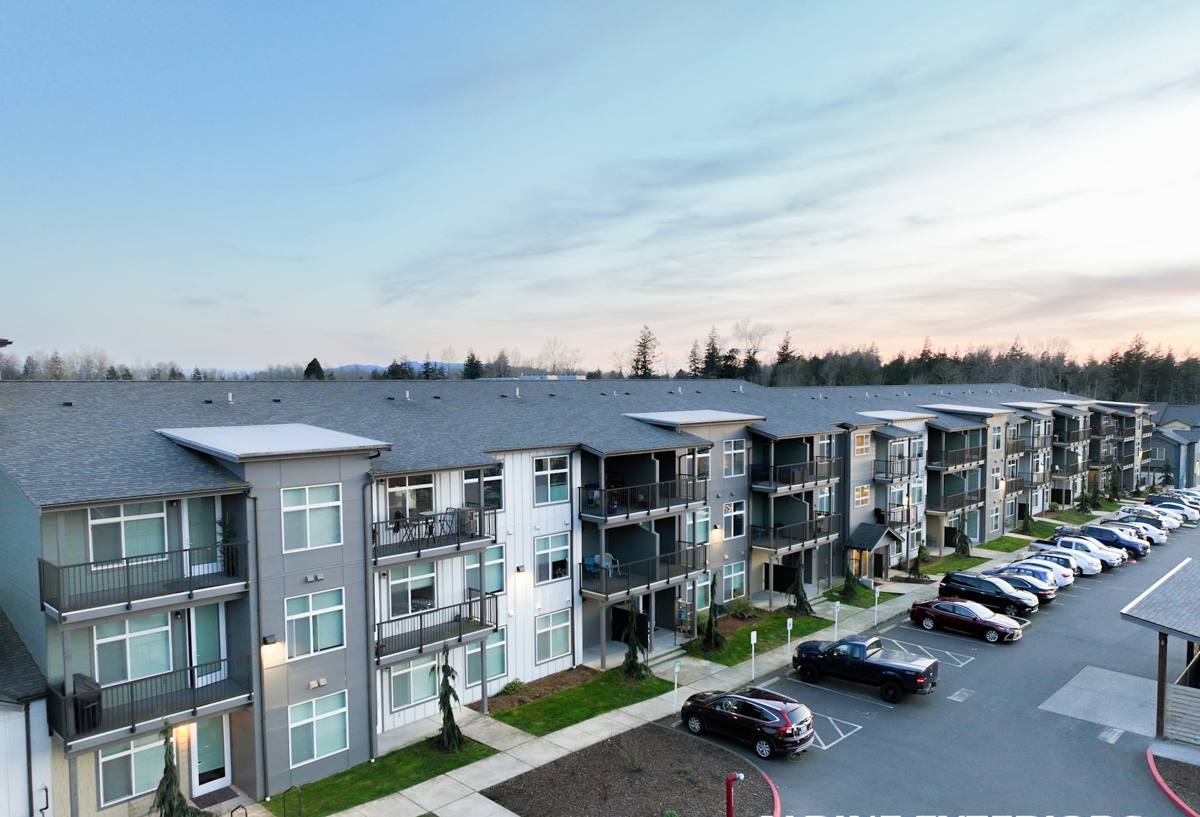
What Salt Air, Driving Rain, and Moss Actually Do to Siding
Salt air
Airborne salt doesn't just sit on the surface — it works into fasteners, trim seams, and any exposed edge of a material that isn't engineered to resist it. Over years, that accelerates corrosion at nail heads and metal flashing, and it degrades paint and caulk faster than the same products would wear inland.
Driving rain
Wind-driven rain doesn't fall straight down — it gets pushed sideways and upward under laps, around window trim, and into any gap in the water-resistive barrier. A siding job that isn't detailed for wind-driven rain (proper lap exposure, correct flashing sequence, sealed penetrations) will eventually let water behind the cladding, even if the surface looks fine.
A long moss season
Tree cover along the Chuckanut corridor keeps a lot of exterior walls in partial shade for much of the year. Combined with regional humidity, that means moss and algae get a longer growing window on north-facing and shaded walls than they would on an open, sun-exposed lot. Siding material, surface texture, and paint quality all affect how fast that growth takes hold — and how easy it is to clean off without damaging the finish.
Why We Only Install James Hardie Fiber Cement
We don't install vinyl, LP SmartSide, primed spruce, cedar, or other fiber cement brands. That's a deliberate standard, not a sales pitch, and it matters more in an environment like Alger's than it would somewhere drier.
- Non-combustible core: James Hardie fiber cement is engineered from cement, sand, and cellulose fiber — it doesn't feed a fire the way wood-based products can, which matters for wildfire-adjacent insurance considerations as well as everyday safety.
- Moisture-resistant by design: Fiber cement doesn't absorb and swell the way engineered wood products can when they take on repeated moisture exposure — a real concern under heavy tree canopy where walls stay damp longer.
- Factory-applied ColorPlus finish: The baked-on finish resists fading and chalking far better than field-applied paint, and it holds up to the freeze-thaw and salt exposure cycles this area sees without needing repainting every few years.
- Climate-engineered HZ product lines: Hardie's HZ5 formulation is specifically built for the wetter, more humid regions of the Pacific Northwest, rather than a one-size-fits-all national spec.
- Real, transferable warranty: A manufacturer warranty that survives a change of ownership matters to resale value — buyers and their inspectors notice when siding has a documented, transferable warranty behind it.
None of this means other products are junk. Vinyl is cheap and easy to install; cedar is beautiful when new; LP SmartSide is a reasonable engineered-wood option in the right climate. We simply won't put our name behind an installation we don't think will hold up to what Alger's weather does to a house over 20-plus years. That's a professional standard, not a knock on every product we don't carry.
What a Correct Siding Installation Actually Involves
Siding failures in this climate are almost never about the panel itself — they're about what's underneath it and how it was installed. A correct job includes:
- Water-resistive barrier: A continuous, properly lapped weather barrier behind the siding, installed shingle-style so water sheds outward, not inward.
- Flashing at every penetration: Windows, doors, vents, and any wall penetration get flashed and integrated with the WRB — this is where most water intrusion actually starts.
- Correct fastening: Hardie specifies fastener type, spacing, and placement for a reason — over-driven or misplaced fasteners crack panels and create entry points for moisture.
- Proper clearances: Siding held off decks, grade, and roof lines by the manufacturer-specified gap so water can drain and wood-framed structure underneath doesn't stay wet.
- Caulking and joint treatment done right: Butt joints and trim seams sealed with a product rated for the exposure, not just whatever's on the truck.
- Painted or factory-finished cut edges: Any field-cut panel edge gets sealed so the cellulose fiber core isn't left exposed to moisture.
Skip any one of these and the siding can still look correct on install day — the problems show up two, five, or ten years later, usually as rot in the framing behind a wall that looked fine from the outside.
Our Process for Alger Siding Installation Projects
1. On-site assessment
We walk the property and look at more than just the siding surface — sun exposure, tree cover, roof drainage patterns, and any signs of past moisture problems all factor into how we plan the job.
2. Tear-off and substrate check
Once the old siding comes off, we inspect the sheathing and framing underneath. Any soft or water-damaged wood gets addressed before a single new panel goes up — covering damaged substrate with new siding just hides a problem, it doesn't fix it.
3. Water barrier and flashing installation
This is the step that determines whether the siding survives Alger's wind-driven rain. We install the WRB and flashing system correctly the first time, because it's the last chance to get water management right before it's covered up.
4. Hardie panel installation to manufacturer spec
Correct exposure, correct fastening pattern, correct clearances — installed to James Hardie's published instructions, which is also what keeps the manufacturer warranty valid.
5. Trim, caulking, and finish detail
Corners, trim boards, and joints get finished and sealed with attention to the specific spots where this area's driving rain tends to find weaknesses.
6. Final walkthrough
We walk the finished job with the homeowner, point out what was done and why, and answer questions about care going forward.
Signs Your Alger Home Needs New Siding
Because problems with old siding often start behind the surface, it helps to know what to look for:
- Soft spots or slight give when you press on the siding near the bottom of walls or below windows
- Persistent moss or algae staining that comes back quickly after cleaning
- Paint that's peeling, bubbling, or chalking heavily rather than just fading evenly
- Visible gaps, cracks, or warping at panel joints and corners
- Rising energy bills that don't match your usage — a sign the wall assembly may no longer be sealing properly
- Interior signs like musty smells or discoloration near exterior walls
Choosing the Right Hardie Product for a Wooded, Coastal-Adjacent Lot
| Hardie Product | Best Fit For | Key Consideration in Alger's Climate |
|---|---|---|
| HardiePlank Lap Siding | Most home styles, classic clapboard look | Widely used option; performs well with proper lap exposure against driving rain |
| HardiePanel Vertical Siding | Modern or mixed-material designs, accent walls | Requires careful joint and batten detailing to shed water on vertical runs |
| HardieShingle | Cottage or craftsman-style homes | More surface texture and joints — needs precise flashing under heavy tree canopy |
| HardieTrim | Corners, window and door surrounds | Pairs with any of the above; protects vulnerable edges from moisture entry |
Why a Crew That Already Works Alger Makes a Difference
A crew that regularly works the Chuckanut area already knows how this climate behaves — which walls stay shaded and damp longest, how far wind-driven rain travels under an eave, and how quickly moss re-establishes on a north-facing elevation. That knowledge shows up in small decisions during installation: where to add extra flashing attention, which trim details need heavier sealant, and how to sequence the job around the area's rain patterns so the water barrier isn't left exposed longer than it has to be.
It also matters for accountability. A local crew is easy to reach if a question comes up after the job is done, and has a reputation in the area worth protecting — that's a different incentive structure than a crew that installs and moves on to the next county.
Maintenance After Installation
James Hardie siding is low-maintenance, not no-maintenance, especially in a moss-prone, salt-air environment. A simple annual routine goes a long way:
- Rinse the exterior annually with a garden hose (avoid high-pressure washing directly at panel joints)
- Trim back tree limbs and vegetation that keep any wall in constant shade and moisture
- Inspect caulking at trim and joints every year or two and re-seal if it's cracking or pulling away
- Address any moss growth promptly with a gentle cleaner rather than letting it establish and spread
- Keep gutters and downspouts clear so roof runoff isn't dumping extra water onto siding
Get a Straight Answer About Your Alger Home's Siding
If you're weighing a siding replacement in Alger, we're happy to take a look, tell you honestly what condition your current siding is in, and walk you through what a correct James Hardie installation would involve for your specific property. Use the form below to request a free, no-pressure estimate.