 Chuckanut Exterior
 Roof Replacement in Edison: Built for This Coastline, Not a Generic Roof
Edison sits close enough to the water that its roofs live a different life than roofs twenty miles inland. Salt-laden air moves through constantly, driving rain comes in sideways off the water more often than most homeowners expect, and the tree cover and damp shade around the area give moss a long growing season instead of a short one. A roof replacement here isn't just swapping old shingles for new ones — it's an opportunity to correct whatever the original roof got wrong for this specific environment.
We work on homes in Edison and the surrounding Chuckanut area regularly, and the failure patterns repeat: fasteners corroding faster than the shingles around them, moss lifting tab edges until wind gets underneath, and valleys or wall flashings that were never quite sealed tight enough for how much water actually hits them here. A correct replacement addresses all of that, not just the surface layer.
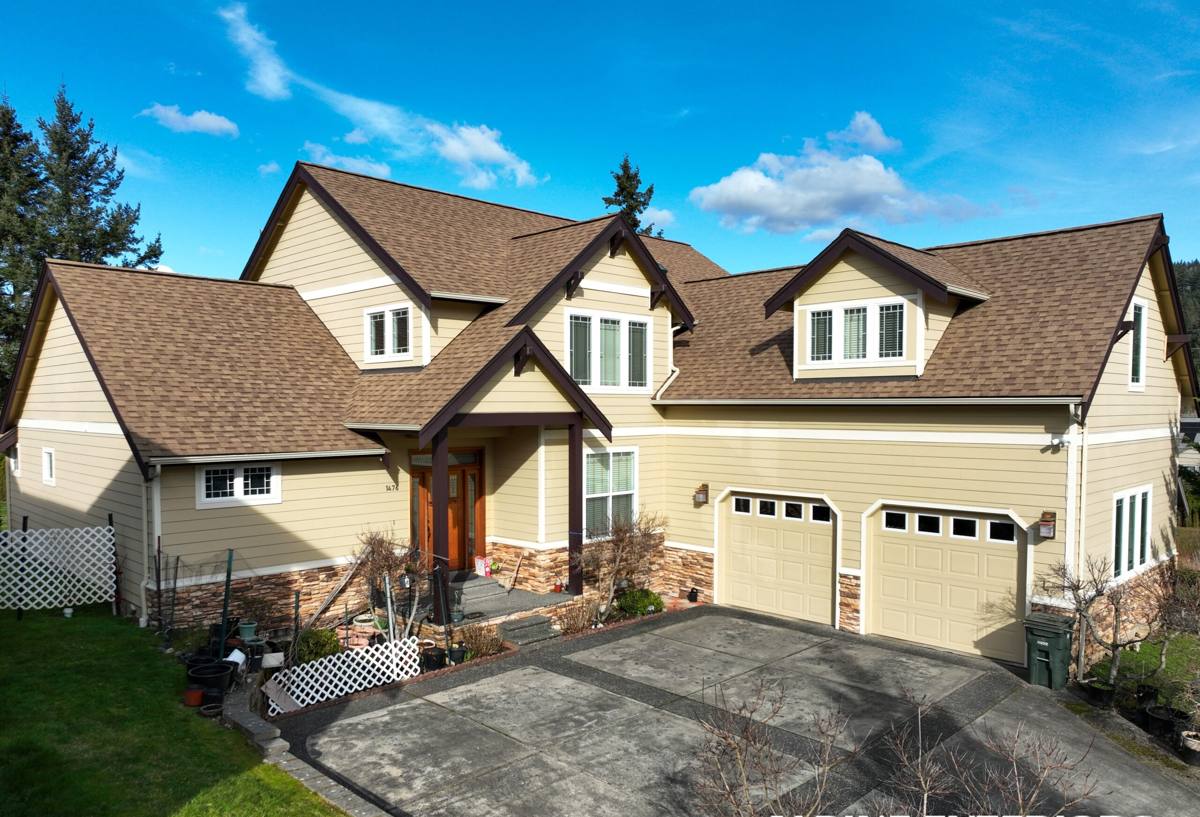
What Salt Air, Driving Rain, and Moss Actually Do to a Roof
Salt air and corrosion
Airborne salt accelerates corrosion on any exposed metal — nail heads, flashing edges, gutter fasteners, even the metal in some ridge vents. On a roof that's twenty or more years old, you'll often find corrosion well before the shingles themselves have worn out. That corrosion is one of the reasons "just re-nail the loose spots" isn't a real fix on an older roof; the fasteners nearby are usually in similar shape.
Wind-driven rain
Rain that comes in at an angle behaves differently than straight-down rain. It gets pushed under shingle tabs, up under flashing laps, and into any gap that a calmer climate might tolerate. Roofs built or repaired without accounting for this tend to develop slow leaks at valleys, wall-to-roof transitions, and around penetrations like plumbing vents — often years before anything shows up as a stain on a ceiling.
Moss and prolonged dampness
Shade, moisture, and mild temperatures are exactly what moss wants, and much of Edison has all three for a good part of the year. Moss doesn't just look bad — it holds water against the roofing material, works its way under tab edges as it grows, and adds weight and friction that shortens the life of the roof underneath it. A roof that isn't shedding water cleanly because of moss buildup is aging faster than its age would suggest.
Signs an Edison Home Needs Replacement, Not Another Repair
Repairs make sense for isolated damage. Replacement makes sense when the roof's overall condition means repairs would just be chasing new problems every season. Some signs point clearly toward replacement:
- Granule loss heavy enough that shingles look patchy or bald in several areas, not just one spot
- Moss that keeps coming back within a year or two of cleaning, even after treatment
- Multiple past repairs in different areas rather than one contained issue
- Soft or spongy decking felt underfoot, or daylight visible from inside the attic
- Shingles curling, cupping, or cracking across large sections rather than isolated tabs
- Flashing that's rusted, separated, or was never properly integrated with the roofing in the first place
- A roof approaching or past the manufacturer's expected service life for this climate, which tends to run shorter here than in drier parts of the state
If your roof shows two or three of these at once, patching individual spots usually costs more over a few years than a single, correctly done replacement.
What a Correct Roof Replacement Involves Here
Full tear-off and deck inspection
We don't install new roofing over old layers. A full tear-off lets us actually see the deck — and in a wet climate, hidden deck damage from long-term moisture intrusion is common enough that skipping this step is a real risk. Any soft, rotted, or delaminated sheathing gets replaced before anything new goes down.
Underlayment suited to the exposure
Given how much wind-driven rain this area sees, we pay close attention to underlayment coverage — particularly at eaves, valleys, and low-slope sections where water sits or moves sideways rather than straight down. A synthetic underlayment with proper lapping, plus ice-and-water barrier at the vulnerable transitions, does more to prevent leaks over the life of the roof than the shingle brand does.
Ventilation that actually balances
Trapped moisture in the attic accelerates deck rot and shortens shingle life from underneath, which is easy to miss since it doesn't show on the roof's surface. A replacement is the right time to correct undersized or mismatched intake and exhaust ventilation rather than reinstalling whatever was there before.
Flashing detail work
Most leaks we're called out to trace back to flashing, not the field shingles. Step flashing at walls, proper counterflashing, and correctly integrated valley metal matter more in a driving-rain climate than almost anywhere else. We treat flashing as its own trade-critical step, not an afterthought bent into place at the end of the day.
What a thorough tear-off day looks like
- Property and landscaping protected before any material comes off the roof
- Old roofing and underlayment stripped down to bare decking
- Deck inspected board by board, with damaged sections marked for replacement
- Any soft or rotted decking replaced and fastened to code
- New underlayment and ice-and-water barrier installed at eaves, valleys, and penetrations
- Flashing replaced or upgraded at walls, chimneys, and vents
- New roofing installed to manufacturer spec, including proper nailing pattern and exposure
- Ventilation checked and corrected if intake or exhaust is inadequate
- Full site cleanup, including a magnetic sweep for stray fasteners
Choosing Materials for a Coastal, Moss-Prone Climate
There's no single "best" roofing material for every home — it depends on budget, roof pitch, and how much moss and salt exposure the specific site actually gets. Here's how the common options compare for a home in this environment:
| Material | Moss resistance | Salt air / corrosion behavior | Typical lifespan here | Relative cost |
|---|---|---|---|---|
| Standard asphalt composition shingle | Moderate — benefits from algae-resistant granules | Fasteners are the weak point; needs corrosion-resistant nails/flashing | 18–25 years | Lowest upfront |
| Algae-resistant (AR) composition shingle | Better — copper-infused granules slow moss/algae growth | Same fastener considerations as standard shingle | 20–28 years | Slightly above standard shingle |
| Metal roofing (standing seam or panel) | Strong — steep shed profile discourages moss buildup | Needs marine-grade coatings/fasteners near salt air | 40+ years | Highest upfront |
| Cedar shake | Weak in shaded, damp spots without regular maintenance | Natural material, but moisture retention is the bigger concern here | Varies widely with upkeep | Mid-to-high, plus ongoing maintenance |
We're generally cautious about cedar shake on shaded, low-airflow sections of a roof in this kind of climate — not because it's a bad product, but because damp, shaded wood needs consistent maintenance to avoid moss and rot, and that upkeep burden is worth knowing about honestly before you commit to it. Algae-resistant shingles or metal tend to need far less ongoing attention on the shadier faces of a roof.
Our Process for an Edison Roof Replacement
- On-site inspection and honest assessment — we look at the whole roof system, not just the shingles, and tell you plainly whether replacement or repair is the right call.
- Written estimate with material options — clear pricing ranges tied to the material and scope, not a vague number.
- Scheduling around weather — we plan tear-off days for dry windows, since an open roof deck and a sudden squall off the water don't mix.
- Tear-off, deck repair, and full re-roof as detailed above.
- Final walkthrough — we go over the finished roof and ventilation with you before calling the job done.
Why a Crew That Already Works Edison Matters
A roofer who mostly works drier, inland areas can still do competent work, but they won't necessarily default to the details that matter most here — the corrosion-resistant fastener choice, the extra attention at valley and wall flashing, the ventilation correction for a shaded, damp lot. Crews who work this coastline regularly build those habits in as standard practice, not an upsell.
There's also a practical side: knowing how weather moves through this area affects scheduling, material staging, and how a tear-off day gets planned so your home isn't left exposed longer than necessary. That local familiarity reduces risk on a project where timing and weather genuinely matter.
Timeline and Permitting
Most single-family roof replacements take one to three days on site once work begins, depending on roof size, pitch, and how much deck repair is needed. Whatcom County and local jurisdictions generally require a permit for full roof replacements — we handle that process as part of the job rather than leaving it to the homeowner. Because dry weather windows aren't unlimited in this climate, we build scheduling flexibility into the plan rather than locking a date and hoping the forecast cooperates.
If your roof is showing its age or you're just not sure whether it's a repair or replacement situation, we're happy to take a look and give you a straight answer. Fill out the form below for a free, no-pressure estimate.