 Chuckanut Exterior
 Siding Installation Built for Edison's Coastline Weather
Edison sits close enough to the water that homes here deal with a different set of siding problems than houses further inland. Salt-laden air moves through on the wind and settles on exterior surfaces. Driving rain comes in sideways during winter storms, not just straight down. And the tree cover and damp shade that make this area beautiful also make it one of the harder places in Whatcom County to keep moss and algae off a house. Any siding installed here has to be chosen and installed with all three of those conditions in mind at the same time, not just one of them.
We install James Hardie fiber cement siding exclusively, and a lot of that decision comes directly from watching how different materials hold up in exactly this kind of environment. This page walks through what Edison homes actually need from a siding job, what a correct installation looks like, and how our process handles the details that matter most out here.
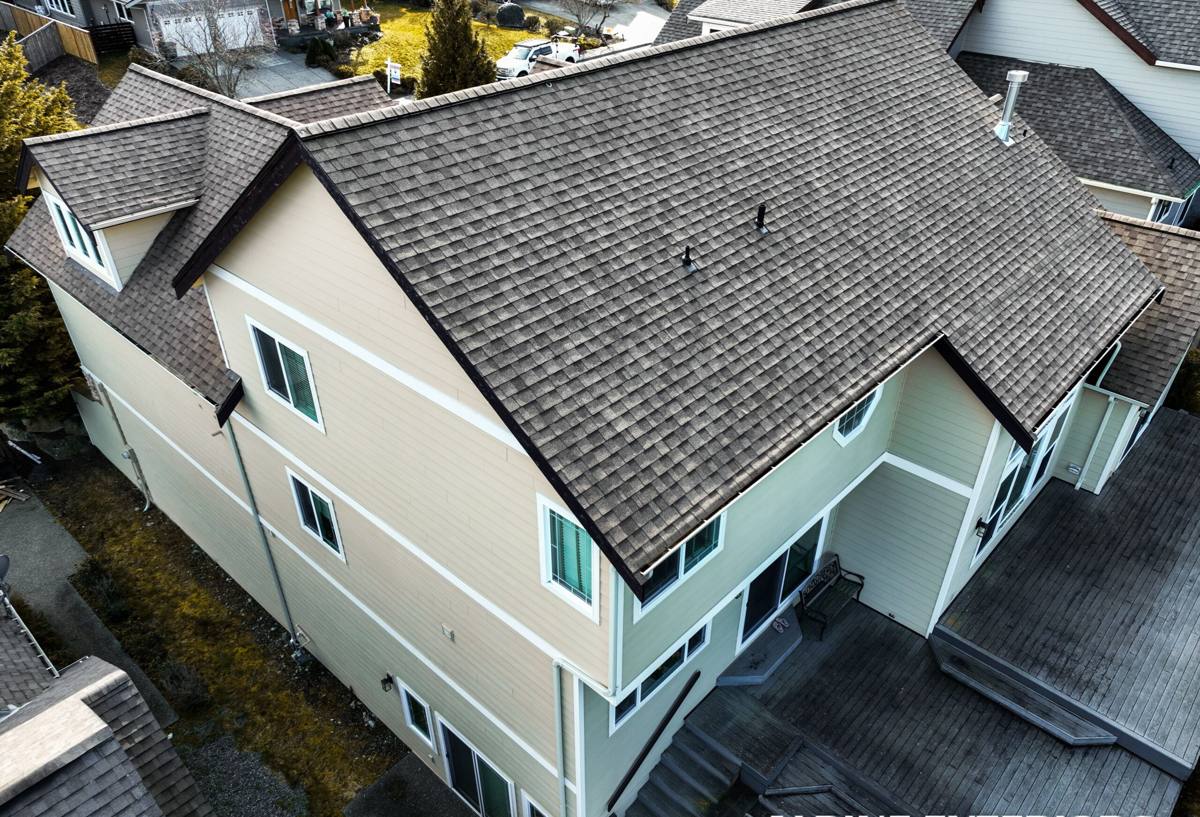
What Salt Air, Rain, and Moss Actually Do to Siding
Salt Air
Airborne salt is corrosive to exposed metal fasteners, flashing, and trim, and it accelerates the breakdown of some paint and coating systems over time. It doesn't need to be a direct oceanfront lot to matter — salt-carrying air moves inland on prevailing winds and settles on siding, trim, and hardware even a mile or more from open water.
Driving Rain
Wind-driven rain doesn't behave like a gentle straight-down shower. It gets pushed sideways and upward under laps, around window trim, and behind poorly sealed penetrations. A siding system that only manages water moving downward will eventually let moisture in during the kind of storm that's routine here from fall through spring.
Moss and Algae
Shade, moisture, and mild temperatures are exactly what moss and algae need to establish themselves, and Edison has all three in abundance. Moss holds moisture against a wall surface far longer than open air would, which is a problem for any material that isn't dimensionally stable when it stays wet.
Why This Matters More Than the Siding Brand Alone
A lot of siding failure in this region isn't really a "bad product" story — it's a moisture-management story. Water gets behind the cladding through a poorly lapped seam, a missing kick-out flashing, or a fastener pattern that wasn't sealed correctly, and then it has nowhere to go and no reason to dry out quickly given the local humidity. The material matters, but the installation details around water, fastening, and finish matter just as much, and that's true no matter what siding a home has.
Why We Install James Hardie and Nothing Else
We made the decision to standardize on James Hardie fiber cement siding company-wide, and we don't install vinyl, LP SmartSide, or unfinished wood products like primed spruce or cedar. That's not a knock on every use case those products might have elsewhere — it's a reflection of what we've found holds up best, with the least ongoing homeowner burden, in this specific coastal, high-moisture climate.
- Non-combustible core: fiber cement doesn't feed a fire the way wood-based products can.
- Dimensionally stable: it doesn't swell, cup, or delaminate from repeated wet-dry cycling the way engineered wood products can under sustained moisture exposure.
- Factory-applied ColorPlus finish: baked-on at the factory under controlled conditions, which holds color and resists fading more consistently than field-applied paint over the long run.
- Climate-engineered HZ product lines: Hardie's HZ5 formulation is engineered for wetter, cooler climates like ours, which is a meaningful distinction from a one-size-fits-all product.
- Strong transferable warranty: when installed to manufacturer spec, the warranty coverage is a real, documented commitment, not just marketing language.
We'd rather install one product exceptionally well, to spec, every time, than offer a menu of options and let installation quality vary by which material a crew happens to be less familiar with that week.
What a Correct Installation Actually Involves
The siding material is maybe half the equation. The other half is everything underneath and around it, which is invisible once the job is done but determines whether the house stays dry for the next 30-plus years.
Weather-Resistive Barrier and Water Path
Before any siding goes up, the wall needs a correctly lapped weather-resistive barrier and a drainage plane that gives incidental moisture somewhere to go rather than trapping it against the sheathing. This is the layer that does the real work when driving rain gets past the outer cladding.
Flashing at Every Penetration
Windows, doors, hose bibs, light fixtures, deck ledgers — every penetration through the siding is a place water can find its way in if it isn't flashed correctly. Kick-out flashing where a roofline meets a wall is one of the most commonly missed details on older installs in this area, and it's one of the most common sources of hidden rot when it's skipped.
Fastening and Fastener Selection
Given the salt exposure in Edison, fastener corrosion resistance isn't optional. Hardie's installation specifications call for specific nail types and placement, and following that spec — rather than using whatever's on hand — is part of what keeps trim and boards from staining, streaking, or loosening years down the road.
Proper Clearance and Gapping
Fiber cement siding needs correct clearance from grade, roof lines, decks, and other siding-to-siding transitions. Too tight, and the board can wick moisture; installed without expansion gaps at the right joints, and you get cracking or buckling over time as the material moves with temperature and humidity.
Caulking and Sealant Discipline
Manufacturer spec calls for sealant only at specific joints, not everywhere — over-caulking can actually trap moisture instead of shedding it. Getting this balance right is a detail that separates a crew that's installed a lot of Hardie from one that's treating it like generic siding.
Our Process for an Edison Siding Installation
- On-site assessment: we walk the exterior, check for existing moisture damage, evaluate the current weather barrier condition, and look at how the home is exposed to wind, rain, and shade.
- Scope and product selection: we recommend the right Hardie product line, plank exposure, and ColorPlus finish for the home's style and exposure, and put together a clear, itemized estimate.
- Tear-off and substrate check: old siding comes off and we inspect the sheathing underneath for rot or damage before anything new goes up — this is where hidden problems from years of moisture intrusion usually surface.
- Weather barrier and flashing installation: a correctly lapped water-resistive barrier goes on first, with flashing detailed at every window, door, and penetration.
- Hardie siding installation to manufacturer spec: proper fastener type and pattern, correct clearances, and expansion gaps where required.
- Trim, caulk, and final detailing: trim work and sealant applied per spec, not just "wherever it looks like it needs it."
- Final walkthrough: we go over the finished job with the homeowner before calling it complete.
Signs an Edison Home's Siding Needs Attention
- Soft or spongy spots when you press on the siding, especially near the bottom courses or under windows
- Persistent moss or algae growth that comes back quickly after cleaning
- Visible gaps, cracking, or warping at butt joints and corners
- Peeling or bubbling paint, or chalky, faded color that won't wash off
- Rust streaking below fasteners or trim, a common sign of salt-air corrosion
- Water stains or musty smells on interior walls that back up to exterior siding
Any one of these on its own isn't necessarily an emergency, but they're worth having looked at before a wet Whatcom County winter turns a small issue into sheathing damage.
What Affects the Cost of a Siding Installation
| Factor | Why It Matters |
|---|---|
| Home size and wall complexity | More square footage, more corners, gables, and dormers all add labor time |
| Condition of existing sheathing | Rot repair found during tear-off adds cost but is essential to fix before new siding goes on |
| Siding profile and exposure | Lap width, board texture (smooth vs. woodgrain), and panel vs. plank affect material cost |
| Trim and detail work | Corner boards, window casing, and fascia detailing add labor beyond flat wall coverage |
| Site access | Tight lots, tree cover, or difficult staging areas can affect crew efficiency |
| Color and finish | Factory ColorPlus finishes come in a range of standard colors; custom finishes may add cost |
We give every homeowner a written, itemized estimate before work starts, so there's no guessing about what's driving the price.
Why Hiring a Crew That Already Works This Area Matters
A contractor who works Chuckanut, Edison, and the surrounding Whatcom County coastline regularly already knows how this climate behaves — which wall orientations take the worst of the driving rain, where moss establishes fastest, and how much salt exposure a given property is realistically dealing with. That's not something a crew unfamiliar with this specific stretch of coastline picks up on the first job. It shows up in the flashing details, the fastener choices, and the overall judgment calls made on-site that a spec sheet alone doesn't cover.
It also means service after the install isn't a mystery. A local crew that's still working in the area next year and the year after is a lot more accountable than a company that moves on to the next region once the job wraps.
Keeping New Siding Looking Right in This Climate
- Rinse siding periodically with a garden hose to knock off salt residue and light grime
- Trim back tree branches and vegetation that keep sections of the wall shaded and damp longer than necessary
- Address moss with a gentle wash rather than aggressive pressure washing, which can damage the finish
- Check and refresh caulking at trim joints every few years as part of routine home maintenance
- Have flashing and trim inspected after major storms if you notice any new staining or gaps
James Hardie siding, installed correctly, is low-maintenance compared to wood or vinyl — but "low-maintenance" isn't "zero-maintenance," and a little attention goes a long way in a climate like this one.
Get a Free, No-Pressure Estimate
If your Edison home's siding is showing its age, or you're planning ahead for a replacement before the next wet season, we're happy to come take a look and walk you through what we'd recommend and why. There's no pressure and no obligation — just a straightforward assessment from a crew that installs one product, does it right, and already knows this stretch of coastline. Reach out using the form below to get started.