 Chuckanut Exterior
 Asphalt Shingle Roofing Built for Fairhaven's Coastal Conditions
Fairhaven sits close enough to the water that homes here take a different kind of weather beating than roofs just a few miles inland. Salt-laden air off Bellingham Bay, driving rain that comes in sideways during winter storms, and a moss season that can run eight months or more all combine to shorten the life of a roof that wasn't installed with this specific climate in mind. Asphalt shingle roofing is still one of the most practical, cost-effective choices for Whatcom County homes, but only when the materials, ventilation, and installation details are matched to what a coastal roof actually has to survive.
This page covers what we look at, why we look at it, and what a correctly installed asphalt shingle roof should give a Fairhaven homeowner in return.
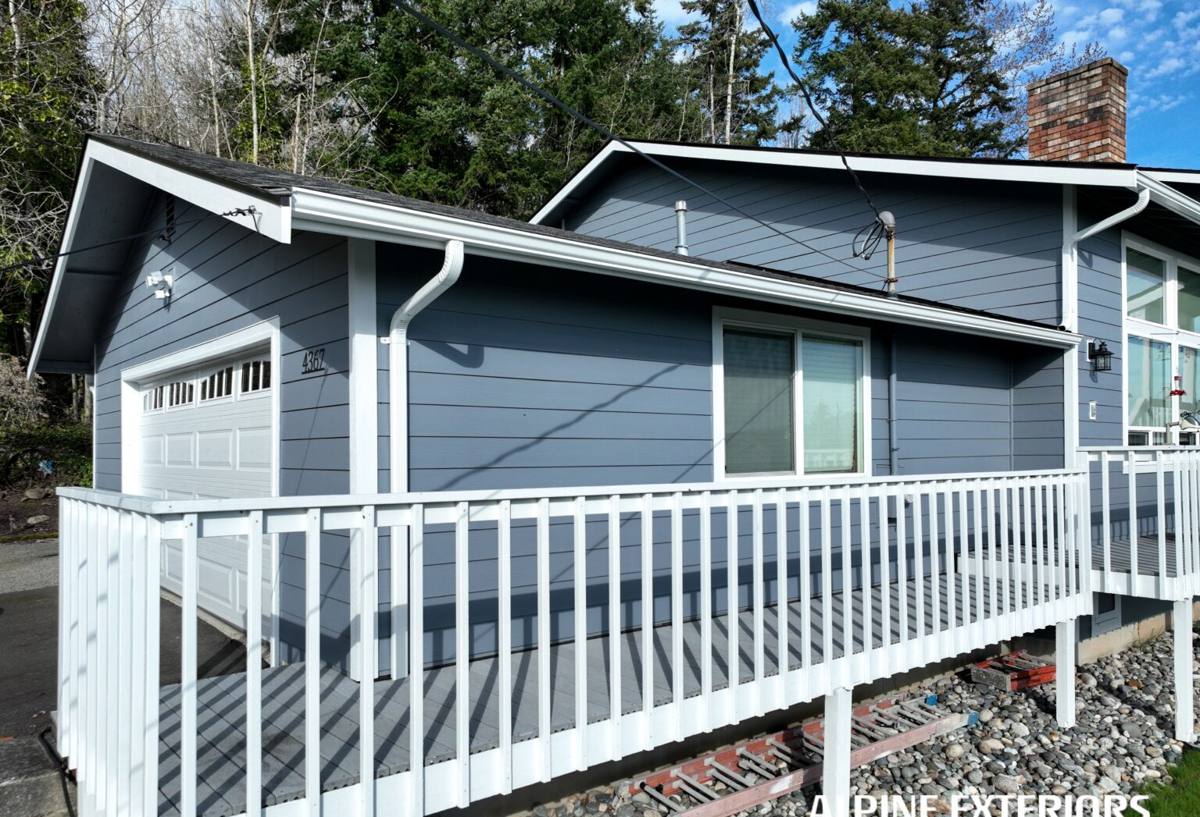
What Salt Air, Rain, and Moss Actually Do to a Roof
Every material on a roof degrades over time, but the rate of that degradation depends heavily on local conditions. Fairhaven's proximity to the bay means airborne salt settles on roofing surfaces and accelerates the breakdown of exposed metal fasteners, flashing, and vent components. Left unaddressed, corroded flashing is one of the most common sources of hidden leaks we find on coastal Whatcom County homes.
Driving rain is a separate problem. Wind-driven rain doesn't just fall straight down — it gets pushed sideways and upward under shingle edges, around chimneys, and into any gap in flashing or underlayment that wouldn't be a problem in a calmer climate. A roof system designed for a drier or less windy region often isn't sealed aggressively enough for what Fairhaven sees in a typical winter.
Then there's moss. Western Washington's long, mild, wet season is close to ideal moss-growing weather, and shaded, north-facing roof sections in tree-heavy Fairhaven neighborhoods are especially prone to it. Moss isn't just a cosmetic issue — as it grows, it lifts shingle edges, holds moisture against the roof deck, and creates a foothold for wood rot underneath.
Why This Matters for Shingle Selection and Installation
None of these conditions make asphalt shingles a poor choice — they just mean the roof needs to be built with them in mind from the start. That includes shingle rating, fastener material, flashing detail, and attic ventilation, all of which we'll walk through below.
Choosing the Right Asphalt Shingle for a Coastal Whatcom County Home
Not all asphalt shingles are built the same, and the differences matter more here than in a drier climate. We generally steer Fairhaven homeowners toward higher wind-rated, algae-resistant shingle lines, because the cost difference over a standard economy shingle is modest compared to the added service life.
| Shingle Type | Typical Lifespan (Coastal WA) | Best Fit For |
|---|---|---|
| 3-tab economy shingle | 12–18 years | Budget-driven projects, low-slope simple roofs |
| Architectural (laminate) shingle | 20–30 years | Most Fairhaven homes; better wind and impact resistance |
| Algae-resistant (copper/zinc-granule) shingle | 20–30 years, slower algae/moss staining | Shaded, tree-covered, or north-facing roof sections |
| High wind-rated shingle | 25–30+ years | Exposed sites closer to the bay with more direct wind exposure |
Architectural shingles have become the practical default for most of our Fairhaven projects. They're thicker, carry a stronger wind rating, and hold up better against the freeze-thaw and wet-dry cycling that's common here. Algae-resistant options are worth the modest upcharge on shaded roof faces, where moss and algae staining shows up fastest.
Moss and Algae Prevention: What Actually Helps
We get asked constantly whether moss treatments, zinc strips, or pressure washing are worth it. Some help, some don't, and a few can actually shorten a roof's life if done wrong. Here's what we recommend, in order of effectiveness:
- Keep gutters and valleys clear. Trapped debris holds moisture against shingles and is the single biggest driver of moss growth we see locally.
- Trim back overhanging branches where practical, to reduce shade and let roof surfaces dry between rain events.
- Install zinc or copper control strips near the ridge on moss-prone sections — rain washing over the metal naturally inhibits regrowth over time.
- Avoid pressure washing shingles. High-pressure water strips protective granules and shortens shingle life; a soft wash or manual moss removal is safer.
- Schedule a yearly roof check before the wet season ramps up, so small moss patches get caught before they lift shingle edges.
What a Correct Asphalt Shingle Installation Involves
The shingle itself is only part of the system. A roof that's going to hold up in Fairhaven's climate needs every layer underneath it done right.
Underlayment and Water Barrier
We use synthetic underlayment as standard, and add self-adhered ice-and-water shield along eaves, valleys, and around penetrations — the areas most exposed to wind-driven rain and ice damming during cold snaps. This is one of the details that separates a roof built for coastal Washington from one built to a generic national spec.
Flashing
Flashing around chimneys, skylights, sidewalls, and vent pipes is where most roof leaks actually start, not in the field of the shingles. Given the salt-air exposure in Fairhaven, we favor corrosion-resistant flashing materials and make sure step flashing and counter-flashing are properly layered, not just caulked over — caulk is a maintenance item, not a permanent fix.
Ventilation
Proper intake and exhaust ventilation keeps the attic temperature and moisture level balanced, which does two things: it prevents moisture buildup that leads to rot and mold, and it helps prevent ice damming in cold weather. An under-ventilated attic is one of the more common issues we find on older Fairhaven homes during a roof evaluation.
Fasteners
Given salt-air corrosion, we use corrosion-resistant nails and fasteners rather than standard galvanized options wherever it makes sense — a small cost difference that avoids premature fastener failure years down the road.
Our Process for a Fairhaven Roofing Project
- On-site evaluation. We walk the roof and attic, check for moss damage, soft decking, flashing condition, and ventilation, and take measurements.
- Honest scope and estimate. We tell you what actually needs to be done — full replacement, partial repair, or targeted flashing and moss work — and explain why, not just what it costs.
- Material selection. We walk through shingle options based on your roof's exposure, shading, and budget, using the comparison above as a starting point.
- Tear-off and deck inspection. Old roofing comes off down to the deck so we can check for rot or soft spots before anything new goes on — this is where hidden moisture damage gets caught.
- Underlayment, flashing, and shingle installation. Done in the order and detail described above, not shortcut to save a day of labor.
- Final walkthrough. We review the completed roof with you, including ventilation and any maintenance recommendations specific to your property.
Repair or Replace? Signs to Watch For
Not every roofing issue in Fairhaven means a full replacement. Common signs we evaluate before recommending one path over the other include curling or cupping shingle edges, granule loss showing up in gutters, soft or spongy spots on the roof surface, daylight visible through attic boards, and moss that's advanced enough to have lifted shingles rather than just sitting on the surface. A roof with isolated flashing failure or storm damage on an otherwise sound shingle field is often a repair. Widespread granule loss, multiple leak points, or a roof already past its expected lifespan usually points to replacement being the more cost-effective long-term choice.
What Affects the Cost of an Asphalt Shingle Roof in This Area
| Factor | Why It Matters Locally |
|---|---|
| Roof size and complexity | More valleys, dormers, and penetrations mean more flashing detail and labor |
| Shingle grade chosen | Algae-resistant and high wind-rated shingles cost more upfront but reduce moss/wind-related callbacks |
| Deck condition | Rot from long-term moisture or moss intrusion may require deck repair before shingles go on |
| Ventilation upgrades | Older Fairhaven homes often need intake or exhaust vents added or corrected |
| Access and site conditions | Tree cover, steep pitch, or tight lot access near the water can add labor time |
We give a written, itemized estimate before any work starts, so you know exactly what you're paying for and why — no vague lump-sum numbers.
Why Hiring a Crew That Already Works in Fairhaven Matters
A roofing crew that mostly works inland doesn't run into salt-air corrosion, driving rain infiltration, or heavy moss growth often enough to build habits around them. Those are exactly the conditions that determine whether a Fairhaven roof lasts fifteen years or thirty. Working regularly in Chuckanut and the surrounding Whatcom County area means we're used to evaluating shaded, tree-covered lots for moss risk, specifying corrosion-resistant fasteners and flashing as a default rather than an upsell, and building in the ventilation and underlayment details that this specific climate demands.
If you're dealing with an aging roof, active moss growth, or you just want an honest read on where your roof currently stands, we're happy to take a look. Reach out for a free, no-pressure estimate — the form below will get you started.