 Chuckanut Exterior
 Why Fairhaven Homes Need Siding Built for This Exact Climate
Fairhaven sits close enough to the water that salt-laden air is a daily fact of life, not an occasional nuisance. Add in the driving, wind-pushed rain that comes off the Salish Sea and the long, damp moss season that stretches across much of the year in Whatcom County, and you have a combination that is genuinely hard on exterior building materials. Siding here isn't just cosmetic — it's the first and most exposed layer of defense against moisture intrusion, and it takes a beating that siding in a drier inland climate never has to deal with.
Salt air accelerates corrosion on fasteners and trim, and it interacts badly with coatings that aren't formulated to resist it. Wind-driven rain doesn't just fall straight down — it gets pushed sideways and upward into laps, seams, and butt joints that a standard installation might treat casually. And moss doesn't just grow on roofs; it takes hold in shaded, north-facing siding runs and anywhere organic debris collects against a wall, holding moisture against the surface for weeks at a time. Any siding product installed in Fairhaven has to be evaluated against all three of these stresses at once, not just one of them.
What "Correct" Fiber Cement Siding Looks Like Here
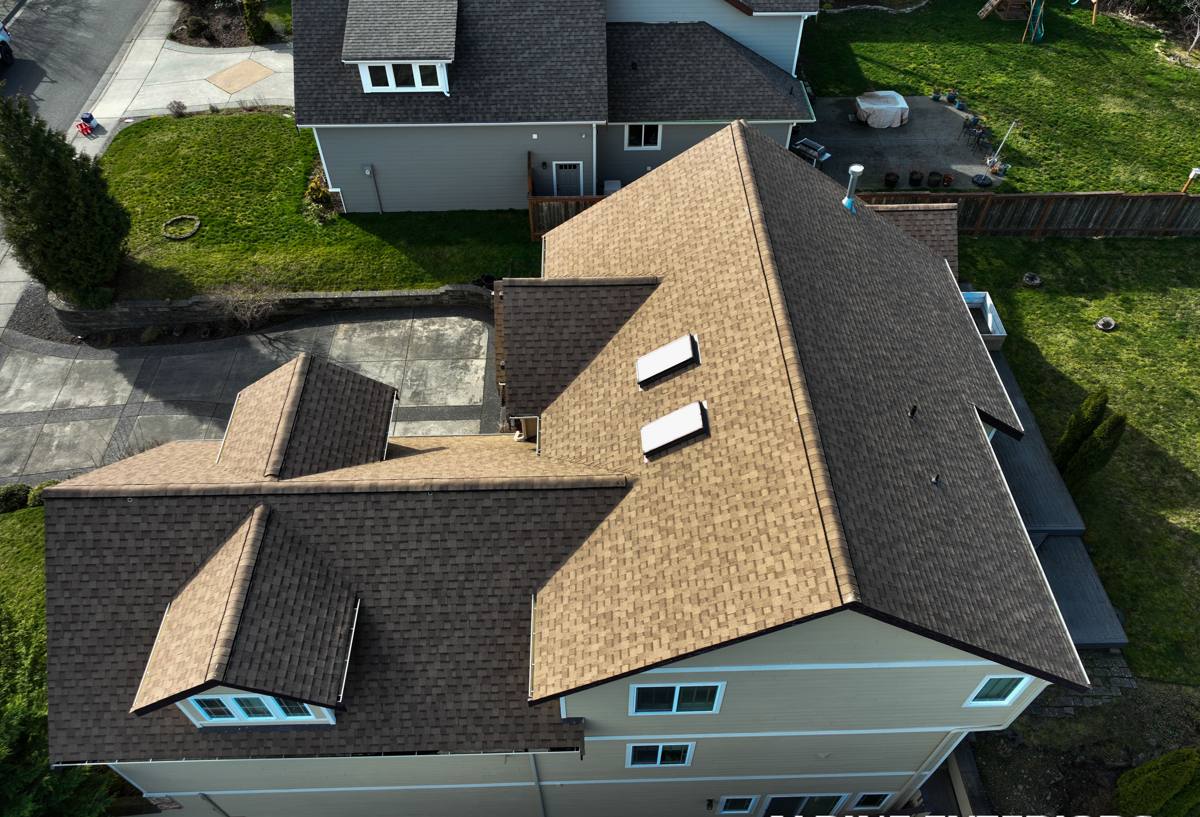
Fiber cement siding, done right, holds up to this environment better than almost anything else on the market — but "done right" is doing a lot of work in that sentence. The material itself is non-combustible, dimensionally stable, and resistant to the swelling, cupping, and rot that wood-based products eventually suffer. But its long-term performance in a coastal, high-moisture climate depends almost entirely on installation details that are easy to skip and expensive to fix later.
The details that matter most in Fairhaven's climate
- Proper clearance and flashing at every window, door, and roofline intersection, so wind-driven rain has nowhere to collect and sit against the board
- Correct fastener spacing and type — fasteners rated for coastal exposure, driven to the manufacturer's specified depth, not overdriven or underdriven
- A drainable water-resistive barrier behind the siding, so any moisture that does get past the cladding has a path to escape instead of sitting against the sheathing
- Factory-finished (ColorPlus) panels where possible, since a factory-cured finish resists the salt-air fading and coating breakdown that field-applied paint struggles with over time
- Adequate ground clearance and gutter/downspout coordination so splashback and roof runoff aren't constantly wetting the bottom courses
- Thoughtful board placement in shaded, north-facing sections where moss and algae growth is most likely, since airflow and sun exposure both help those areas dry out between rain events
Skip any one of these and you don't get a siding failure next month — you get one in five or eight years, quietly, behind the wall, which is the worst kind of problem because it's invisible until it isn't.
Why We Only Install James Hardie Fiber Cement
We've made a deliberate decision to install James Hardie fiber cement products exclusively — not LP SmartSide, not vinyl, not Cemplank or Allura, not primed spruce or cedar. That's not a marketing position, it's a standard we hold ourselves to because of what we've seen this climate do to lesser-suited products over time.
James Hardie's HZ5 product line is engineered specifically for climates like ours, with freeze-thaw cycling, sustained moisture exposure, and coastal conditions factored into the formulation. The ColorPlus factory finish system gives you a baked-on, warrantied finish that resists the fading and chalking that field-painted or lower-grade coatings show first in salt air. And because it's non-combustible fiber cement rather than a wood-composite or vinyl product, it doesn't carry the same long-term vulnerability to moisture absorption, insect activity, or heat distortion. We back installations with Hardie's transferable warranty, which matters to a lot of Fairhaven homeowners who plan to sell within the warranty period — it's a real asset at resale, not just paperwork.
None of this means other products are without merit. It means that after years of doing exterior work in this specific climate, we decided we'd rather stand behind one system we trust completely than offer a menu of options with different long-term risk profiles.
Our Fairhaven Installation Process
Every fiber cement project follows the same disciplined sequence, whether it's a full re-side or a targeted repair section. Consistency here is what prevents the kind of "close enough" installation that looks fine on day one and fails quietly by year six.
1. Assessment and moisture check
Before any siding comes off, we look at the existing wall assembly for signs of past moisture intrusion — soft sheathing, stained framing, or evidence of prior moss and mildew intrusion at seams. This tells us whether we're dealing with a straightforward re-side or whether there's underlying repair work to address first.
2. Water-resistive barrier and flashing
We install a drainable weather-resistive barrier and properly integrate flashing at every penetration — windows, doors, hose bibs, light fixtures, and roof-to-wall transitions. This step is where most long-term failures actually originate, and it's the step most likely to get rushed on a lower-bid job.
3. Panel installation to manufacturer spec
Boards are fastened per James Hardie's published installation guidelines — clearances, fastener patterns, and joint treatment included. We don't treat these specs as suggestions; they're the basis of the warranty coverage you're paying for.
4. Trim, caulking, and finish detail
Trim work and sealant are finished with coastal exposure in mind, using products rated for sustained UV and moisture exposure rather than generic caulk that degrades faster in salt air.
5. Final walkthrough
We walk the finished job with the homeowner, point out how the drainage and clearance details were handled, and make sure everything matches what was scoped.
Comparing Siding Options for a Coastal Whatcom County Home
| Factor | James Hardie Fiber Cement | Vinyl | Wood / Cedar |
|---|---|---|---|
| Salt air resistance | Strong, factory-finish resists fading | Can become brittle and discolored over time | Requires ongoing coating maintenance |
| Moisture / rot resistance | Non-combustible, dimensionally stable | Doesn't rot, but seams can trap moisture behind panels | Vulnerable to rot without diligent upkeep |
| Moss/algae susceptibility | Low with correct placement and drainage | Low, but doesn't breathe well against damp sheathing | Higher, especially in shaded areas |
| Maintenance burden | Periodic wash, no repainting with ColorPlus | Low, but cracks/fades are not repairable in sections | Regular painting/staining and inspection required |
| Fire resistance | Non-combustible | Melts/deforms under heat | Combustible |
| Warranty structure | Long-term, transferable | Varies widely by manufacturer | Typically none beyond installer workmanship |
What Fairhaven Homeowners Should Watch For Between Now and a Replacement
You don't have to be a siding expert to catch early warning signs, but you do have to know where to look. In our climate, most problems show up first in the areas that stay damp longest.
- Persistent moss or algae streaking on north- or shade-facing walls that doesn't wash off easily
- Soft spots, visible swelling, or bubbling paint near ground level or under windows
- Gaps opening up at seams, corners, or trim boards after a few wet seasons
- Fastener heads showing rust bleed through the finish, especially on older or non-coastal-rated hardware
- Visible warping or cupping on wood-based siding sections
Catching these early usually means a repair. Ignoring them usually means a much larger project once moisture reaches the sheathing or framing behind the siding.
Why Local Experience in Fairhaven Specifically Matters
A crew that's worked exteriors up and down the Whatcom County coastline knows things that don't show up in a manufacturer's installation manual — which wall orientations in this area take the worst wind-driven rain, which lots hold moisture and moss longer because of tree cover or drainage patterns, and how salt exposure varies even within a few blocks depending on elevation and wind exposure. That local pattern recognition shapes real decisions on the job: where to add extra flashing attention, which trim details to reinforce, and where a "standard" installation approach needs an adjustment for this specific site.
It also means faster, more accurate estimates. When we've already seen how a particular type of wall assembly performs a few streets over, we're not guessing at what your home needs — we're applying what's already proven out in the neighborhood.
What a Fiber Cement Project Typically Involves, Cost-Wise
Every home is different, and we don't publish blanket per-square-foot pricing because wall complexity, trim detail, existing damage, and access all move the number. That said, the factors that most commonly affect cost on a Fairhaven project are worth knowing going in.
| Cost Factor | Why It Matters |
|---|---|
| Existing wall condition | Hidden moisture or rot repair adds scope beyond the siding itself |
| Home size and story count | More surface area and access complexity (scaffolding, lifts) increase labor |
| Trim and architectural detail | Corners, gables, and window/door trim take more time than flat wall runs |
| Factory-finished vs. field-painted panels | ColorPlus panels cost more upfront but reduce long-term maintenance and repainting |
| Removal and disposal of existing siding | Full tear-off vs. install-over changes labor and disposal costs |
We give straightforward, itemized estimates so you can see exactly what's driving the number — no vague lump-sum quotes.
Ready for a Straight Answer on Your Home
If you're dealing with aging siding, visible moss buildup, or you just want an honest read on whether your current siding is holding up the way it should in this climate, we're happy to take a look. Fill out the form below for a free, no-pressure estimate — we'll walk your home, tell you what we actually see, and explain your options in plain terms.