 Chuckanut Exterior
 Fairhaven's Climate Is Hard on Roofs — Here's Why
Fairhaven sits close to Bellingham Bay, which means homes here deal with a combination of weather stresses that inland neighborhoods simply don't face. Salt-laden air drifts in off the water and settles on every exterior surface, including your roof. Add Whatcom County's long, wet winters — where driving rain comes in sideways more often than straight down — and a moss season that can stretch from fall through spring, and you've got a roofing environment that punishes shortcuts. A roof that would last decades in a dry inland climate can show real wear here in half that time if it wasn't built for these specific conditions.
Metal roofing, done correctly, is one of the strongest answers to that climate. But "done correctly" is doing a lot of work in that sentence. Metal roofing installed with the wrong fasteners, the wrong flashing details, or without accounting for salt exposure and moss buildup can fail early in ways that are expensive to fix. This page covers what a Fairhaven metal roof actually needs, how a correct installation works, and what to expect if you're considering one for your home.
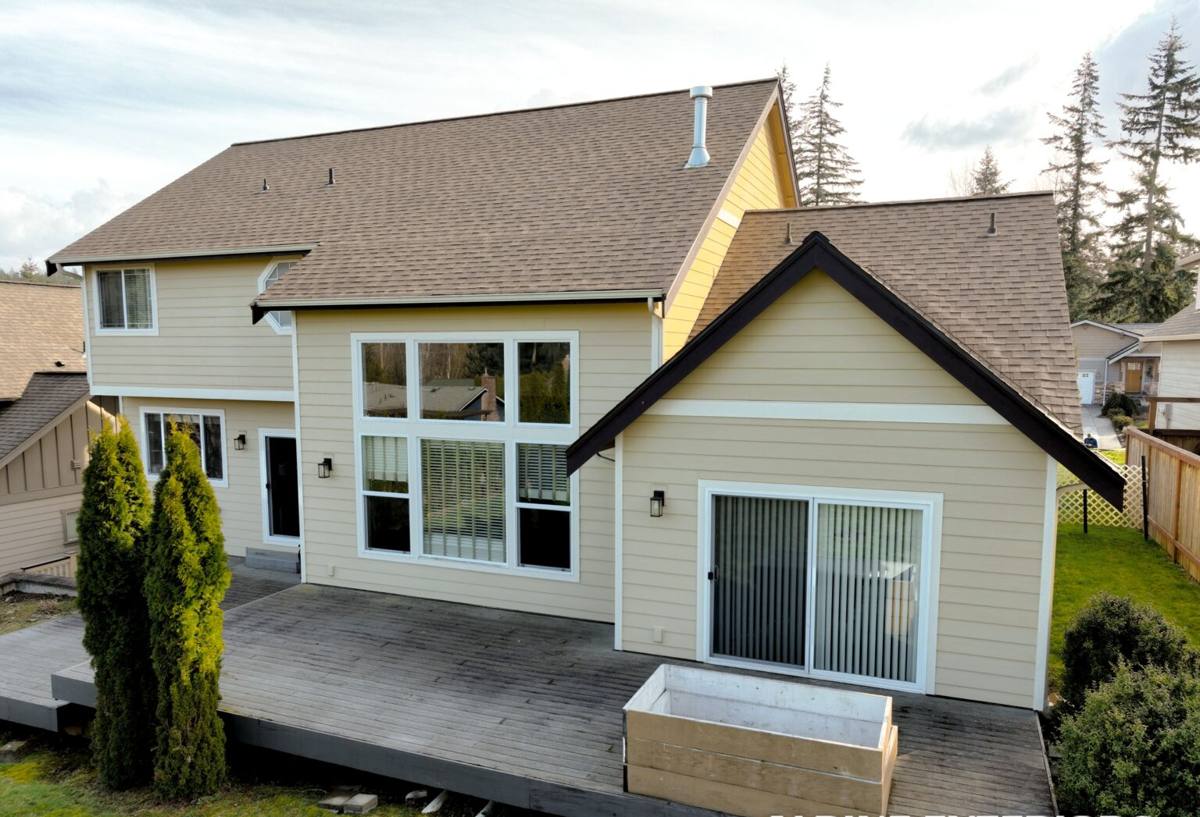
What Fairhaven Homes Specifically Need From a Metal Roof
Corrosion Resistance for Salt Air
Proximity to saltwater accelerates corrosion on any exposed metal — roofing panels, fasteners, flashing, and gutters included. This doesn't mean metal roofing is a bad choice near the bay; it means the specific metal, coating, and fastener hardware matter more here than they would fifty miles inland. Bare or poorly coated steel, mismatched fastener metals, and cut corners on flashing are where salt-air corrosion shows up first — usually at exposed edges, screw heads, and valleys where water and salt residue sit longest.
Standing Up to Driving Rain
Whatcom County rain isn't always gentle. Wind off the water frequently pushes rain sideways and up under roof edges, which is a very different load than rain falling straight down. That means underlayment quality, flashing at every penetration and transition, and proper overlap at seams aren't optional extras — they're the difference between a roof that sheds water and one that lets it find a way in through the wind-driven angle.
Managing Moss and Shade
Many Fairhaven lots have mature trees and a good amount of shade, and combined with our damp, mild winters, that's ideal moss-growing conditions. Moss holds moisture against roofing material, and on the wrong surface it can work into seams and fastener points over time. Metal roofing is naturally more moss-resistant than shingles because there's less texture for spores to grip, but valleys, low-slope sections, and shaded north faces still need attention.
Metal Roofing Options — What Actually Fits This Climate
Not all metal roofing is the same product wearing different clothes. The panel style, coating, and fastening method all change how a roof performs against salt air, wind-driven rain, and moss. Here's an honest comparison of the main options homeowners consider:
| Type | Salt-Air Durability | Upfront Cost | Maintenance | Best Fit |
|---|---|---|---|---|
| Standing seam steel | Excellent — concealed fasteners avoid the most common corrosion point | Higher | Low | Full replacements, long-term ownership, closest-to-water lots |
| Exposed-fastener steel | Good, but fastener heads need monitoring and eventual re-sealing | Moderate | Moderate | Budget-conscious projects, outbuildings, shops |
| Stone-coated steel | Very good — coating adds a protective layer over the panel | Higher | Low to moderate | Homeowners wanting a traditional shingle or tile look with metal's durability |
| Aluminum panel systems | Excellent — naturally corrosion-resistant, doesn't rely on coating alone | Higher | Low | Properties directly exposed to bay winds and salt spray |
For homes closest to the water and most exposed to wind off the bay, we generally steer clients toward standing seam or aluminum systems, since the concealed-fastener design and inherent corrosion resistance remove the weakest points in the assembly. Exposed-fastener panels aren't a bad product, but they carry a maintenance obligation — checking and re-sealing fastener washers periodically — that some homeowners would rather not take on.
What a Correct Metal Roof Installation Actually Involves
A metal roof is only as good as what's underneath it and how it's fastened down. In Fairhaven's climate, we pay particular attention to a few details that get skipped on lower-quality jobs:
- Underlayment: A high-temperature, self-adhering underlayment at eaves, valleys, and penetrations, with synthetic underlayment across the rest of the deck — not just felt paper, which degrades faster under sustained moisture.
- Flashing: Custom-formed flashing at every wall intersection, chimney, vent, and valley, sealed and lapped to shed wind-driven rain rather than just vertical rainfall.
- Fasteners: Corrosion-resistant fasteners matched to the panel metal — mixing incompatible metals accelerates corrosion through galvanic reaction, which is a common cause of early failure near saltwater.
- Ventilation: Proper ridge and soffit ventilation so moisture doesn't get trapped against the underside of the deck, which matters even more in a consistently damp climate.
- Panel expansion allowance: Metal expands and contracts with temperature swings; panels and clips need to be installed to allow for that movement without stressing seams over time.
Skipping any one of these doesn't usually cause an immediate problem — it shows up two, five, or ten years down the road as a leak, a corroded fastener, or a lifted panel edge. That's exactly why the quality of the installation matters more than the brand name on the panel itself.
Retrofitting Older Fairhaven Homes
Fairhaven has a lot of character in its housing stock — older rooflines, varied pitches, and homes that were built well before metal roofing was a common residential choice. Retrofitting a metal roof onto an older home takes some judgment calls that a newer-construction job doesn't:
Tear-Off vs. Overlay
In most cases, we recommend a full tear-off to the deck rather than installing metal over existing shingles. This lets us inspect the decking for rot or moisture damage that's common on older homes in a wet climate, and it gives the new underlayment a flat, sound surface to bond to — which matters a lot when driving rain is part of the equation.
Matching the Home's Look
Not every homeowner wants the same panel style. Standing seam reads as a clean, modern line; stone-coated panels can echo a traditional shingle or shake look while still giving you metal's durability. We'll talk through what fits your home's existing character rather than pushing one look.
Structural Considerations
Older framing sometimes needs minor reinforcement to handle a different roofing load or to correct settling that's occurred over decades. We check this during the estimate, not after we're already on the roof.
Our Process, Start to Finish
- On-site assessment: We walk the roof, check the decking where accessible, look at existing flashing and ventilation, and note any moss, moisture staining, or drainage issues specific to your property.
- Honest recommendation: You get a clear explanation of what panel type and system fits your home, your budget, and your exposure to the elements — not a one-size-fits-all pitch.
- Written estimate: Scope, materials, and cost ranges laid out plainly before any work begins.
- Tear-off and deck inspection: Old roofing removed, deck inspected and repaired as needed before anything new goes down.
- Underlayment and flashing: Installed to the standard described above, with extra attention at valleys, walls, and penetrations.
- Panel installation: Fastened and sealed per manufacturer specification, with allowance for thermal movement.
- Final walkthrough: We review the finished roof with you, point out anything you should watch for, and answer questions before we consider the job done.
Maintaining a Metal Roof in This Climate
One of metal roofing's biggest advantages is how little ongoing maintenance it needs compared to shingles — but "little" isn't "none," especially this close to the bay. A simple seasonal routine keeps a metal roof performing the way it's supposed to:
- Clear debris and organic matter (leaves, needles, moss fragments) from valleys and low-slope sections at least once a year.
- Check gutters and downspouts for salt residue buildup and clear blockages before the heavy fall rains start.
- Look for any early moss growth in shaded areas and remove it before it spreads or holds moisture against seams.
- Inspect exposed fasteners (if you have an exposed-fastener system) every year or two for loosening or washer wear.
- After major windstorms, do a visual check for lifted panel edges or displaced flashing.
None of this requires special equipment or a contractor visit every time — it's the kind of upkeep most homeowners can handle themselves, and it goes a long way toward getting the full lifespan out of the roof.
What Affects Cost
Every roof is different, so exact numbers depend on your specific home, but the main cost drivers on a Fairhaven metal roofing project are generally:
| Factor | Why It Matters |
|---|---|
| Panel type and metal | Standing seam and aluminum systems cost more upfront than exposed-fastener steel, but carry lower long-term maintenance and corrosion risk near saltwater. |
| Roof complexity | Multiple valleys, dormers, and roof-to-wall transitions mean more custom flashing work and labor time. |
| Deck condition | Rot or moisture damage found during tear-off adds repair cost but is far cheaper to fix now than after a new roof is installed over it. |
| Tear-off scope | Multiple existing roof layers or difficult access add to removal and disposal costs. |
| Ventilation upgrades | Older homes sometimes need added ridge or soffit ventilation, which is worth doing at the same time as the roof. |
As a broad range, homeowners in this area typically see metal roofing projects land somewhere in the mid-five-figures for a full residential re-roof, with the specific number swinging based on the factors above. We'll never give you a number without walking your roof first.
Why a Crew That Already Works Fairhaven Matters
Roofing crews who mostly work drier, inland areas don't always plan for what saltwater proximity and constant moss pressure do to a roof over time. A contractor who regularly works Chuckanut and Fairhaven properties already knows to spec corrosion-resistant fasteners without being asked, to detail flashing for wind-driven rain rather than textbook rainfall, and to flag moss-prone areas during the estimate instead of after the first winter. That local pattern-recognition is the difference between a roof that's engineered for this exact coastline and one that was simply installed correctly on paper.
If you're weighing a metal roof for your Fairhaven home, we're happy to walk your roof, talk through what your specific property needs given its exposure and layout, and give you a straight, no-pressure estimate. Use the form below to get started.