 Chuckanut Exterior
 When a wind event or a hard blow off the water comes through Alger, the damage it leaves on a roof isn't always obvious from the ground. A few lifted shingles, a strip of missing granules, a flashing seam that's opened up half an inch — none of that looks urgent, and none of it usually gets fixed until a ceiling stain shows up weeks later. We repair storm-damaged roofs for homes in and around Alger, and most of what we see didn't start as a dramatic failure. It started small, went unnoticed, and got worse every time the next storm rolled through.
What Storms Actually Do to an Alger Roof
Alger sits close enough to the water that wind off Samish Bay and the surrounding bluffs hits roofs at an angle, not straight down. That matters, because wind-driven storms don't just test how well shingles are nailed down — they test the edges: ridge caps, rake edges, valleys, and anywhere two roof planes or a roof and a wall meet. Those are the spots where wind gets underneath a shingle or a piece of flashing and starts working it loose, and they're the spots we check first on every storm inspection.
Salt air carried in off the water adds a second layer to the problem. It speeds up corrosion on exposed fasteners, flashing, and any metal roofing components, which means a fastener or flashing seam that would hold up fine somewhere inland can start failing years earlier here. And Whatcom County's long, wet stretch of the year means a roof rarely gets a real chance to dry out between storms — so any spot where water has found a way in stays wet, and that's exactly when rot, moss, and interior damage start moving fast.
The Damage Pattern We See Most in Alger
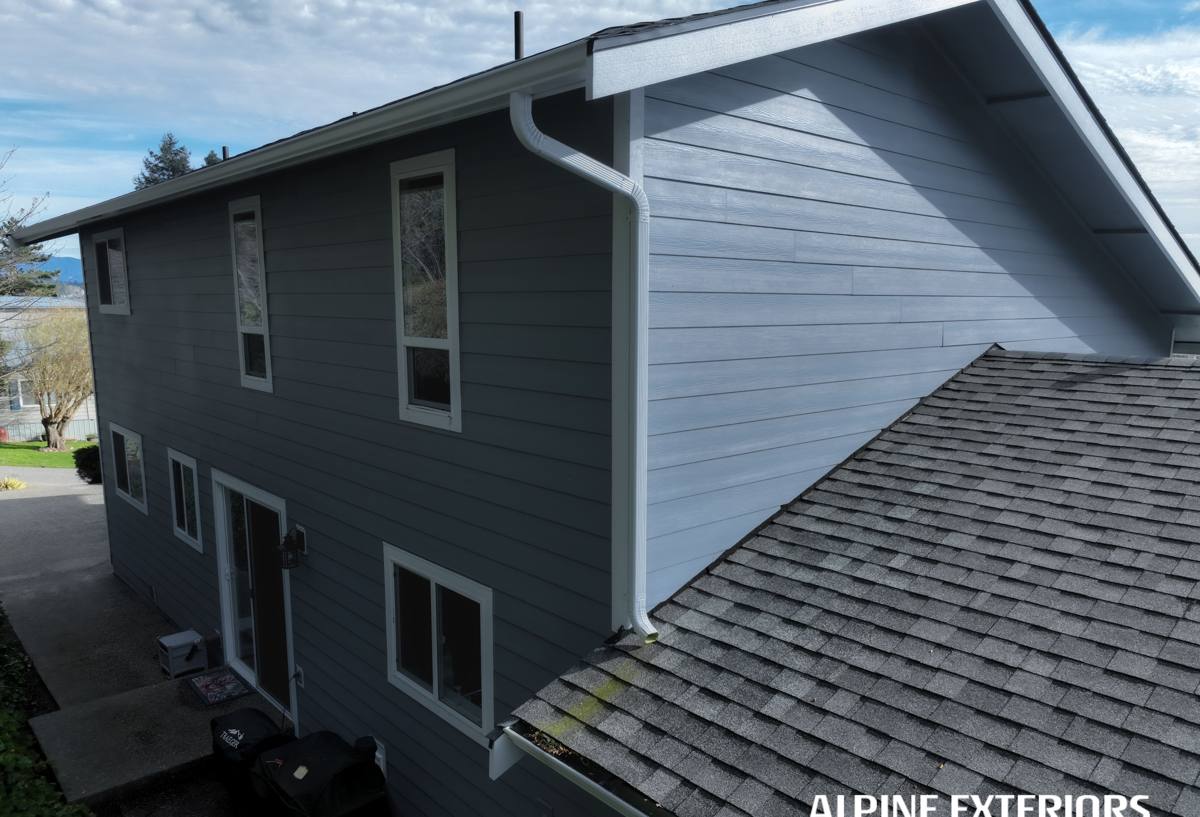
Three things tend to show up together after a storm in this area: wind-lifted or missing shingles (usually on the side of the roof that took the brunt of the wind), flashing that's been pried loose or bent at a valley or chimney, and moss mats that were already holding moisture against the roof deck before the storm even hit. A storm rarely causes damage in isolation — it usually exposes and worsens a weak point that was already there, which is why a real storm inspection has to look past just the obvious stuff.
Why Fast, Correct Assessment Matters
The gap between "storm hits" and "water reaches the inside of the house" can be short in this climate, especially with the amount of rain that follows a typical Whatcom County storm system. A missing shingle or open flashing seam that sits exposed through even one more heavy rain can soak the underlayment and decking beneath it, and once the decking is wet, you're no longer looking at a simple shingle repair — you're looking at rot, sagging, and possibly interior drywall or insulation damage. Getting a roof assessed and tarped or repaired promptly after a storm isn't about urgency for its own sake. It's about stopping a cheap fix from turning into an expensive one.
We also don't assume every storm call needs a full repair quote before we've actually been on the roof. A lot of storm damage in Alger turns out to be limited and fixable in a single visit — a handful of shingles, a resealed flashing joint, some cleared debris. Other times what looks minor from the ground turns out to involve soft decking once we get up there. Either way, the assessment comes first, and it's honest either direction.
How We Handle a Storm Damage Roof Repair
1. Inspection, Ground and Roof
We start by walking the property and then getting on the roof itself — gutters, downspouts, and the ground around the house often show early signs (granule buildup, torn-off shingle pieces, dented metal) before you ever look up. On the roof, we check every valley, ridge, penetration (vents, chimneys, skylights), and edge, since those are where storm damage concentrates.
2. Temporary Protection If Needed
If there's an active leak or exposed decking and a repair can't happen the same day, we tarp the affected area first. Protecting the interior of the house comes before anything else — a properly secured tarp buys time without making the eventual repair harder.
3. A Clear, Written Scope
Before any repair work starts, we tell you specifically what we found, what it'll take to fix, and what it'll cost — not a vague range. If we find something beyond storm damage, like existing moss damage to the decking or aging flashing that's due for replacement regardless, we separate that out clearly so you know what's storm-related and what isn't.
4. The Repair Itself
Storm repairs on a roof in this climate need to hold up to the next storm, not just look fixed. That means matching shingle type and, where possible, color; re-flashing valleys and penetrations to spec rather than just caulking over a gap; and replacing any decking that's gone soft rather than covering over it. A repair that skips any of those steps tends to fail again at the next hard rain, which just means paying for the same fix twice.
5. Insurance Documentation
If the damage is significant enough to involve a homeowner's insurance claim, we document what we find with photos and a written description of cause and scope, which most Whatcom County insurers want to see before approving a claim. We're not a public adjuster and we don't handle the claim itself, but we give you the documentation a claim needs to move.
Repair vs. Replace: How We Decide
Not every storm-damaged roof needs to come off. The right call depends on how much of the roof is affected, how old the existing roof already is, and what condition the decking underneath is in once we can see it.
| Factor | Points Toward Repair | Points Toward Replacement |
|---|---|---|
| Extent of damage | Limited to one section or a handful of shingles/flashing points | Widespread across multiple roof planes |
| Roof age | Roof is well within its expected service life | Roof was already nearing the end of its lifespan before the storm |
| Decking condition | Decking is sound once exposed | Decking is soft, delaminated, or rotted in multiple spots |
| Shingle match | Existing shingle style/color is still available or close enough to blend | Shingle is discontinued and a patch would be visibly mismatched |
| Prior moss/moisture history | No significant moss or moisture damage found beyond the storm event | Moss mats or chronic moisture already compromised large sections |
We'll tell you plainly which side of that table your roof lands on, and why — not steer you toward whichever option is bigger for us.
What This Climate Adds to the Job
A storm damage repair in Alger isn't quite the same job as the identical repair somewhere drier and further from the water. Salt air means we're paying closer attention to fastener and flashing material, since corrosion-prone metal is a repeat point of failure here. The moss season that runs long across Whatcom County means we're also checking whether moss has already been undermining shingles or holding moisture against the deck near the storm-damaged area — fixing the storm damage without addressing an active moss mat two feet away just sets up the next problem. And because driving rain here tends to come in at an angle rather than straight down, we pay particular attention to how flashing and shingle overlap are oriented relative to prevailing wind and rain direction, not just whether they're technically installed to spec.
What to Check After a Storm, Before You Call
A quick ground-level check right after a storm can help you decide how urgent a call is — though we'd rather you call and have it turn out to be nothing than wait on real damage.
- Shingle pieces, granules, or metal flashing fragments in the yard or gutters
- Visible gaps, curling, or missing shingles from the ground (binoculars help — stay off the roof yourself, especially right after a storm)
- New water stains, drips, or damp spots on ceilings or interior walls
- Sagging or uneven spots along the roofline
- Gutters pulling away from the fascia or overflowing during rain
- Debris or fallen branches resting directly on the roof surface
- Any daylight visible through the attic roof deck, if you can safely check
Why Hiring a Crew That Already Works Alger Matters
A roofing crew that regularly works this stretch of Whatcom County already knows what Alger roofs are up against — the salt exposure off the bay, the angle storms tend to hit from, and how long moss has to work on a shaded roof plane before it becomes a real problem. That's not something you can fully substitute with general roofing experience from a drier or more inland market. It also means faster response after a storm, since we're not driving in from across the region to get eyes on your roof, and it means a repair built around materials and details that hold up specifically here, not just on paper.
We also don't disappear once the repair is done. If a repaired section needs a follow-up look after the next big storm, or if you want a second set of eyes before an insurance adjuster visits, that's part of working with a local crew rather than a one-time out-of-area outfit.
A Straight Answer on Cost
Storm damage repair costs vary a lot depending on scope, and we're not going to put a number on your roof without seeing it. What we can say honestly: a small flashing or shingle repair is a modest job, a repair involving decking replacement costs more because of the added labor and material, and a roof that turns out to need full replacement is a different conversation entirely. We'll always give you the real number after inspection, broken down by what's storm-related and what isn't, before any work starts.
If your roof took a hit in a recent storm, or you just want a professional set of eyes on it before the next one comes through, we're glad to take a look. Reach out for a free, no-pressure estimate — we'll tell you honestly what we find and what it'll take to fix it.